Les années noires et la guerre s'achèvent, et les parents de Julien arrivent au terme d'une longue vie de labeur, de courage et de privations. Sans nouvelles de leur fils qui court le maquis, ils s'aigrissent dans l'horizon étroit de leur petit jardin, sans bien comprendre la sanglante tragédie qui se joue autour d'eux. Vient enfin la Libération et le retour de Julien, accompagné d'une jeune femme portant un enfant de lui, à l'aube de ces temps nouveaux que le vieux couple ne connaîtra pas.
Bernard Charles Henri Clavel (May 29, 1923 – October 5, 2010 was a French writer.
Clavel was born in Lons-le-Saunier. From a humble background, he was largely self-educated. He began working as a pastry cook apprentice when he was 14 years old. He later had several jobs until he began working as a journalist in the 1950s. After the war, he worked for the social insurance, and he could not dedicate himself to literature until 1964. He has lived and worked in many places and lived in Savoy until his death.
His first novel was L'Ouvrier de la nuit (Night Worker, 1956). He later published works for young people and numerous novels, at times organised into series: La grande patience (The Great Patience, 4 volumes — 1962–1968), Les Colonnes du ciel (Heaven's Pillars, 5 volumes — 1976–1981), or Le Royaume du nord (Northern Kingdom, 6 volumes — 1983–1989).[2]
In his writings, he employed simple language and attached importance to humble characters and to the defence of humanist values by questioning violence and war.
This book is special to me. Friends on GR who follow my reviews will know that most often I read translations of modern foreign novels. I’m a geographer so I like to learn about life and places in other countries. Of course, as a big reader, as a young person I had read many translations of classics - Dostoevsky, Jules Verne, etc. - but this book that I first read about 25 years ago, long before I started writing reviews, showed me the value of contemporary translations. In addition, translations are usually excellent books because they were often award-winning in their home countries. This book won France’s highest literary award, the Prix Goncourt, for 1968.
So this is a great story. The title is apt because it is about an older couple in France, during and after the German occupation in World War II. They live in the Jura Province, in east central France, right on the Swiss border. They live in a small town but happen to have a large patch of land that they farm.
It’s a second marriage for him after his first wife died young. He has two sons, one by each wife. The older son is fortyish and lives in town and has become a collaborator with the Germans. He’s a food wholesaler and makes big money supplying the German occupiers. The younger son by his current wife is 20-ish and has left home supposedly to join the anti-Nazi resistance fighters. Most of the time they don’t know where he is or even if he’s alive.
He’s 70 and she’s 56. They’re both crotchety (he reminds me of Ove in the novel with that name) and they bicker constantly, but they have a deep love and respect for each other. There’s the old expression “work like a dog.” I’ve never seen a dog work but it seems apt. Early in the book there’s a story where an acquaintance gives them permission to gather firewood on a lot three miles away uphill. He drives the old man’s 4-wheel cart up there on his truck. The next day the couple walks three mils up the hill with their cutting tools. At his age, he gets winded easily; she younger, but has a hernia. The spend all day cutting and bundling wood and they push the cart BY HAND over ruts and through mud a mile to the road and push it miles along the town streets back home.
The old man is in love with hard work. He worked 12 hours a day all his life as a baker but retired when the war began issuing rationing coupons for “gray bread” mixed with sawdust. The bread disgusts him. Now he works twelve-hour days chopping wood for their stove and weeding and hoeing their large plot of land. He could sell off some land and improve his life but he’s a skinflint and he won’t do it. He won’t spend the money to adapt his wood-fired stoves to burn the coal issued by rationing. After the war, a visitor is shocked to see they have no electricity and no running water – they still have an outdoor well they pump by hand.
The old man has no interest in politics. His wife tells him war news she hears from neighbors. He just wants to be left alone to his drudgery. But politics intrudes on his life in a vicious way, which is really the core of this story. The husband and wife enter a mine field when they talk about their two sons. The old baker is a-political and doesn’t really care about the two sons taking different sides.
But he’s deeply disappointed in both of his sons. The rich German collaborator visits them infrequently even though he lives in town and he doesn’t help them out. In fact, he wants his father’s land to build a garage for his delivery trucks. The old man will never agree to that. His younger son can do no wrong by his mother. The few times they see him, he doesn’t seem to be involved in the fighting; instead he’s hanging out as a poet and artist. The old man sees no point in this foolishness. Things come to a head when they worry that the older son might actually turn the younger son over to the authorities.
All in all, an excellent read. It gives you a great feel for life in rural France under the Nazi occupation and how it affected people’s lives. It’s a beautiful picture of love between an aging quarrelsome couple. And it’s about a life of hard work and drudgery leading to disappointment in the end. Melancholy, but, In this case, c’est la vie. I’m giving in a “5’ and adding it to my favorites.
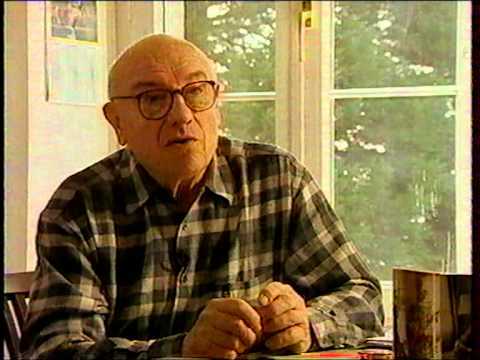
The author (1923-2010) wrote more than a dozen novels. He must have been very popular in France because two of his books were made into movies and a half-dozen were adapted for French television series. Yet on GR most of his books have only 10 or 15 ratings and none more than 80, whether they are in English or French. I think his work (this book, anyway), deserves greater recognition.
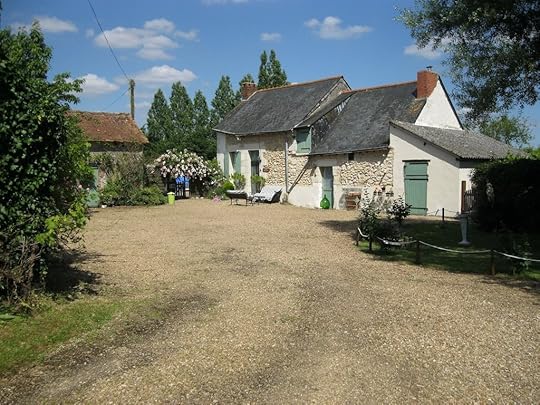
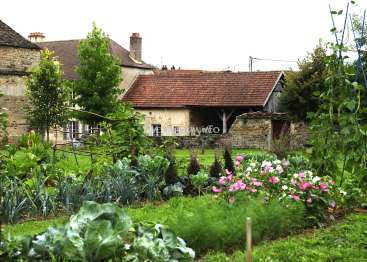
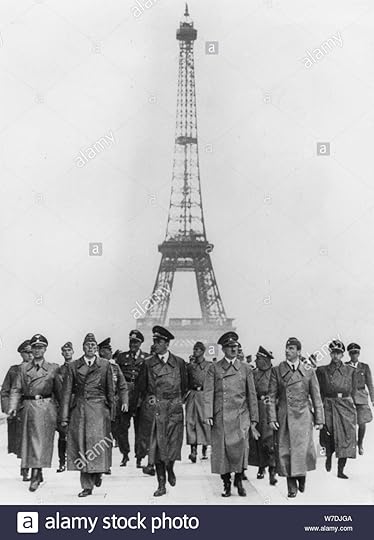
Top photo of French cottage from workaway.info Second photo from vrbo.com Hitler visits the Eiffel Tower from alamy.com The author from alchetron.com
I'm pretty sure it was a review here on GR, by Jim Fonseca, that made me want to read it. I probably knew before buying the book that it was set in Jura, part of France that I have a particular feeling for. It is so beautiful and makes such excellent wines! All the same, it is not easy to review the book because it is such a small and simple story, I was occasionally bored with it, yet occasionally excited. I didn't like the central characters to start with but grew to feel for the old boy towards the end of the book. It very much reminded me of "The Cat" by Georges Simenon where the old couple also constantly nag while desperately needing each other. It's a kind of love that is so difficult to describe and yet both Clavel and Simenon have done it beautifully. It is wartime (1943), there is no decent bread (and Gaston used to be a baker), no firewood, so the beginning of the novel is taken up by an expedition to get firewood - a blow-by-blow account, a little bit like watching the paint dry. Both are elderly, in poor health, making an effort, bickering as they go along. Gaston fought in the First World War and occasionally something reminds him of that. He has a son from his first marriage (the first wife died) who is a successful grocer, friendly with the Germans. Fernande is his second wife who also produced a son, but he is a deserter sought by the Germans. There is an enmity between the half-brothers. This is pretty much all there is to it. I hope I'm not giving away anything if I say it ends in a death pretty much as a baby is born. The couple's lives are very small, there is far too much small detail (clothes damp with sweat annoyed me most), but there is a kind of mystery element that kept me turning the pages. And some scenes (the battle fought over the town, the vipers in the woods) are unforgettable.
6 stars This is perhaps the most perfect book of historical fiction I’ve ever read. I am duly gutted emotionally. Also, it is ridiculous that we don’t know about this book in American schools.
A long life. A miserable man. Family intrigue. The denouement of war in a small village. Nineteen forty-five in France. An autumn and two winters and he's gone. Little will change with his passing. Yet, somehow I was held captive by this intimate look into a life forcefully half-lived, and it's slow passing into death. Clavel doesn't ask you to like Gaston, just to see him, hear him, step into his shadow and observe a life, a difficult one made even more so by fear. And a passing so intimate as to be felt.