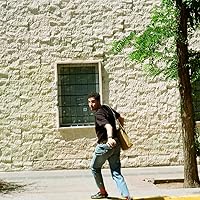
J. M. Coetzee is a South African writer, essayist, and translator, widely regarded as one of the most influential authors of contemporary literature. His works, often characterized by their austere prose and profound moral and philosophical depth, explore themes of colonialism, identity, power, and human suffering. Born and raised in South Africa, he later became an Australian citizen and has lived in Adelaide since 2002. Coetzee’s breakthrough novel, Waiting for the Barbarians (1980), established him as a major literary voice, while Life & Times of Michael K (1983) won him the first of his two Booker Prizes. His best-known work, Disgrace (1999), a stark and unsettling examination of post-apartheid South Africa, secured his second Booker Prize, making him the first author to win the award twice. His other notable novels include Foe, Age of Iron, The Master of Petersburg, Elizabeth Costello, and The Childhood of Jesus, many of which incorporate allegorical and metafictional elements. Beyond fiction, Coetzee has written numerous essays and literary critiques, contributing significantly to discussions on literature, ethics, and history. His autobiographical trilogy—Boyhood, Youth, and Summertime—blends memoir with fiction, offering a fragmented yet insightful reflection on his own life. His literary achievements were recognized with the Nobel Prize in Literature in 2003. A deeply private individual, Coetzee avoids public life and rarely gives interviews, preferring to let his work speak for itself.
“Reading is not a typically African recreation. Music, yes; dancing, yes; eating, yes; talking, yes – lots of talking. But reading, no, and particularly not reading thick novels” states Mr.Emmanuel Egudu, the internationally acclaimed Nigerian writer, with the charming impudence and unnerving defiance that so characteristically permeate his rhetoric to vindicate his argument that defines novels as a cultural genealogy fed upon Western colonialism and modernity and therefore, alien to the African oral tradition.
His colleague and rival Mrs. Elizabeth Costello, an Austrialian author well up into her years, listens to Mr. Egudu’s discourse in mocking disbelief, as she has done so many times before, while surveying the enraptured audience that hangs on every word uttered by the exuberant man hidden behind the mask of genuine artist. Mrs. Costello is a liberated, opinionated woman whose standpoint relays in the old Socratic dialogue of presenting the pros and the cons of almost any topic, with the exception of the universality of a literate mind which raises above abstract boundaries such as nationalities, folklore or time.
Contrarily, Mr. Egundu’s outlines reading as a solitary activity that isolates people in their blatant declaration to be left alone surrounded by the privacy that fictional worlds provide for them.“African people are not like that. We don’t like to distance ourselves from others. Africa is a continent whose people share. Reading a book in seclusion is not sharing. It is like eating or speaking alone.”
Mrs. Costello counterattacks mentally in outraged retaliation. For this inamorata of the classic novel, an attempt to disentangle the knots of mankind’s destiny, to restore the past granting power to characters and circumstance in order to create a present and explore the future is what gives consequence to the act of reading.
What is both remarkable and ironic is the fact that these clash of cultivated titans debating the essence of modern literature and the exotic African myths are both commissioned by a traveling agency called “Northern Lights” to give conferences and entertain accommodated tourists on board a luxurious cruise ship sailing the oceans steering towards the remote Antarctica and that underneath their scholarly dispute emotional bonds unite the man and the woman in a sweeping language that obliterates all trace of rationality.
In barely 60 pages Coetzee delineates the contradictions of globalization, cultural heritage and international literary criticism using the paradoxical plight of African intellectuals, who belong neither to their aboriginal ancestry nor to the Western postcolonial panorama. With a pungent, concise and bare prose devoid of all superfluous ornament and employing a symbolic story as conduit to deliver his final blow, Coetzee draws a scrupulous map of sneaky subjects such as the colliding worlds of the African oral tradition, the ethos of the written word and the devastating effects of a history of tyranny under the Apartheid and the Colonial Systems on the dislocated African communities.
I wonder how much of fictional Mr. Egundu and Mrs. Costello’s heated discussion mirrors Coetzee’s personal dichotomy as a white, literate South-African and his concern to rethink the embroiled world we live in and its cultural diversity. There are no definite answers, but Coetzee’s allegorical “alter-egos” have disclosed a half-acknowledged truth to me. I had been an island adrift in the fictional oceans of books until I found this magic vessel that allowed me to sail to the shore of meaning and the port of communication where reading became a collective journey and novels the catalyst to reshape isolation into fellowship. At least I know that much. So let’s keep reading. Let’s keep sharing, then.
***** Note:“The Novel in Africa” is the result of a transcribed conference Mr. Coetzee presented in the framework of a series of lectures organized by MACBA (The Barcelona Museum of Contemporary Art) in 1999, which were later published in 2003.
Para quien se escribe una novela realmente? Para uno, el compatriota o el extranjero? Aue bueno que es este wn de Coetzee, un agrado retomar su prosa con este breve relato.