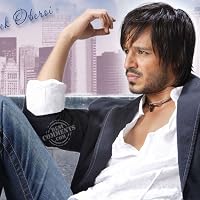
In what is Shakespeare's Othello transplanted to the badlands of Uttar Pradesh, Omkara (Ajay Devgan) is a bahubali, a sort of political enforcer for the local politician Tiwari Bhaisaab (Naseeruddin Shah). Ishwar 'Langda' Tyagi (Saif Ali Khan) and Keshav 'Kesu Firangi' Upadhyay (Vivek Oberoi) are his closest lieutenants, while Dolly (Kareena Kapoor) is his ladylove.
In this timeless tale of love, betrayal and jealousy, a jealous Langda betrays Omkara and sets off a chain of events that end in savage tragedy. The film has unforgettable performances from the cast and memorable music, including the all-time hit item number 'Beedi jalai le', penned by the one and only Gulzar and set to music by Vishal Bhardwaj. The cult classic now as a book.
Othello, brought to India. To the heartland of the cow belt: rural/semi-urban Uttar Pradesh, where politics and crime go hand-in-hand (and with the police included in that unholy nexus), and where Omkara, the half-caste strongman (baahubali) of a crooked politician, falls in love with the beautiful Dolly, daughter of the politician’s lawyer. While Omkara and Dolly prepare to get married, life goes on: Omkara’s boss promotes Omkara, and Omkara appoints the new strongman—not Langda, who has been certain of the post, but the college-educated Kesu Firangi. Embittered yet unable to speak up, Langda sets about ruining Omkara and all that is dear to him. In classic Shakespearean style, but so brilliantly transposed to an Indian setting.
Omkara: The Original Screenplay, written by Vishal Bhardwaj, with Robin Bhatt and Abhishek Chaubey, is bilingual: the dialogues are written in Devnagari (followed by a translation in English) while the other components—setting, action, details of the scene, etc—are all in English. It’s an excellent interpretation of Othello, bringing forth not just the emotions and motives—the jealousy, the anger, the suspicion—of the original, but also building up very believable characters. The beautiful, naïve Dolly. Omkara, who loves her so much—and who, deep down, cannot seem to let go of the inferiority of his birth. Langda, smarting at his humiliation and at being bypassed; a wily, scheming man, ruthless yet hiding behind a façade of camaraderie. Kesu, confused, pulled in different directions. Indu, Langda’s wife, who helps set off a chain of events she could not have envisaged.
What really enthralled me about this screenplay was the way it brings to life the setting and the people. This is an area of India I am familiar with, and just reading the script, I could visualize it, smell it, hear it. In the harsh crudity of the language, in the often half-cruel humour that pervades the language, in just the very fact that most of the characters pronounce न as ण.
And that, actually, was where this screenplay also had its one flaw: in the translation of the dialogues. The translation is somewhat erratic. In places, it’s perfect; it manages to convey all the obscenity and no-holds-barred way of talking of the original very well (as an example, the very first lines—“बेवकुफ और चूतिये में धागे भर का फरक होता हैगा भैया... धागे के इंगे बेवकूफ और उंगे चूतिया... और जो धागा खींच लो... तो कौने बेवकूफ और कौने चूतिया... करोर रुपये का प्रसन है भैया...”—which is translated as “There’s a thin line separating a moron from a fucking idiot… on one end of the line lies the moron and on the other, the fucking idiot… snap the line and you don’t know who’s who… therein lies the million dollar question, my pretty polly”)
On the other hand, there are a lot of dialogues which are badly translated. Which lose the punch of the original. For instance, the contempt inherent in something like “सरत घोड़ों पे लगाते हैं, कठोर... सेरों पे नहीं” is missing in something as tame as “Next time, bet on horses”.
But that, ultimately, if you’re reading the dialogues only in Hindi, is easily remedied—and is very good. I hadn’t watched Omkara before I read the screenplay, even though I’d heard plenty about it. Halfway through reading the screenplay, I went and got the DVD for myself, and watched it. Excellent.
great adaptation of most Honorable writter's creation.
its a nice indian adaptation of othelo. The background of up was written so nicely. the writter who is one of the most talented writter-director of bollywood has written it in a absolute indian rural background, where dons rule the politics and termed as "bahubali".the character of "langda tyagi " is so good,who converts omkara 's little doubt into a great political thriller.the screenplay explains human mentality, traditional riuals and political situation(specialy u.p.'s) of society. afterall its a great experience to read it.
A great Indianised version of Shakespeare's creation....A stunning exploration of Indian locality,political power and agony. Brilliant use of superstitious in India like "eagle drops dead snake in turmeric". The pace of the screenplay is positive point of the book. All the characters are written and used so well.