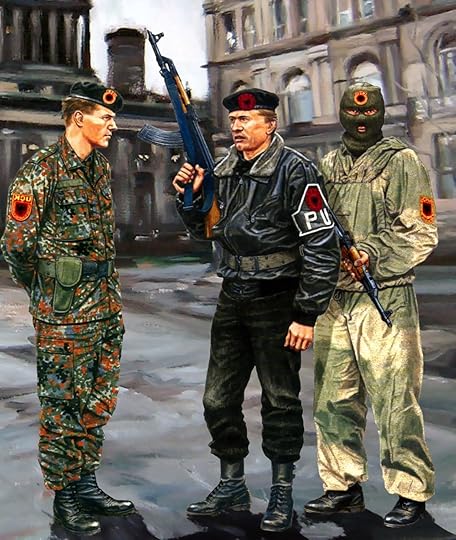
The military intervention by NATO in Kosovo was portrayed in American media as a necessary step to prevent the Serbian armed forces from repeating the ethnic cleansing that had so deeply damaged the former Yugoslavia. Serbia trained its military on Kosovo because of an ongoing armed struggle by ethnic Albanians to wrest independence from Serbia. Warfare in the Balkans seemed to threaten the stability of Europe, as well as the peace and security of Kosovars, and yet armed resistance seemed to offer the only possibility of future stability. Leading the struggle against Serbia was the Kosovo Liberation Army, also known as the KLA. Kosovo Liberation The Inside Story of an Insurgency provides a historical background for the KLA and describes its activities up to and including the NATO intervention. Henry H. Perritt Jr. offers firsthand insight into the motives and organization of a popular insurgency, detailing the strategies of recruitment, training, and financing that made the KLA one of the most successful insurgencies of the post-cold war era. This volume also tells the personal stories of young people who took up guns in response to repeated humiliation by "foreign occupiers," as they perceived the Serb police and intelligence personnel. Perritt illuminates the factors that led to the KLA's success, including its convergence with political developments in eastern Europe, its campaign for popular support both at home and abroad, and its participation in international negotiations and a peace settlement that helped pave the long road from war to peace.
This is a great source about the Kosovo Liberation Army (Ushtria Çlirimtare e Kosovës – UÇK). The book talks about some of its formations, financial support from Europe and the US, and military engagements against Serb military and police forces. The book has some extremely scarce photos of some important KLA leaders, Kosovar political figures, and some random KLA photography from the war. I thought it was worth a read and would recommend it to anyone interested in the Balkans. Thanks!
A concise but detailed history of the KLA, exactly as advertised. The author systematically explores all of the aspects of the insurgency including its strengths and weaknesses. He also considers the failures of the Milosevic regime, many of which played into the hands of the KLA. Ultimately, Perritt argues, the Milosevic regime failed to put down the KLA because Milosevic was more interested in persecuting Kosovo Albanians per se (through war crimes, ethnic cleansing, and genocide) than actually removing the KLA's ability to fight.
My biggest complaint about the book is its final chapter (before the brief conclusion). In this chapter Perritt, a law professor by trade, goes into a largely theoretical discussion of the inadequacy of international criminal law in prosecuting war crimes in cases of insurgencies. This is a fine topic and one that is interesting by itself, or in proper context. But this chapter derailed what was otherwise a very concise and concrete book about the KLA and the lessons to learn about it.
One chapter before that out-of-place chapter, though, is a brief discussion of how the KLA impacted party politics in Kosovo in the immediate post-war period, until 2007 or so when the book was drafted. This was particularly useful to me; I have yet to find another book explaining contemporary or post-war politics in Kosovo. I wish this chapter could have been longer or more detailed. But that's a topic for another book.