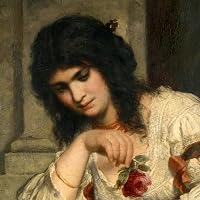
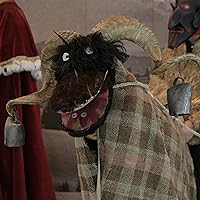
George Gordon Byron, 6th Baron Byron, but more commonly known as just Byron was a leading English poet in the Romantic Movement along with Keats and Shelley. Byron was born on January 22nd, 1788. He was a great traveller across Europe, spending many years in Italy and much time in Greece. With his aristocratic indulgences, flamboyant style along with his debts, and a string of lovers he was the constant talk of society. In 1823 he joined the Greeks in their war of Independence against the Ottoman Empire, both helping to fund and advise on the war's conduct. It was an extraordinary adventure, even by his own standards. But, for us, it is his poetry for which he is mainly remembered even though it is difficult to see where he had time to write his works of immense beauty. But write them he did. He died on April 19th 1824 after having contracted a cold which, on the advice of his doctors, was treated with blood-letting. This cause complications and a violent fever set in. Byron died like his fellow romantics, tragically young and on some foreign field.
George Gordon Byron (invariably known as Lord Byron), later Noel, 6th Baron Byron of Rochdale FRS was a British poet and a leading figure in Romanticism. Amongst Byron's best-known works are the brief poems She Walks in Beauty, When We Two Parted, and So, we'll go no more a roving, in addition to the narrative poems Childe Harold's Pilgrimage and Don Juan. He is regarded as one of the greatest British poets and remains widely read and influential, both in the English-speaking world and beyond.
Byron's notabilty rests not only on his writings but also on his life, which featured upper-class living, numerous love affairs, debts, and separation. He was notably described by Lady Caroline Lamb as "mad, bad, and dangerous to know". Byron served as a regional leader of Italy's revolutionary organization, the Carbonari, in its struggle against Austria. He later travelled to fight against the Ottoman Empire in the Greek War of Independence, for which Greeks revere him as a national hero. He died from a fever contracted while in Messolonghi in Greece.
I'm going to go ahead and say that of everything I've read of Byron's so far, this was by far a favourite and most powerful and impactful. A bit heartbreaking too if you take into account the autobiographical inspiration Byron drew from to create the character of Arnold. Caesar was extremely well written and I enjoyed his speeches and schemes very much.
Arnold kokee itsensä epäonnistuneeksi muotopuoleksi. Hän on päättämässä elämäänsä, kun hänelle ilmestyy henki, joka lupaa vaihtaa Arnoldin rujon ulkokuoren uuteen. Vaihtoehtoja on monia Sokrateesta urheisiin sankareihin. Arnold valitsee (ymmärtääkseni) Akilleuksen ulkomuodon ja henki saa uuden ruumiin Arnoldin vanhasta kuoresta. Henki on Caesar. Jo vain. Ja niin alkaa Arnoldin sankarillinen sotasankarin elämä Rooman muurille ja sen yli sodassa, jossa ovat toisiaan vastassa protestantit ja katolilaiset. Lopussa Arnold taitaa rakastua vastapuolen Olimpia-neitoon, joka sukua paaville, mutta neito kuolee tai taitaa surmata itsensä. Aikamoista.
E incredibil cât de interesant e cursul de semantică dacă eu am stat să citesc asta :)) a fost funny, dar și confuză here and there, dar mi-a plăcut. A fost interesantă și ideea pe care Byron a aplicat-o aici.
It's 1527, or thereabouts, and Arnold the Hunchback is having a rough go of things. He is afflicted not only with a name that's difficult to take seriously in a tragic hero, but also a club foot, an unsightly visage, the aforementioned humped back, and a real asshole of a mother who loves bullying him. Inside, Arnold is sensitive and intelligent, and just wants to be loved - but his mother's taunts have taught him that he can never be anything more than his physical disabilities. He's feeling pretty low, and he's just about ready to end it all. But suddenly, a Mysterious Stranger shows up, and offers him the chance to, well, transform (not a lot of thought went into that title, B) into the strong, handsome, beloved macho man he's always dreamed of being.
Arnold is genre-savvy enough to ask the stranger right away if he's the devil, and to ask what the conditions of the deal are. But he's not quite genre-savvy enough to follow up when the stranger gives extremely vague and somewhat ominous answers to both questions. So he accepts. A suddenly sexy Arnold and his new BFF set off to have some adventures, featuring battles, valour, wickedness, homoerotic subtext - and possibly a beautiful woman being raised from the dead, but Coming Back Wrong...
Mary Shelly, who transcribed this for Lord B, loved it - "The more I read this Poem, the more I admire it," she wrote to him; "it fully surpasses the best parts of your best productions." She was wrong (sorry, ma'am), but TDT certainly does feature a lot of Mary Shelley's favourite themes, so I understand why she flipped for it. In the same letter she says, "I pray that Your Lordship will finish it. – It must be your own inclination that will govern you in that, but from what you have said, I have some hopes that you will." Unfortunately she was wrong about that too. Which is very frustrating, because, flawed as this poem is, it's also strange and fascinating and I would love to know where Byron would have ultimately gone with it.
It seems like there aren't a lot of references to The Deformed Transformed in his letters, so it may have just been that most of his energy was being channeled (rightfully so) into Don Juan, and he just sort of set this aside and never picked it up again. (When it was released, the preface said, "The present publication contains the first two parts only. The rest may perhaps appear hereafter." I have to respect an ADHD king who does not commit himself to finishing a project.) But I also wonder, a little, if he might have felt that this poem got a little too personal. Given Byron's skill at mining his own angst for material - and profiting hugely off of a carefully cultivated angst-based public image - perhaps that's a silly speculation. But, well - this is a story about a lonely, awkward young man, abused by his mom for his disability, and consequently fixated on said disability and desperate to be loved in spite of it, who is then able to, seemingly overnight, become handsome and popular, though not without making some sacrifices, possibly including his soul, along the way. Does that, maybe, remind you of anybody?
The Deformed Transformed is a recycled Dr. Faustus narrative, where Faust is replaced by Arnold, and Mephistopheles is represented by The Stranger. Essentially, Arnold has been constantly rebuked and isolated throughout his life due to his being born with a hunchback. At the beginning of the play, Arnold has reached his breaking point, and right as he's about to kill himself, The Stranger enters. He makes a deal with Arnold: I'll give you a new body in exchange for your old one. Arnold takes the body of Achilles, and with his new able body, goes off to war.
This play provides such an interesting conversation on able bodies verses disabled bodies. Lord Byron himself was disabled, and it seems like a lot of personal frustration was written into these pages, especially when you read some old archival sources. You basically get this really interesting narrative of Arnold, who on the inside, felt comfortable in who he was; it was the rest of society telling him something was wrong with him. Arnold even says at some point he can live with the struggles of his own body, but he cannot bare the burden others have put on him because of his disability. Arnold ultimately ends up changing forms, choosing the body of the most famous Greek hero of all time, and it brings up a fascinating question: did he change forms because he felt like he needed to, that he preferred an able body over his disabled one, or was it that society made him feel as though he needed that able body? The question can unravel even further at that point, leading into discussions of able bodies being the norm, disabled bodies being something othered that need to be "fixed," yet is it for the disabled person's own good, or the comfort of the able bodied person? There's some deep discussion in this play. For this section, I want to end on the note that Arnold said he had all the internal workings of being a hero from having to live life as someone with a disability, Achilles' body just made the inside match the outside. Very interesting.
Moving into The Stranger, he too plays a very interesting role. Due to his being in the Faustian role of devil, we assume he is all bad. Yet, when actually reading through the play, he almost takes on this watcher role. He's there throughout the entire play, watching, observing, but not really doing anything "bad". Yet, he also diverged from Dr. Faustus' plot in the fact that he didn't remain a separate entity, but instead fused with Arnold, symbolizing this neutral ground.