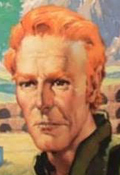
Orrie Edwin Hitt was born in Colchester and died from cancer in a VA hospital in Montrose, NY. He married Charlotte Tucker in Pt Jervis, NY (a small town upstate where he became a lifelong resident), on Valentine’s Day, '43. Orrie & Charlotte had 4 kids—Joyce, Margaret, David & Nancy. He was under 5’5″, taking a 27' inseam, which his wife altered because no one sold pants so short.
Hitt wrote maybe 150 books. He wasn’t sure. “I’m no adding machine”, he answered on the back cover of his book Naked Flesh, when asked how many he’d written. “All I do is write. I usually start at 7 in the morning, take 20 minutes for lunch & continue until about 4 in the afternoon.” Hitt wrote a novel every 2 weeks in his prime, typing over 85 wpm. “His fastest & best works were produced when he was allowed to type whatever he wanted,” said his children. “His slowest works were produced when publishers insisted on a certain kind of novel, extra spicy etc.”
Most of Hitt’s books were PBOs. He also wrote some hardcovers. Pseudonyms include Kay Addams, Joe Black, Roger Normandie, Charles Verne & Nicky Weaver. Publishers include Avon, Beacon (later Softcover Library), Chariot, Domino (Lancer), Ember Library, Gaslight, Key Publishing, Kozy, MacFadden, Midwood, Novel, P.E.C, Red Lantern, Sabre, Uni-books, Valentine Books, Vantage Press, Vest-Pocket & Wisdom House.
He wrote in the adults only genre. Many of such writers were hacks, using thin plots as an excuse to throw tits & ass between covers for a quick buck. Others used the genre as a stepping stone to legitimate writing, later dismissing this part of their career. There were few like Hitt, whose writing left an original, idiosyncratic & lasting mark even beyond the horizons of '50s-mid 60s adult publishing. What made him unique was his belief he was writing realistically about the needs & desires, the brutality (both verbal & physical), the hypocritical lives inside the suburban tracts houses & the limited economic opportunities for women that lay beneath the glossy, Super Cinecolor, Father Knows Best surface of American life. He studied what he wrote about. Wanting to write about a nudist camp, he went to one tho “he wouldn't disrobe”.
His research allowed him to write convincingly. S. Stryker, in her Queer Pulp: Perverted Passions from the Golden Age of the Paperback, says, “Only one actual lesbian, Kay Addams, writing as Orrie Hitt, is known to have churned out semipornographic sleaze novels for a predominantly male audience.” She thought “Orrie Hitt” a pseudonym, & “Kay Addams” a real lesbian author! Orrie’d like that one.
It wasn’t just about sex. It was also about guts. “The characters,” Hitt’s protagonist–a movie producer complimenting a screenwriter on her work–says in the novel Man-Hungry Female, “were very real, red blooded people who tore at the guts of life. That’s what I’m after. Guts.” If anyone knew about guts, it was him.
Life started out tough for Hitt. His father committed suicide when he was 11. “Dad seldom spoke of his father, who'd committed suicide, because it was a very unpleasant chapter in his life,” said his children.
After Father’s death, Orrie & his mother moved to Forestburgh, NY, where they worked for a hunting-fishing club. He started doing chores for wealthy members for $.10 hourly. Management offered him a better job later, at .25 hourly. Eventually, he became club caretaker & supervisor. “Dad talked a lot about working as a child to help his mother make ends meet,” his children recalled. “He wanted his children to have a better life while growing up.”
Tragedy struck Hitt again during those years. His children explain: “Dad’s mom died at her sister’s house on the club property during an ice storm, so Dad walked to the house to get his mother & carried her back to his car"
Tawny, or Cabin Fever, or Lovers at Night, continues Orrie Hitt’s exploration of small upstate New York resorts and the oddly-matched couples running them. This time it’s the Flying Red Rooster Inn outside of Clarksville. Danny O’Connor, the lead character, has been working night and day in the city, and decided he would take all of his banked vacation at once at this resort. His girlfriend Sue would join him on weekends, though she would take a separate room, wanting to wait til marriage before sleeping together. Once up there, Danny gets rolled for his cash and, as the story opens, he has walked miles in the rain into town to see a temporary agency about a job. They offer him one – the catch is it’s back at the Flying Red Rooster Inn taking deliveries and reconciling bills.
Danny would shortly learn that the mismatched couple running the place were at odds. Tawny was the blonde temptress waiting for Danny in his cabin. She had put up the $30,000 to buy the inn with money from her burlesque act. The Inn though was in Elbert Stone’s name. A portly man with the voice of a shouting child: But it was Stone’s voice that interested Danny most. It was almost the voice of a child—not the voice of a shouting child, but of a child who spoke quietly because of fear of an angry mother. It was not the voice of a man. It was a voice similar to that of those strange people who exist only on the fringe of humanity. Danny began to hope that Stone wouldn’t be around very much.” To complicate matters further, Stone couldn’t get a liquor license because of his past activities and that was in the bartender Jenks’ name.
“Stone looked like a great big lump of abandoned jello. Danny began to sweat. How could Tawny sleep in the same room with a guy who’d take up three-fourths of the bed and who had the voice of a frightened child? It made him feel just a little sick.”
Tawny does the whole seduction routine on Danny and offers to run away with him, but she wants her money from the Inn. She tells Danny that Stone wants to kill her and he needs to protect her from Stone, who on the other hand, tells Stone that they are trying to get the Inn from him and offers Danny a half interest if he drowns Tawny for Stone.
Hitt gets the mixed emotions that Danny is drowning in just right. Danny, oddly for one of Hitt’s lead characters, is essentially a decent Everyman caught up in a maelstrom. But, as Hitt aptly demonstrates, it doesn’t take much for an ordinary guy to start to lose his head around a nubile young female like Tawny: “She had said it all, and he knew it. He wanted to tell her that she was a bitch and a bum, but he couldn’t She was like a fatal disease that was eating through his blood, leaping through his veins, waiting to destroy him. The only thing he could do was to get out of there and keep right on going.” Looking in from the outside, it always seems silly for these characters to lose their heads and get manipulated, but they are all like putty in the hands of a master manipulator.
Tawny, or Cabin Fever, or Lovers at Night, continues Orrie Hitt’s exploration of small upstate New York resorts and the oddly-matched couples running them. This time it’s the Flying Red Rooster Inn outside of Clarksville. Danny O’Connor, the lead character, has been working night and day in the city, and decided he would take all of his banked vacation at once at this resort. His girlfriend Sue would join him on weekends, though she would take a separate room, wanting to wait til marriage before sleeping together. Once up there, Danny gets rolled for his cash and, as the story opens, he has walked miles in the rain into town to see a temporary agency about a job. They offer him one – the catch is it’s back at the Flying Red Rooster Inn taking deliveries and reconciling bills.
Danny would shortly learn that the mismatched couple running the place were at odds. Tawny was the blonde temptress waiting for Danny in his cabin. She had put up the $30,000 to buy the inn with money from her burlesque act. The Inn though was in Elbert Stone’s name. A portly man with the voice of a shouting child: But it was Stone’s voice that interested Danny most. It was almost the voice of a child—not the voice of a shouting child, but of a child who spoke quietly because of fear of an angry mother. It was not the voice of a man. It was a voice similar to that of those strange people who exist only on the fringe of humanity. Danny began to hope that Stone wouldn’t be around very much.” To complicate matters further, Stone couldn’t get a liquor license because of his past activities and that was in the bartender Jenks’ name.
“Stone looked like a great big lump of abandoned jello. Danny began to sweat. How could Tawny sleep in the same room with a guy who’d take up three-fourths of the bed and who had the voice of a frightened child? It made him feel just a little sick.”
Tawny does the whole seduction routine on Danny and offers to run away with him, but she wants her money from the Inn. She tells Danny that Stone wants to kill her and he needs to protect her from Stone, who on the other hand, tells Stone that they are trying to get the Inn from him and offers Danny a half interest if he drowns Tawny for Stone.
Hitt gets the mixed emotions that Danny is drowning in just right. Danny, oddly for one of Hitt’s lead characters, is essentially a decent Everyman caught up in a maelstrom. But, as Hitt aptly demonstrates, it doesn’t take much for an ordinary guy to start to lose his head around a nubile young female like Tawny: “She had said it all, and he knew it. He wanted to tell her that she was a bitch and a bum, but he couldn’t She was like a fatal disease that was eating through his blood, leaping through his veins, waiting to destroy him. The only thing he could do was to get out of there and keep right on going.” Looking in from the outside, it always seems silly for these characters to lose their heads and get manipulated, but they are all like putty in the hands of a master manipulator.
Tawny, (Beacon B261, 1959), is a reprint of Cabin Fever (Uni-book 73, 1954) with a new title and new cover art. Cabin Fever was Hitt's third published book and it shows, with some sloppy writing in places. That said, we have here a cool dust-up at a summer resort in rural New York. Danny, our focal character and first-rate heel, manages to get drunk and rolled while on vacation. But he takes a job at the resort as a means to get back on the cash. He's quickly chasing after the owner's wife - the femme fatale character - in between chasing after the hostess and his late arriving former girlfriend. There are several other shady characters and everybody seems to have an angle to rip somebody else off. Danny is slow on the uptake, thinks he's in the driver seat, planning his own scam, but as they say about poker games, if you don't know who the mark is . . . All good fun if you put on the editorial blinders. Hitt's book Summer Hotel (Beacon B168, 1958) picks up many of these same themes a few years later and is more smoothly written. Tawny is the femme fatale character but the novel is not focalized through her, so it's one of those marketing bait and switches where the cover art and blurbs suggest one story but what you get is something else entirely.
A early novel of Orrie Hitt's. This is actually a Beacon re-titled reissue of the Uni Book Cabin Fever. A variation on The Postman Always Rings Twice theme, but with both husband and wife scheming to kill one another.