Jump to ratings and reviews
Rate this book

The New German Cinema: Music, History, and the Matter of Style

Rate this book
When New German cinema directors like R. W. Fassbinder, Ulrike Ottinger, and Werner Schroeter explored issues of identity—national, political, personal, and sexual—music and film style played crucial roles. Most studies of the celebrated film movement, however, have sidestepped the role of music, a curious oversight given its importance to German culture and nation formation. Caryl Flinn’s study reverses this trend, identifying styles of historical remembrance in which music participates. Flinn concentrates on those styles that urge listeners to interact with difference—including that embodied in Germany’s difficult history—rather than to "master" or "get past" it.

Flinn breaks new ground by considering contemporary reception frameworks of the New German Cinema, a generation after its end. She discusses transnational, cultural, and historical contexts as well as the sexual, ethnic, national, and historical diversity of audiences. Through detailed case studies, she shows how music helps filmgoers engage with a range of historical subjects and experiences. Each chapter of The New German Cinema examines a particular stylistic strategy, assessing music’s role in each. The study also examines queer strategies like kitsch and camp and explores the movement’s charged construction of human bodies on which issues of ruination, survival, memory, and pleasure are played out.

331 pages, Hardcover

First published January 1, 2003

42 people want to read

About the author

Caryl Flinn

19 books3 followers

Ratings & Reviews

What do you think?
Rate this book

Friends & Following

Create a free account to discover what your friends think of this book!

Community Reviews

5 stars
2 (16%)
4 stars
5 (41%)
3 stars
5 (41%)
2 stars
0 (0%)
1 star
0 (0%)
Displaying 1 of 1 review
Profile Image for Owlseyes .
1,807 reviews308 followers
April 9, 2025


This is an interesting book. One at the crossroads of Art, Psychology and History. The object at stake (The New German Cinema) is that one of the post-war Germany. It's about the task of mourning and reconstruction. It's about new (art) ways to confront the past and imagine a new, autonomous future.
"For years I have been attempting through literary and filmic means to change opera stories: to disarm the fifth act ...we must work to develop an imaginary opera, to bring forth an alternative opera world" Alexandre Kluge
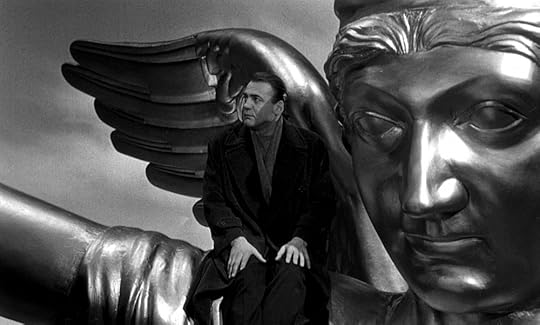
The author writes: "...the New German Cinema has been indelibly marked by filmmakers and commentators alike with themes of loss, guilt, paralysis, and grief. Freud's 1915 Mourning and Melancholia provided the theoretical backbone to that mourning work constituting mourning and melancholia as normal and neurotic responses...to loss (...)"fatherless" Germany was unable to mourn and work through its guilty past".


"As I noted in Chapter One, Freud model of somatic conversion in hysteria influenced film scholars analysing melodramatic excesses in the 1980's"
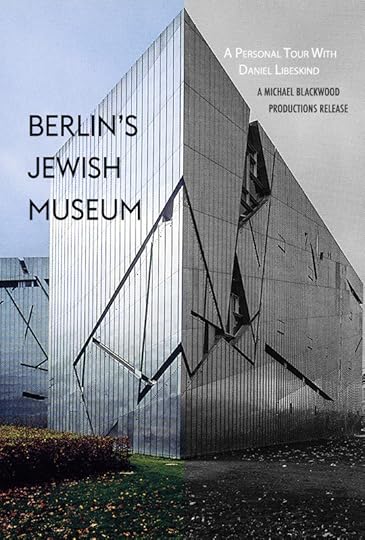
The book is about a discussion of German films,... "made in Germany". And some still echo the "separation" issue; the nationalistic stance; the demarcation from the American influence. See this Wim Wenders quote: "The Yanks have colonized our unconscious", in his 1976 movie "Im lauf der Zeit".
Displaying 1 of 1 review

Can't find what you're looking for?

Get help and learn more about the design.