An all-star cast of radical intellectuals discuss the continued importance of communist principles
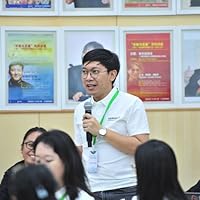
In 2009 Slavoj Žižek brought together an acclaimed group of intellectuals to discuss the continued relevance of communism. Unexpectedly the conference attracted an audience of over 1,000 people.
The discussion has continued across the world and this book gathers responses from the conference in Seoul. It includes the interventions of regular contributors Alain Badiou and Slavoj Žižek, as well as work from across Asia, notably from Chinese scholar Wang Hui, offering regional perspectives on communism in an era of global economic crisis and political upheaval.
Pun Ngai's "Chinese Communism Revisited: Still a Class Perspective but Why?" is a gem! This book is probably the best installation in the series precisely because, unlike the previous 2 volumes and their speculative thrust, most of the contributors in this volume not only touches on the "Idea of Communism" but on its articulation in Maoist China, South Korea, etc. The book hence clears the way for going beyond the idealist straitjacket of a pristine and pure communism untainted by the 20th century socialist revolutions towards a productive engagement with the real victories as well as deadlocks of these world-historical events.
I won't vouch for every essay in the book, but the paper by Cécile Winter (apparently a long time comrade of Alain Badiou), titled "Liberating Dictatorship: Communist Politics and the Cultural Revolution" is absolutely brilliant. Fresh and nuanced analysis of the Cultural Revolution that is free of both cynicism and excessive theoretical formalism -- significantly, she is a medical doctor and political activist, not a philosopher. The essay is animated by a close reading of the very complex political struggles of the period (ie red guards a vs red guards b,c,d etc vs workers committees vs party bureaucracy vs the Army vs the communist center) with an eye towards drawing relevant lessons for the reconceptualization of future communist politics and organization.
Particularly noteworthy: her discussions of the fragile nature of socialism after the elimination of private ownership -- in fact she doubts this first stage of communist revolution should even be called 'socialism'; her discussion of the limits and conditions for communist agency; and the related critique of voluntarism in much of the left's politics during the cultural revolution. Written with passion, energy and real desire for human emancipation. Eagerly awaiting more of her work in English translation.
An interesting series of essays exploring efforts to deal with the State and its bureaucratic/bourgeois/reactionary tendencies as it relates to a revolutionary moment and the 'idea of communism'. Many of the essays revolved around historical examples with interesting results.
"No – there is nothing inherently ‘conservative’ in being tired of the usual radical leftist demands for permanent mobilization and active participation, demands that follow the superego logic – the more we obey them, the more we are guilty … The battle has to be won here, in the domain of citizens’ passivity, when things return back to normal the morning after ecstatic revolts: it is (relatively) easy to have a big ecstatic spectacle of sublime unity, but how will ordinary people feel the difference in their ordinary daily lives? No wonder conservatives like to see from time to time sublime explosions – they remind people that nothing can really change, that the next day things return to normal." [Zizek]
Nach der Erschöpfung: Die „Idee des Kommunismus“ global denken Die von Slavoj Žižek und anderen herausgegebene, dreibändige Reihe „The Idea of Communism“ markiert eine der provokantesten philosophischen Interventionen des frühen 21. Jahrhunderts. Jenseits der historischen Katastrophen des 20. Jahrhunderts verfolgt sie das Ziel, den Begriff „Kommunismus“ aus seiner ideologischen Geiselhaft zu befreien und als kritische Denkfigur neu zu beleben. Entstanden aus einer Folge internationaler Konferenzen – von London über New York bis Seoul –, vereint das Projekt Denkende wie Alain Badiou, Žižek, Étienne Balibar und Susan Buck-Morss. Inmitten der globalen Krise des Kapitalismus und nach dem vermeintlichen „Ende der Geschichte“ fordern sie, die Idee des Kommunismus nicht als nostalgisches Relikt, sondern als philosophische Möglichkeit neu zu denken. Im dritten Band, der aus der Konferenz in Seoul hervorging, verschiebt sich der Fokus deutlich: Die Idee des Kommunismus wird nicht mehr primär aus einer europäischen oder amerikanischen Perspektive betrachtet, sondern im Spannungsfeld asiatischer Erfahrungen, Revolutionen und intellektueller Traditionen. Damit öffnet der Band den Diskurs radikal – hin zu einer globalen Verortung des kommunistischen Denkens. In seinem Vorwort „Why Communism Today?“ fragt Žižek nach der Aktualität des Begriffs selbst: Kann Kommunismus heute noch als politischer Name für universelle Emanzipation gelten, oder ist er nur noch ein theoretischer Restbegriff vergangener Kämpfe? Alain Badiou antwortet in seiner „General Introduction to the Seoul Conference“ mit einem charakteristisch affirmativen Gestus: Nicht die Geschichte, sondern die Wahrheit der Idee müsse bewahrt werden – als affirmative dialectics, die die Negativität nicht leugnet, sondern produktiv wendet. Die folgenden Beiträge entfalten diesen Gedanken in überraschenden Richtungen. Wang Hui analysiert in „The Crisis of Representativeness and Post-Party Politics“ die Erosion der Partei-Form und fragt, ob eine neue politische Organisation jenseits repräsentativer Modelle denkbar ist. Pun Ngai kehrt in „Chinese Communism Revisited“ zur Klassenfrage zurück und untersucht, wie sich in der chinesischen Gegenwart die Widersprüche zwischen Arbeit, Staat und Kapital neu formieren. Besonders eindrücklich ist Chele Winters Essay „Liberating Dictatorship“, der die Kulturrevolution nicht als historische Abweichung, sondern als experimentelle Form kommunistischer Politik interpretiert – ein hochriskanter, aber theoretisch scharfer Zugriff. Claudia Pozzanas „Althusser and Mao: A Missed Encounter?“ rekonstruiert das ausgebliebene Gespräch zwischen französischem Strukturalismus und maoistischer Praxis, während Alex Taek Gwang Lee in „Communism, the Void“ die Leere (le vide) als ontologische Bedingung kommunistischer Subjektivität deutet. Mit Beiträgen wie „The Sixties and Us“ (Alessandro Ruvo) und „Manifestos without Words“ (Yong Soon See) wendet sich der Band schließlich der Erinnerungskultur Asiens zu: den Protestbewegungen in Südkorea, der Gwangju-Erhebung und den metaphorischen „Treppen“ (Ho Duk Hwang), auf denen sich lokale kommunistische Diskurse in Sprache und Bild transformieren. Rosalind C. Morris schließlich erweitert den Rahmen in „Unpopular Politics“ auf die jüngere thailändische Geschichte und zeigt, wie kollektive und populare Formen des Politischen jenseits westlicher Kategorien gedacht werden können. Žižek beschließt den Band mit „No Way Out? Communism in the New Century“ – einem Text, der, wie so oft bei ihm, das Scheitern nicht als Ende, sondern als Voraussetzung des Denkens versteht. Das „Keine Ausweg“ wird zur paradoxen Formel eines Denkens, das in der Sackgasse die Bewegung selbst entdeckt. Wie schon in den vorangegangenen Bänden bietet „The Idea of Communism 3“ kein politisches Programm, sondern eine philosophische Herausforderung. Sein Wert liegt darin, dass er das kommunistische Denken aus der eurozentrischen Selbstbezüglichkeit löst und es in den globalen Süden, in die postkoloniale Gegenwart, verlagert. So erscheint der Kommunismus hier nicht mehr als Modell, sondern als Fragestellung – als offener Prozess, der das Verhältnis von Idee und Wirklichkeit neu vermisst. Der Band lässt sich daher als Versuch lesen, das Denken selbst zu dezentrieren: In hegelschem Sinn ließe sich sagen, dass die Idee nur in ihrer Bewegung existiert – als Negativität, die das Bestehende infrage stellt und in der globalen Vielfalt ihrer Gestalten fortlebt.
The idea of communism to many in the West is dead. The Soviet Union is dead. China is essentially a semi-capitalist dictatorship. All that remains is North Korea, Vietnam, and Cuba; none of them threatens capitalism. In 2009 Slavoj Žižek brought together leftist intellectuals to discuss the meaning of the idea of communism since the fall of the Soviet Union.
The speakers center on Asia and spend a great deal of time discussing China. The conference was held in Seoul on the Cold War divided peninsula of Korea. No one speaking at the conference accepted North Korea as part of “communism.” In fact, the Soviet Union is divided into Leninist and Stalinist periods. China is the example of where communism went wrong. There is a discussion of class difference and more importantly the state. Ideally, communism would lead to the disappearance of the state and the capitalist world's idea of nationalism. It also opposed Stalin's “socialism in one state.”
China as a state presents two problems to communism. The first is a dictatorial party government and second, the greater problem is the entrenched bureaucracy. Both lend themselves to the creation of a class on to their own above the worker and peasant. The conference was good at pointing out flaws in the current communist states as well as the flaws in capitalism. The problem lies in practical solutions. Leadership is needed initially, but once established refuses to let go. However, the idea of the population willing following a Rousseauian general will is impractical.
The conference does lend insight to the problems of communism in the 21st century. There is criticism and theory, but little in the way of practical solutions. Granted many of the same problems exist in capitalism and are starting to be recognized: Class difference, racial discrimination, pay difference between men and women, police abusing their authority, rising college costs preventing many attending or leaving them with near impossible debt, exporting manufacturing jobs, and European austerity programs. The point that problems, rejections of current and past government models, are being examined and criticized shows that at least on an intellectual level the idea of change and refinement is possible. This collection of opinions, however, is written for a very limited audience. An understanding of Maoist China and the current Chinese government is almost necessary.
For me this is the weakest of the 'Idea of Communism' series. Unsurprisingly, Žižek's contribution is far and away the best and most related to the actual Idea. The remainder of the essay's are of two types: entirely historical in nature (which could work if I wanted to read a history of Asian states as they relate to communism. I didn't, so they just bored me) or obtusely theoretical (but also quite backward-looking/historical in their references). Neither of these approaches were intriguing in the slightest. Which leaves me unsure if the Idea has little to no footing in Asian states, or if there is merely a dearth of academics studying - or allowed to study, publicly or otherwise - the Idea. A dull series of essays that hopefully are rendered forgettable by a fourth book in the series.
The Idea of Communism 3 is part of an ongoing discussion, initiated by Slavoj Zizek, on the continuing importance of communist ideals in contemporary society.
The discussions and critiques, of both communist and capitalist states, are very insightful and offer much to those willing to consider many options to address today's societal ills. What this book is not is prescriptive. There are no even remotely developed plans for implementation of these ideas. That wasn't the purpose of this work, though it would be nice to read a bit about how to make the changes that are largely theorized quite well here.
If you're looking for a call to arms this will likely disappoint you but if you are looking for a better grasp of communist ideas as they compare and contrast with contemporary capitalism, there is a great deal to like here. If you're like me, you'll be both pleased and disappointed, but far more positives here than negatives.
Reviewed from a copy made available by the publisher via NetGalley.
It is a very useful overview of the current theoretical discussions regarding communism, a very necessary one following the end of the Cold War and the failure of communist regimes almost everywhere in the world. However, I've found that the discussions are at a great extent dilussional, as they approach the idea of 'a new communist project' without coping properly with the failures and the impossibilities of a smooth - meaning without repression and supression of basic human rights - exercise of the theories into practise. It is important that the discussion continues, but an acknowledgement of the current state of mind is therefore important. Disclaimer: Book offered by the editor