Jump to ratings and reviews
Rate this book

Briefe aus dem Schweigen 1932-1935

Rate this book
/ / German literature / Duits / German / Allemand / Deutsch / Pocket / Poche / Taschenbuch / 12 x 19 cm / 311 .pp /

311 pages, Paperback

First published January 1, 1977

Loading...
Loading...

About the author

Ratings & Reviews

What do you think?
Rate this book

Friends & Following

Create a free account to discover what your friends think of this book!

Community Reviews

5 stars
1 (20%)
4 stars
3 (60%)
3 stars
0 (0%)
2 stars
1 (20%)
1 star
0 (0%)
Displaying 1 of 1 review
Profile Image for Greg.
611 reviews150 followers
October 7, 2019
Kurt Tucholsky may well have been the most prolific German writer of the Weimar era. His wide range of articles—written under four pseudonyms and his own name—for Die Weltbühne, a leftist periodical, included political, social, theater, and cultural commentary and criticism as well as humor, light verse, travel, and romance. His left-leaning philosophy rejected the extremism of communists and was critical of social democrats as being empty, unprincipled pragmatists who were too willing to compromise with their enemies. The Nazis shut down Die Weltbühne as soon as they took power. Carl von Ossietzky, the editor, was arrested on the night of the Reichstag fire. Tucholsky was given special attention at their book burnings. He had the honor of being on their first list of Germans whose citizenship was revoked by the Nazi government. Anticipating their wrath, he left the country permanently in 1932 to live in exile in Hindås, Sweden, just east of Göteborg.

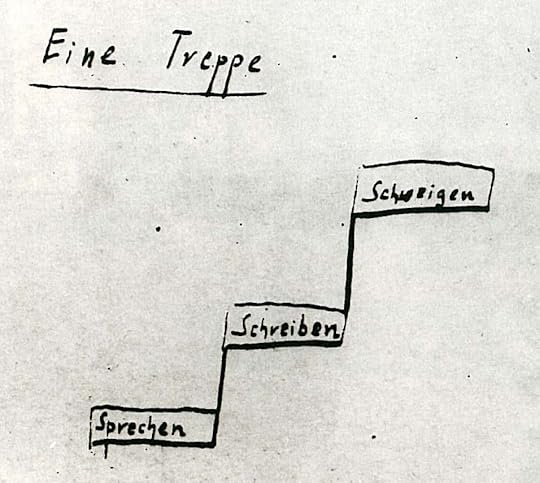
Prior to this, during one of his stays in Switzerland, he fell in love with Dr. Hedwig Müller, an internist based in Zürich. She would be the last love of his life. They had a long-distance relationship, meeting occasionally in Switzerland, on the French Riviera and in Sweden. Briefe aus dem schweigen (Letters from the Silence) is a collection of correspondence Tucholsky wrote to Müller in the last three years of his life. (Interestingly, the letters between them went on a postal route that went directly through Germany.) The title is based on a famous note he wrote shortly before he died:

“description"/

The three ascending steps—speaking, writing, silence—fed the conventional wisdom that Tucholsky committed suicide by overdosing on sleeping pills on December 21, 1935. But as his biographer speculates, it is just as likely that Tucholsky accidentally did so because he had chronic health problems—a consistent topic in his letters—and had long needed medications to help him sleep. Reading these letters makes his thesis more plausible. He was certainly in a state of despair, writing in February 1934, “…I’m not living right now, haven’t for three years” (“…ich lebe doch zur Zeit gar nicht, schon drei Jahre nicht.”). He had nagging health problems, lost his writing platform and profession, lived in exile in a country that often frustrated him, and despaired about the state of the world during the ascendancy of fascism.

For a compulsive writer with so many voices, it must have been torture not to express himself in public. His one great joy was his deep love in for Nuuna, the pet name he gave Müller. He still found humor in daily life and was making daily efforts to adjust to his new world. His last letter to his beloved Nuuna, written four days before his death, does not conjure up a picture of one who either wanted or was prepared to die.

Tucholsky tried hard to adjust to Swedish life, taking as many as six hours per day to learn the language. His keen observational gift found humor in their culture. While in the hospital for a sinus operation, he noted their deep and isolated their protestantism when the nurses asked him if Catholics believed in Jesus. The stereotypical Swedish frugality and stoicism highlighted a story he shared with Nuuna:
One of your most famous colleagues in Stockholm saw an old farmer’s wife, whose life he saved. (Those kind of doctors do exist.) And after she had a very difficult and dangerous operation she asked how much she owed him, she would be very thankful to know. ‘Well, for you I’ll do it 75.’ And she said, very seriously, ‘Let’s say a whole Crown.’—and really laid down one Crown, and the man took took it politely. Whatta guy.”

(Bei einem Deiner berühmtesten Kollegen in Stockholm ist eine alte Bauersfrau gewesen, der er das Leben gerettet hat. (Es gibt auch solche Ärzte.) Und dann hat sie nach der sehr schwierigen und gefährlichen Operation gefragt, was sie ihm denn schuldig sei, sie sei ihm doch so dankbar. Es war ein ganz altes Frauchen, und da hat der Mann gesagt: ‘Na, also für Sie mache ich das für 75.’ Und da hat sie ganz ernst gesagt: ‘Sagen wir eine ganze Krone.’—und hat wirklich eine Krone hingelegt, und der Mann hat sie auch brav genommen. So jenner.)
He followed Swedish domestic politics closely and recognized similarities with Weimar Germany, reviving old frustrations: “…how should I deal with so much cowardice and timidity?” (“…wie soll ich mit so viel Feigheit und Ängstlichkeit behandeln?”) Although led by a governing coalition of Social Democrats, they acted in fear of a rising tide of fascist sympathy as he noted, “They’ll find the 100,000 needed to send 2-3 trouble makers to Parliament and then it begins.” (“Die 100,000, die nötig sind, um 2-3 Radaumacher ins Parlament zu entsenden, werden sich schon finden, und dann geht es los.”) Nor did he have much hope for the future. “I believe, as I always have, that democrats will continue to be the weakest with their pathetic methods and their secret sympathy for fascism.” (“Ich glaube nach wie vor, daß die Demokratien mit ihren armseligen Methoden und ihrer heimlichen Sympathie für den Faschismus die schwächeren blieben werden.”) For him “the idea of democratic freedom is dying here, here just like everywhere else. It isn’t being rejected, it just doesn’t interest anyone anymore. Bet on in it, it will fall.” (“die Idee der demokratischen Freiheit ist hier im Absterben, hier wie anderswo. Sie wird nicht abgelehnt, sie interessiert nich mehr. Tipp an, sie fällt.”) He was most critical of Sweden’s policies for political exiles, which did not allow him to earn a living and threw up many legal roadblocks to finalize, which in their totality were “impudent, expensive, and difficult” (“frech, teuer und umständlich”).

The messy details of a national policy of neutrality were also mirrored in Switzerland, which he followed closely because of his Nuuna. He did not settle there because he was convinced Germany would not respect Switzerland’s neutrality, especially after the Anschluß of Austria. Swiss neutrality hid from the outside world a large contingent of support of fascism, even as many Nazis hid their money in Swiss banks. He was upset, for example, when 56,000 Swiss citizens supported the creation of a referendum to outlaw freemasons. It ultimately lost by a vote of 515,000 to 234,000. Tucholsky linked his views about the two nations with his typical dark humor: “That the communists lit up the Reichstag, only the Swiss envoy believes that. Today that must be changed to: the Swedish envoy.” (“Daß die Kommunisten den Reichstag angezündet haben, das glaubt ja nur noch der schweizerische Gesandte. Man müßte das heute ändern in: die schwedische Gesandte.”)

He was also upset with how people and nations responded to Nazi Germany. Forgetting the fact that he had means and no family obligations, his view that “He who, after January 1, 1935, is still in Germany is not decent Jew,” (“Wer nach dem 1. Januar 1935 noch in Deutschland ist, ist kein anständiger Jude”) seems a bit harsh and unrealistic. The ways the nations responded to Hitler baffled him as well, “They are not strong—the others are only weak.” (“Stark sind sie nicht—die andern sind nur schwach.”) But most of his venom was reserved for England:
England does everything to let the next war fester like a boil rather than to cut it immediately off. And they do so surely not out of evil, but because they think differently than those they are thinking about—they are not Europeans, they are the ruin of Europe. It is not possible to discuss with them—it’s a different part of the world. I think German foreign policy is excellent. They whistle and the others march.

(England tut alles, um den nächsten Krieg wie ein Geschwür reifen zu lassen, statt sofort zu schneiden. Und sie tun das bestimmt nicht aus Bosheit, sondern weil sie anders denken as die, für die sie denken—sie sind kein Europäer, sie sind das Verderben Europas. Es ist mit ihnen keine Discussion möglich—das ist ein anderer Erdteil. Ich finde die deutsche Außenpolitik ausgezeichnet. Sie pfeift, und die andern marschieren.)
One of his few pragmatic thoughts was, “How good it is that Hindenburg is still alive.”

Two issues that constantly came up in his letters were his reading and his concern for Carl von Ossietzky, who was imprisoned under brutal conditions by the Nazis. Tucholsky was particularly enamored with the French poet and author Charles Péguy, who died on front in 1914. “A prophet,” according to Tucholsky. “The man speaks—30 years ago—our language, has our ideas, understands everything from its deepest meaning, and there are things about Jews (Dreyfus), I will bring it to you…I haven’t had such a literary experience since Schopenhauer, with whom the man is in now way comparable.” (“Der Mann spricht—vor 30 Jahren—unsere Sprache, hat unsere Vorstellungen, versteht alles von tief unten her, und da stehen Sachen über Juden (Dreyfus), ich werde es Dir mitbringen…Seit Schopenhauer, mit dem der Mann keinesfalls zu vergleichen ist, hab ich solch ein literarisches Erlebnis nicht gehabt.”) He was also consumed with Tolstoy’s War and Peace (“a jewel”) and Anna Karenina, Mauriac (a 1952 Nobel laureate), and Simenon. Tucholsky begrudgingly admired Kleist while hating his message on patriotism. And he ventured to read Kierkegaard in Swedish translation as his language skills improved.

But it was with Knut Hamsun that Tucholsky was most obsessed. First because of his writing. When Tucholsky read the German translation of The Road Leads On, he could not contain himself, “It is a singular delicacy. I spent the whole night reading it—it is unbelievable how someone with 75 years can pull this off. (And Thomas Mann stole from him!) it is heavenly.” (“Es ist eine einzige Köstlichkeit. Ich habe die ganze Nacht darin geläsen—es ist aber unglaublich, wie einer das mit 75 Jahren fertig bringen kann. (Und der Thomas Mann hat bei ihm gestohlen!) Es ist himmlisch.”) As he later wrote Nuuna, “I order you to cry over the new Hamsun.” (“…befehle Dir über dem neuen Hamsun zu weinen.”)

Despite his love for Hamsun’s writing, he could not reconcile it with the man, especially when Hamsun openly opposed the campaign to award Ossietzky the Nobel Prize. After reading a biography of Hamsun, Tucholsky concludes, “The man is likely not even human, rather a troll or something like that.” (“Der Mann ist wahrscheinlich überhaupt kein Mensch, sondern ein Troll oder so etwas.”) On July 1, 1935, Tucholsky wrote Nuuna about his fears for Ossietzky’s life (who they named Johann in case the Nazi censors read their letters): “The news about Johann sound so devastating. If he can only make it through this. They are doing everything so that he won’t.” (“Die Nachrichten über Johann lauten ja niederschmetternd, Du hast das vielleicht gelesen. Wenn er es nur durchsteht! Sie tun alles, damit er nicht durchsteht.”) This only intensified his his growing hate for Hamsun as he noted, “…but to write agains him, he who can’t even defend himself—that is a disgrace.” (“…aber gegen den zu schreiben, der sich nicht einmal wehren kann—das ist eine Schweinerei.”) Tucholsky even took down his former literary hero’s photograph from his wall as he concluded, “Hamsun seems to be behaving like a dumb boy…It is quite terrible and for me, an evil disappointment.” (“Hamsun scheint sich also zu benehmen wie ein dummer Junge…Es ist ganz schrecklich und mir wirklich eine böse Enttäuschung.”) He presciently saw how it would affect Hamsun’s legacy: “It will be a damned few, with time, who stay with him.” (“Es werden verdammt wenige, mit der Zeit, die bei einem bleiben.”)

Tucholsky had a vision and gift that outlived him. It is needed as much today as it was during his lifetime. Just as he could see how Hamsun was ruining his standing in history, he critiqued others just as clearly. He foresaw the damage that French politician Pierre Laval was doing to his nation; it was as though he foresaw Laval’s role in Vichy France and his execution in 1945. His observation “Fatherland, Flag Land…that never counts for the other side” (“Vaterland, Fahne, Boden…das gilt nie für die andere Seite”) foresaw how extremists of the right would consistently appropriate shared concepts for slanted political gain. Some things never change. Although these letters were never meant for publication, for students of Tucholsky they are an essential insight into a complex, gifted writer who wrote, to quote Hannah Arendt’s biographer, “for love of the world.” One can only speculate about how much he could have taught us had he lived through and survived the Thousand Year Reich.
Displaying 1 of 1 review