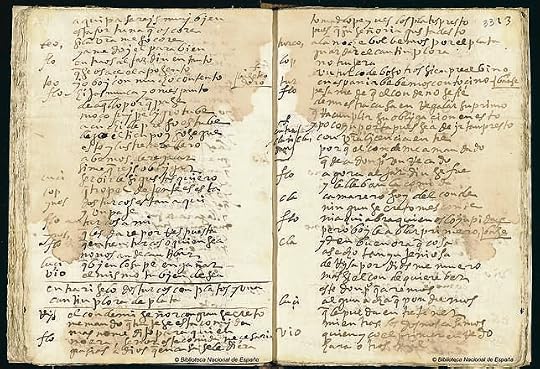
La comedia de Lope de Vega Mujeres y criados, que se creía perdida, fue descubierta no hace mucho en un manuscrito de la Biblioteca Nacional de Madrid por el profesor Alejandro García-Reidy. Habría sido escrita entre 1612 y 1613, ya que aparece incluida por primera vez dentro del catálogo de las obras de Lope en la edición de El peregrino en su patria, Madrid, 1618, sin que aparezca en la lista de anteriores ediciones de El peregrino…, ni en la de Barcelona de 1605, ni en la de Bruselas de 1608. La transcripción de dicho manuscrito en esta edición intenta poner al alcance de los lectores por primera vez una comedia que no solo permanecía manuscrita, sino perdida, con el deseo de que su trama, arquitectura, versificación y calidad literaria sean apreciadas por un público general. Su tema principal son las relaciones amorosas que se establecen entre miembros de distintas capas sociales en una sociedad estamental como la de las primeras décadas del siglo XVII, y cómo los celos surgidos dentro de estas relaciones hacen avanzar una trama, en la que las mujeres llevan la iniciativa, y cuyas artificiosas invenciones producen situaciones de gran comicidad. El palacio de un noble, la casa de un hombre económicamente acomodado y un espacio campestre dentro de la propia ciudad, conforman el entorno urbano en el que se desarrolla la obra, un Madrid vivo del que se dan referencias concretas: la calle del Pez, el Prado y la calle Mayor.
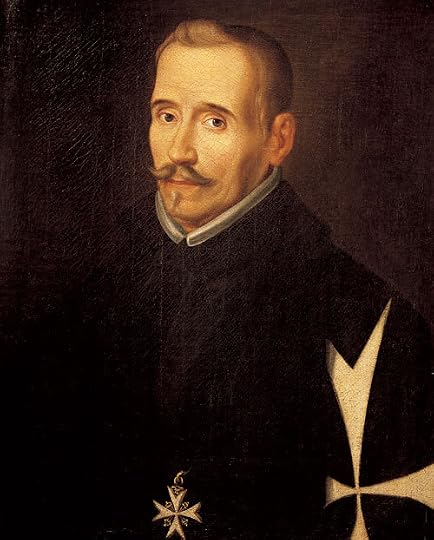
Lope de Vega was a Spanish Baroque playwright and poet. His reputation in the world of Spanish letters is second only to that of Cervantes, while the sheer volume of his literary output is unequaled: he is estimated to have written up to 1,500 three-act plays – of which some 425 have survived until the modern day – together with a plethora of shorter dramatic and poetic works.
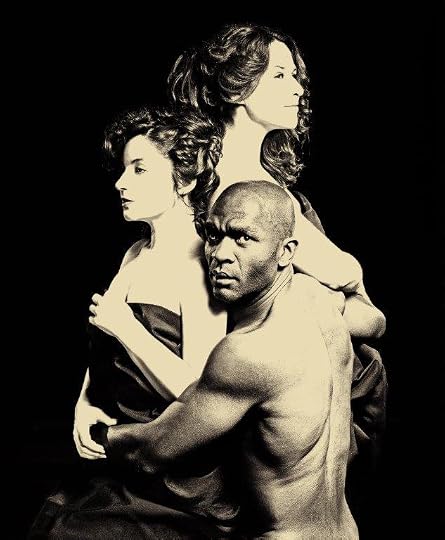
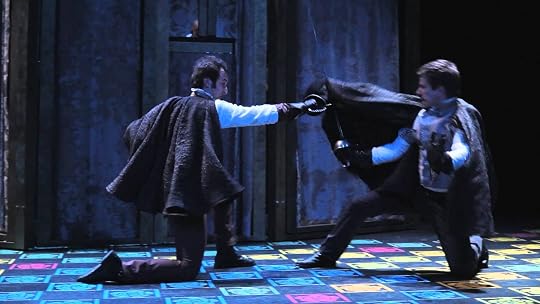
I have recently attended a performance, and have read the play of this ‘new’ play by Félix Lope de Vega (1562-1635). Just last year was it announced that a lost manuscript with a complete play by Lope, Women and Servants had been found in the Biblioteca Nacional in Madrid.
Belardo, a pseudonym often used by Lope, signs it. But it has taken a couple of years for scholars to certify its authorship. It is written out in one single hand, not Lope’s, but we have a database of 17C copyists. We also have Lope’s own list of some of his plays, and one titled Women & Servants was there.
Lope de Vega was quite a character. He was outstandingly prolific, which earned him several nicknames, such as ‘Monster of Nature’. He wrote prose, poetry and theatre. Tons of ink. Now, even if it is his plays that are most often praised, his lyrical ability pervades them.
As one of the several playwrights of the Spanish Golden Age, he contributed to a huge production of entertainment for the stage. It is said that the total number of works was about four times that of Elizabethan drama. This should not surprise us since there was also a great disparity in the population of the two countries at that time.
Lope changed Spanish drama. In his treatise from 1602, New art in composing plays for our timesArte nuevo de hacer comedias, he formulated his own concoction. For a start, the word ‘comedia’ included both tragedies and comedies. He also broke away from the Aristotelian three unities. He defended that it was more effective to mix more than one plot. Several locations were used in the play and the extension of time was also quite free. He excelled at twisting his intrigues to confuse and surprise his audience. Common themes were love, jealousy and disguised identities and simultaneous and parallel scenes were his artifice. He liked to mix: tones, with both tragic and comic elements; sub-genres, such as cloak and dagger (capa y espada) and of manners (costumbrista); social classes (the comedy at hand); and sources (Boccaccio, Homer, Tasso, Ariosto).
Lope was got very close to women, which must have given him some happiness but also a fair amount of trouble. He was exiled from the City of the Court (Madrid – villa de la corte) for his entanglements. He also identified women as his main audience and figure prominently in his plots. Like many of his other compatriot writers, he was a soldier too. So had been Jorge Manrique (I discussed this in Coplas por la muerte de su padre) and was Cervantes. If the latter damaged his arm in the 'Battle of Lepanto' (1571), Lope survived the severely defeated Armada Invencible (1588).
That he was outstanding his parents, of humble origin, must have felt from early on. He was a child prodigy, learning and translating Latin at an early age. And ironically, his exceptional abilities, for he now ranks as one of the most prolific writers, can be used against him.
The finding of this new play may arouse a condescending response, since several hundred have already survived. But I think that this response misses the point. Had Mozart lived twice his lifespan and continued composing at the same rate, a hypothetically newly found keyboard sonata from the middle period would not have changed our opinion about his music. The sonata would presumably have a similar structure, with the expected play of harmonies from tonic to dominant, and a rich combination of Alberti bases and melodic runs, as the many others. The new find would have however strengthened the identification of what is idiosyncratic about a Mozart sonata and added to our perception of his creative powers.
That his creative abilities were admired rather than derided, is proven to us by Cervantes’ reaction. Indeed, we could even say that may be it was, indirectly, thanks to Lope's overwhelming talent that we have Don Quijote de La Mancha. It is said that when Cervantes felt completely outdone by his arch-rival in the theatres, that he decided to focus on the genre of the novel.
Mujeres y Criados is a lot of fun. It is a good sample of the characteristics defended by Lope of what a ‘comedia’ should be. The plot involves the love stories of three women, but it is the two sisters who call the shots. For a start they reject their suitors, a Duke and a wealthy Hidalgo. Instead they chose two servants. Granted these are not just any servants. The hierarchy of the various levels of attendants was complex, for one is a ‘camarero’ (valet) and one a ‘secretario’. But still. The social message is plainly there.
Written in consonant verse of eight syllables, the pace is suitable for humorous situations, with ingenious allusions to contemporary issues, and for moments of lyricism. One speech emerges as a lovely love sonnet. A true literary cameo. Lope also has fun mocking other writers, as when describing the pretty teeth of a lady for being ‘as equal as the sonnets of Garcilaso’ (1539-1616 - Garcilaso de la Vega). But he expresses reverence for the novels of the Italian Giovanni Baptista Giraldo Cinthio (1504-1573).
If during the performance I enjoyed the magic, letting the actors and the staging lead and amuse me, in my read I found myself underlining all the historical, literary and artistic allusions. Learning which were the common cultural references has been one of the great perks of this play for me.
Although this is certainly not the first, I am glad there are so many other plays by Lope I can look forward to.
Fantástica obra, divertida de principio a fin, y muy bien tejido todo el enredo entre los personajes. Destaca especialmente el diálogo entre don Pedro y el conde en el segundo acto, y en general toda la confusión con los Pedros. Tampoco tiene desperdicio la trama secundaria, con Inés.
Algo que me daba miedo era el lenguaje: en verso y del Siglo de Oro. Sin embargo, me ha resultado bastante sencillo, se lee muy bien. Y, por una vez, no he tenido que estar mirando continuamente quién era cada personaje. Que es un detalle colateral, pero permite meterse más en la historia.
Last year I was in Madrid and wanted to go to this play but did not allow it. So I picked up the book and tried to read it but it was tough. Kalliope had done a great review as well so I was disappointed to give it a rest. Then last weekend I attended a Shakespeare play, Much ado about nothing, and weirdly I recalled this play. Why not give it a second chance with the words on Bill Shakespeare fresh in my mind?
Well it worked! I feel that Shakespeare is better listened to than reading it. Don't get me wrong, I love the Bard. In fact one of my favourite books read way back in high school were the big name plays, Macbeth and Romeo and Juliet. But like "Much ado about Nothing", I really love his love comedies.
And so we have "Mujeres y criados" (Women and Menservants), a truly fun "love romp" written and presented in Barcelona, 8 December 1631. Lope de Vega was one of Spain's other great writers, judging by his statues in Madrid and the popularity of his museum-house. He wrote this play just 15 years after the death of Shakespeare and Cervantes.
He was a man of his time and this comedy is a hoot. You have the count eyeing one of the women, his two courtier sidekicks, Claridan and Teodoro, also eyeing marriage prospects in the two sisters, Luciana and Violante, who play coy and hard to get, don Pedro, working on a marriage to Violante, two fathers who give their piece of mind views, assorted court people and of course, a dynamic duo of Lope and Inés, house servants. The plot is simple - love and decption and how it rolls out, one needs to read. The servants, like in Shakespeare, always have a way with their words and often appearing better than the other characters.
A word of advice, read the words out loud, the language rolls off your tongue, and oh yeah, keep Shakespeare in mind (or maybe when reading Shakespear, keep Lope de Vega in mind). A fun entertainment and would give it a 4.5.
Mujeres y criados" de Lope de Vega nos sumerge en la intrincada comedia del Siglo de Oro español. Esta obra, escrita en el siglo XVII, destaca por su aguda observación de la sociedad y sus ingeniosos diálogos. El dramaturgo, maestro del teatro barroco, presenta una trama enredada de celos, engaños y equívocos amorosos, típicos de la época. Lope de Vega despliega un repertorio de personajes que representan las complejidades de las relaciones sociales y amorosas. Las mujeres de la obra, fuertes y astutas, desafían las convenciones de la época, mientras que los criados, con su ingenio y lealtad, confieren un toque cómico a la trama. Los diálogos ágiles y el ritmo vibrante mantienen a los lectores cautivos, explorando temas universales como el amor y la intriga. A través de divertidos enredos, Lope de Vega revela las contradicciones y matices de la naturaleza humana. "Mujeres y criados" sigue siendo un tesoro literario que ofrece una ventana a la riqueza del teatro clásico español, invitando a los lectores a sumergirse en un mundo de pasiones y risas, donde la maestría de Lope de Vega perdura a lo largo del tiempo.