Note: The decision was made to consolidate all Disney publications under the name Walt Disney Company. This profile is for Walt Disney, the characters he created, and the company he founded. Any questions, please ask in the Librarian's Group.
Walter Elias “Walt” Disney (December 5, 1901 – December 15, 1966) was an American film producer, director, screenwriter, voice actor, animator, entrepreneur, entertainer, international icon, and philanthropist. Disney is famous for his influence in the field of entertainment during the 20th century. As the co-founder (with his brother Roy O. Disney) of Walt Disney Productions, Disney became one of the best-known motion picture producers in the world. The corporation he co-founded, now known as The Walt Disney Company, today has annual revenues of approximately U.S. $35 billion.
Disney is particularly noted for being a film producer and a popular showman, as well as an innovator in animation and theme park design. He and his staff created some of the world's most famous fictional characters including Mickey Mouse, a character for which Disney himself was the original voice. He has been awarded four honorary Academy Awards and has won twenty-two competitive Academy Awards out of fifty-nine nominations, including a record four in one year, giving him more awards and nominations than any other individual. He also won seven Emmy Awards. He is the namesake for Disneyland and Walt Disney World Resort theme parks in the United States, as well as the international resorts Tokyo Disney, Disneyland Paris, and Disneyland Hong Kong.
Disney died of lung cancer in Burbank, California, on December 15, 1966. The following year, construction began on Walt Disney World Resort in Florida. His brother Roy Disney inaugurated the Magic Kingdom on October 1, 1971.
The Walt Disney Company (NYSE: DIS) (commonly referred to as Disney) is the largest media and entertainment conglomerate in the world in terms of revenue. Founded on October 16, 1923, by brothers Walt Disney and Roy Disney as the Disney Brothers Cartoon Studio, the company was reincorporated as Walt Disney Productions in 1929. Walt Disney Productions established itself as a leader in the American animation industry before diversifying into live-action film production, television, and travel. Taking on its current name in 1986, The Walt Disney Company expanded its existing operations and also started divisions focused upon theatre, radio, publishing, and online media. In addition, it has created new divisions of the company in order to market more mature content than it typically associates with its flagship family-oriented brands.
The company is best known for the products of its film studio, the Walt Disney Motion Pictures Group, today one of the largest and best-known studios in Hollywood. Disney also owns and operates the ABC broadcast television network; cable television networks such as Disney Channel, ESPN, and ABC Family; publishing, merchandising, and theatre divisions; and owns and licenses 11 theme parks around the world. On January 23, 2006, it was announced that Disney would purchase Pixar in an all-stock transaction worth $7.4 billion. The deal was finalized on May 5. On December 31, 2009, Disney Company acquired the Marvel Entertainment, Inc. for $4.24 billion. The company has been a component of the Dow Jones Industrial Average since May 6, 1991. An early and well-known cartoon creation of the company, Mickey Mouse, is the official mascot of The Walt Disney Company.
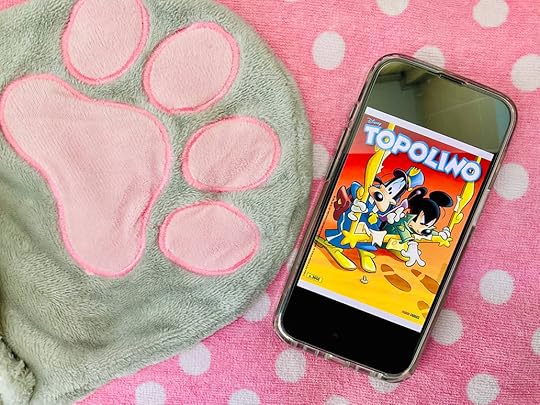
Sono arrivata alla fine di questo numero a stento e con grande fatica: infatti ci ho messo quasi due settimane per leggerlo, ma proprio era difficile da mandar giù.
La vignetta iniziale vede Topolino con dei dentoni spaventosi in un sorriso forzato e con una battuta ridicola che dovrebbe fare ridere. E non aggiungo altro.
Ci sono quattro storie stiracchiate: due cercano di essere abbastanza normali ma falliscono nella trama, sempre banale e scontata. Le altre due… una parodia e uno stravolgimento: diciamo che peggio di così non poteva andare.
1- TOPOLINO E L’ARTE DEL MISTERO – SOTTO COPERTURA Storia di: Matteo Venerus Disegni di: Carlo Limido
Fiumi di parole in tantissime vignette che narrano una vicenda confusionaria e, come sempre, scontata. Topolino lavora sotto copertura per smascherare un trafficante d’armi e poi viene fuori che anche il collaboratore era invischiato, come sempre. Una confusione: vignette su vignette di discorsi e dialoghi, una noia… Sembrava la copia di un poliziesco mal riuscito da tutti dimenticato.
2- GALAXY QUACK – LA DISFIDA DEI PACCHI Storia di: Giovanni Barbieri Disegni di: Giovanni Preziosi
Paperino in versione fantascientifica consegna pacchi nello spazio e cerca di vincere una gara con un suo collega. Alla fine non ce la fa per un errore del suo amico robot. La storia non si presenta male ma resta comunque un po’ sempliciotta. I disegni sono carini, ma ho notato un errore in una delle ultime vignette: manca la profondità del pacco.
3- I TRE FORCHETTIERI – 2 Storia di: Sergio Badino Disegni di: Alessandro Perina
Seconda e, per fortuna, ultima parte. Terribile come la prima. Un mix insopportabile di parodie e battute forzate continue, con giochi di parole che cercano di dimostrare una certa abilità ma che invece risultano del tutto fuori luogo. Vignette confusionarie piene di personaggi che parlano e fanno sempre la stessa cosa in una storia noiosa di cui non avevamo bisogno, perlomeno qui su Topolino. Come se non bastasse, l’idea di avere Ciccio nei panni di D’Artagnan mi sembra del tutto sbagliata. Come sempre, Paperone fa il re… sempre la solita roba insulsa e illeggibile.
4- ZIO PAPERONE, IL PAPERO PIÙ POTENTE DELLA TERRA – IL TESORO DI UNA VITA Storia di: Jason Aaron Disegni di: Lorenzo Pastrovicchio, Alessandro Pastrovicchio, Andrea Freccero
Altra storia illeggibile, ridicola e fuori luogo. Non si capisce perché questi paperi debbano diventare dei supereroi in una trama confusionaria e super intricata che cerca di essere oscura e invece resta soporifera. Tra l’altro questa è quella storia che deve essere messa capovolta in fondo, cosicché la retrocopertina diventa la copertina della storia, con il risultato che la versione digitale è un vero disastro. Nella versione digitale, ragazzi, mettetela normale: non mi importa che in fondo ci sia un’altra copertina. Già uno la legge affaticato, poi non sa neanche come tenere il dispositivo perché si rigira tutto… Patetico.