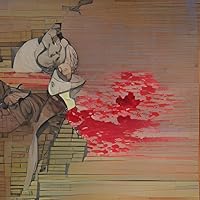
Have you ever questioned whether your very existence is a grotesque experiment gone wrong—a malfunction in a kind of divine laboratory, your consciousness a mere spore adrift in the fallout of a cosmic accident that the manmade gods themselves are struggling to erase?
Time has no beginning. No end. It exists only on demand.
It flows with space, infinite and indifferent. In Amphitheater of the Gods, the fragile illusion of reality is shattered. This is not a story of salvation—but of revelation—a metaphysical and philosophical journey through the quantum architecture of being itself. Through the haunted eyes of Peter, you’ll witness a theatre of horrors where particle conglomerates—disguised as plants, animals, and humans—perform unknowingly in an eternal tournament for the entertainment of transcendent, godlike beings. Behind the veil, the mysterious Switchers—skycleaners of a contaminated world cell—initiate a brutal reset of a universe even the gods wish to abandon. Within these pages, you’ll uncover revelations that shake the foundations of science fiction, religion, and consciousness intercosmic scandal of why the Big Bang was not a beginning, but the aftermath of a hypergau—a meltdown that shattered multiversal symmetryThe infinite cycle of death feeding life, life feeding an unending metamorphosis reactorThe twilight of divine beings who consume human suffering from cosmic opera boxesThe emergence of consciousness from mineral substrate, imprisoned in the evolutionary shell of Homo BacterThe non-local dream impulses that leak from the quantum fabric of alternate timelinesThe fate of a species desperately trying to escape its own cursed designThis is a book for readers who crave more than surface-level science fiction. It’s a metaphysical expedition for those radical new lens on the illusion of free will and the pre-scripted nature of existenceInsight into the quantum mechanics of reality, multiverse theory, and how unseen forces influence our choicesLiberation from the comforting lie that consciousness is a blessingA deeper understanding of religion as a cosmic control mechanismRecognition of repeating life patterns revealing your role in this Amphitheater of crueltyThe ability to perceive the hidden horror beneath the beauty of the natural worldAn awakening to the terrifying comedy that is human existenceAmphitheater of the Gods is for the thinkers, the questioners, the ones who feel that something is fundamentally wrong with reality. It is for those unafraid to confront disturbing truths. For those who’ve stared into the abyss—and sensed that it was not only staring back, but studying them. This visionary, genre-defying novel offers no false hope—only the piercing clarity of cosmic truth. Its pages expose a deterministic universe masquerading as chaos, where every being plays a role in a tragedy scripted before the dawn of time. And yet, in seeing the architecture of the lie… there may lie a form of freedom—the freedom that comes from finally seeing the bars of your cage.
A bold, uncompromising read that rewards patient, introspective readers. It’s the kind of book that changes how you look at everyday life, that is, the cycle of eating, aging, and striving suddenly feels both tragic and absurdly theatrical. I’d recommend it highly to anyone who enjoys thought-provoking blends of existentialism, cosmic horror, and philosophy
An exhilarating exploration of mythology, existence, and the consequences of divine intervention. Max Zwölf brilliantly navigates the complexities of fate and free will.
The characters are well-developed, each carrying their own burdens and motivations, which adds depth to the already rich tapestry of the story.
The world-building is nothing short of spectacular. Zwölf paints vivid images of reality, making the reader feel as if they are spectators in this grand spectacle. The contrasting realities presented within the narrative serve as a haunting metaphor for the fragility of existence.
The pacing is generally effective. The times when Zwölf allows the story to breathe give space for character development and philosophical reflection, adding layers to the reading experience.
Overall, a remarkable novel, combining compelling storytelling with a unique blend of myth and existential inquiry. I would highly recommend it to anyone looking for a thought-provoking read that combines action, philosophy, and rich narrative styles.
This book did not feel like a normal novel to me. It felt like I accidentally opened a philosophical fever dream, a cosmic horror documentary, and an existential crisis all at once, and somehow I mean that as a compliment.
From the very beginning, Amphitheater of the Gods throws you into this massive, almost overwhelming universe where existence itself feels like a staged experiment. The writing is dense, intense, and unapologetically ambitious. It’s the kind of book that constantly makes you pause after a paragraph just to process what you actually read.
What fascinated me most was how brutally the book examines humanity. Not in a gentle, hopeful way either. It completely strips people down to instinct, violence, suffering, ego, religion, survival, and the endless cycle of destruction disguised as meaning. The author doesn’t try to comfort the reader. If anything, the book forces you to sit in discomfort and stare directly at the ugliness of existence.
The sections following Peter especially stayed in my head for hours. His observations about poverty, religion, cruelty, and society felt horrifyingly raw because they weren’t written to be “pleasant.” They were written to provoke. Some scenes genuinely made me feel unsettled in the best way possible because they force you to confront things most people try not to think about.
What also stood out to me was the atmosphere. Everything feels cosmic, surreal, and strangely cinematic. The imagery throughout the book is vivid in this almost apocalyptic way, gods watching suffering like spectators, humanity trapped inside a giant experiment, nature functioning as both beautiful and merciless. There’s this constant sense of doom hanging over every chapter that makes the entire reading experience feel hypnotic.
I honestly don’t think this is a book for everyone, and that’s exactly why it works. If you go into this expecting a traditional fast-paced plot, you’ll probably struggle. This book is much more about ideas, symbolism, existentialism, philosophy, religion, cosmic cycles, and psychological discomfort than straightforward storytelling. It demands patience and attention from the reader, but if you let yourself fully sink into it, it becomes incredibly thought-provoking.
The writing itself feels intentionally relentless, almost like the author wants the reader to feel mentally cornered by the weight of the ideas being explored. And weirdly? That made the experience even more immersive for me.
This is one of those books that you don’t really “finish.” It lingers afterward. You keep thinking about certain passages, certain images, certain arguments long after you close the book.
Dark, unsettling, intelligent, and completely uncompromising. Definitely one of the most unique things I’ve read in a while.
Amphitheater of the Gods: Where Gods Applaud and Existence Suffers—A Tournament of Doomed Realities by Max Zwölf is a dense, high-concept piece of philosophical science fiction that feels less like a traditional novel and more like a visceral, nihilistic meditation on the nature of reality.
1. Character Quality
The protagonist, Peter, is deliberately constructed to be "un-heroic." In many sci-fi epics, the lead character is the one who breaks the system; in Zwölf’s world, Peter is the one who simply witnesses the system’s cruelty. Relatability through Flaws: Peter is haunted and deeply flawed. He isn’t seeking to save the world; he is a traveler unwillingly thrust into a cosmic experiment. This makes him a grounded anchor for the reader.
The Passive Protagonist: Some readers might find Peter frustrating because he lacks traditional "agency." However, in a story about the illusion of free will, his passivity is a brilliant thematic choice. He represents the human condition—struggling to find meaning in a world where the script may already be written.
2. Plot Quality:
The plot does not follow a standard three-act structure. Instead, it operates through a series of "snapshots"—ordinary life events that are recontextualized as part of a divine, cruel tournament. Blending the Mundane with the Cosmic: The book’s greatest strength is how it takes real-world tragedies (like the 2004 tsunami) and reimagines them as the "entertainment" of the gods. This bridges the gap between high-concept philosophy and visceral human emotion.
Pacing and Complexity: The narrative is non-linear and "genre-defying." While this creates a rich, atmospheric experience, it can be disorienting. It is a "cerebral" plot; if you are looking for a fast-paced space opera, this isn’t it. It’s a slow-burn revelation of a "deterministic universe masquerading as chaos."
Max Zwölf’s writing style is poetic, dark, and almost academic in its precision. He doesn't offer "false hope" or a conventional happy ending. Instead, he provides a "disturbing clarity." Philosophical Weight: The book explores the idea that suffering is built into the architecture of existence—a "recycling system" for the gods' amusement. It’s a heavy, unsettling thesis that lingers long after you finish. The "Theater" Metaphor: The central metaphor—existence as an amphitheater where we are the performers and the gods are the audience—is executed with chilling consistency.
Amphitheater of the Gods is a rare find because it refuses to apologize for its bleakness. Most modern sci-fi tries to find a "human spark" that overcomes the cold universe; Zwölf suggests that the spark itself might just be part of the show.
Amphitheater of the Gods: Where Gods Applaud and Existence Suffers is a two out of five stars for me for the following reasons. It was written by AI and is really hard to follow. I feel like this could have been better written. There are a lot of M-dashes that make it really hard to concentrate on the reading. On one of the pages, I counted five, and other pages had a lot more, and they didn’t always make sense with where they were in the sentence. It has too many words in some areas and not enough explanation in other areas of the book. The beginning of the book is very science heavy, and it touches on religion in this book as well. It talks about Adolf Hitler quite a bit. This book just seems to be all over the place and is hard to follow sometimes. There are also quotes in this book, but it does not refer to who wrote the quotes. I am one who can read a book all the way through before starting another book; however, this book was really hard for me to be able to sit and read without stopping. I had to take breaks from it. This book took me just over 3 hours to read and I had to break it up over several days. I also had family and friends ask me about it as I was reading it and I was having a hard time talking to them about it, I just kept coming back to it was weirdly written. There are parts of it where the author paints a very good picture but then other times it is hard to picture what he is talking about. Also humans are referred to as “Homo Bactor” throughout the whole book, and it talks about sky robots and I think those are supposed to be satellites. All in all, I would not recommend this book personally but I do think there are parts of it where it is very thought-provoking.
This is a cerebral and imaginative work that fearlessly ventures beyond the typical conventions of the science fiction genre, offering a deep and unsettling exploration of reality, consciousness, and our place in the universe. The narrative eschews spaceships and laser battles for a far more compelling journey, one that challenges the reader to contemplate a grand, and at times, cruel experiment of existence. The author's writing is a major highlight, characterized by a dense, almost poetic style that elevates the story into a philosophical text.
The prose is captivating, drawing the reader into a fascinating and complex world of ideas that linger long after the final page is turned. While the concepts are intricate, the author masterfully maintains an engaging narrative. This book provides a dark and disturbing clarity rather than a conventional happy ending, a quality that is both powerful and strangely liberating. For readers who seek a thought-provoking, five-star experience that challenges and deeply impresses, this work is a highly recommended and refreshing entry in the genre.
I give this book a solid 7 out of 10. Reading from the beginning through the introduction, I had to re-read some parts because, either I got lost in the jargon and couldn't process what I was reading or was just plan confused. As I continued to read (not to spoil it too much), in my head I pictured everything happening as the humans being characters and, the God's themselves being just side character's. Being written as if the concept of religion is an actual being that wrote this play that we are performing in. Meanwhile, everything is being observed by a higher being just studying the struggles of God's and humanity, trying to understand our way of thinking. The ending suprised me the most, with the struggle and fight to have the faith be, "this is the way." Only, for it to ultimately be replaced by a newer version after destroying itself and those who follow. Good read but, technical in the since some of the book does get lost in thought process.
wow what a read! this book definitely pushed me out of my comfort zone when it came to reading, as the story and the writing were both so complex. you will definitely need a dictionary on hand for this read! the author has such an ability to write the most beautifully gut wrenching sentences it blew my mind. a lot of this reads like a scientific journal to me and while i did enjoy it in this book, it is not what i typically go for. the only reason it isn’t a five star from me, is that sometimes the sentences were a bit long and complex which made them hard to understand. no shade to the author, it is definitely just my brain that needs a little work.
This book hits hard. It mixes big ideas about the universe with real, painful life stuff. The message is about suffering and how that is built into the world. The writing is sharp, very dark and poetic. Sometimes it feels like a report and other times like a parable. It makes you stop and reflect basically at every page. Some parts feel too long without a clear reason, but I think it’s part of the appeal of the book.
this took me by surprise. it questions everything. our being our universe is result of a lab experiment gone wrong. and we are just players or mare pawns in the vast cosmos. the god like being are sitting somewhere and we are part of their play.
how did you feel?
this is just a plain view from this book. this book delves into complex things like birth of universe, cosmos and many more.
I was blown away by the idea. very thought provoking read.
This book isn’t what I would originally go for, but I am glad for the opportunity to read this.
Very very thought provoking, it questions every part of life, of the universe. Its complexities and simplicities, the physics, biology and chemistry, the history of it all, and the machinations involved with everything.
Wow. Genuinely a compelling read.
4.5 stars because it did stress my mind a bit, but worth it.
This book was a pleasant experience for my AuDHD brain. It's not a read for the average layman. But I must say I enjoyed experiencing the author wax philosophical on such subjects as time and space. Some of the descriptions and perspectives are also rather moving. Thought provoking. A good read for people who tend to look at the world/life more deeply than their peers...
Absolutely unique POV of the Universe, collective life of the mankind the life of each individual. Many until now unasked questions about the meaning of our existence and many unpleasant surprising, even shocking answers. Who are we? Why are we here? Deep, not easy to comprehend, definitely some genius madness included, but absolutely worth the reading! Exceptional!
Dark, unsettling, and absolutely mind bending. This book is not just science fiction. It’s a philosophical deep dive into the nature of reality, suffering, and control. Haunting imagery and bold ideas make it unforgettable. A must read for fans of cosmic horror and metaphysical story telling.
Ein fantastisches Buch, das die Konventionen eines Romans in postmoderner Manier klar überschreitet. Stilistisch auf höchstem Niveau, wird das höhere Prinzip des informatischen Universums abseits der konformen religiösen und physikalischen Warte betrachtet. In abwechselnd poetischem und explikativ-analysierendem Stil überraschen philosophische Betrachtungen der menschlichen Natur und des menschlichen Wesens, eng verknüpft mit harscher Religionskritik, den Leser und fordern sein Reflexionsvermögen heraus, ohne diesem eine bestimmte Ansicht als objektive Wahrheit aufzudrängen. Besonders auffallend und gelungen ist die Darstellung der Flora- und Faunawelt als komplexes Netzwerk, in welchem dem Menschen keinesfalls der Vorrang eingeräumt wird. Im Gegenteil, der Mensch erhält sogar eine besondere Gattungsbezeichnung. Geniale Satzkonstruktionen, bei denen das Hilfsverb schlichtweg weggelassen wird, verleihen dem Text zusätzlichen poetischen Klang. Urplötzlich tauchen verschachtelte Sätze auf, Stromschnellen im Lesefluss, die jedoch leicht zu überwinden sind. Zum Abschluss ein Satzbeispiel aus dem Text, wie nur selten in der Literatur zu finden: „Das alte Haus, bestehend aus: eins, zwei, drei, vier, insgesamt elf Räumen, von denen ein jeder auf unterschiedliche Weise unheimlich, lediglich das Wohnzimmer und sein Bett heimlich, war für ihn ein Geisterhaus.“