THREE ESSAYS THAT EXTEND HIS IDEAS FROM “PERSONAL KNOWLEDGE”
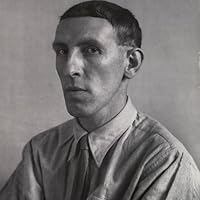
Michael Polanyi (1891-1976) was a Hungarian-British chemist and philosopher; he wrote other books such as 'Personal Knowledge: Towards a Post-Critical Philosophy,' 'The Tacit Dimension,' 'Knowing and Being,' 'The Logic of Liberty,' 'Science, Faith, and Society,' etc.
He wrote in the Preface to this book [which were the 1958 Lindsay Memorial Lectures given at the University College of North Staffordshire], “These lectures were intended to form an extension of the enquiry undertaken in my recently published volume on ‘Personal Knowledge.’ But since it proved impossible to proceed from the point reached in that book without first recapitulating the relevant parts of its argument, the first two lectures had to be used largely for this purpose. The whole series can accordingly be read as an introduction to ‘Personal Knowledge.’”
He says in the first lecture, “What is usually described as knowledge, as set out in written words or maps, or mathematical formulae, is only one kind of knowledge; while unformulated knowledge, such as we have of something we are in the act of doing, is another form of knowledge. If we call the first kind explicit knowledge, and the second, tacit knowledge, we may say that we always know tacitly that we are holding our explicit knowledge to be true. If, therefore, we are satisfied to hold a part of our knowledge tacitly, the vain pursuit of reflecting ever again on our own reflection no longer arises. The question is whether we can be satisfied with this… Tonight I shall try to transmit this conviction to you … that tacit knowing is in fact the dominant principle of all knowledge, and that its rejection would, therefore, automatically involve the rejection of any knowledge whatever.” (Pg.12-13)
He explains, “purely tacit operations of the mind are processes of understanding… the understanding of words and other symbols is also a tacit process. Words can convey information… but neither words nor symbols nor maps can be said to communicate an understanding of themselves. Though such statements will be made in a form which best induces an understanding of their message, the sender of the message will always have to rely for the comprehension of his message on the intelligence of the person addressed. Only by virtue of this act of comprehension, of this tacit contribution of his own, can the receiving person be said to acquire knowledge when he is presented with a statement.” (Pg. 21-22)
He states, “Though the intellectual superiority of man over the animal remains due to his use of symbols, this utilization itself… is now seen to be a tacit, a-critical process. It is a performance, like understanding or meaning something, which can be done only in our heads and not by operating with signs on paper. Our whole articulate equipment turns out to be merely a tool-box, a supremely effective instrument for deploying our inarticulate faculties.” (Pg. 25)
He argues, “All human knowledge is now seen to be shaped and sustained by the inarticulate mental faculties which we share with the animals. This view entails a decisive change in our ideal of knowledge. The participation of the knowing in shaping his knowledge, which had hitherto been tolerated only as a flaw… is now recognized as the true guide and master of our cognitive powers… The ideal of a knowledge embodied in strictly impersonal statements now appears self-contradictory, meaningless, a fit subject for ridicule. We must learn to accept as our ideal a knowledge that is manifestly personal. Such a position is obviously difficult; for we seem to define here as knowledge something that we could determine at will, as we think fit…
"I have argued that personal knowledge is fully determined, provided that it is pursued with unwavering universal intent. I have expounded the belief that the capacity of our minds to make contact with reality and the intellectual passion with impels us towards this contact will always suffice so to guide our personal judgment that it will achieve the full measure of truth that lies within the scope of our particular calling.” (Pg. 26-27)
In the second lecture, he says, “The theory of Personal Knowledge offers an interpretation of meaning. It says that no meaningful knowledge can be acquired, except by an act of comprehension which consists in merging the awareness of their joint significance. Such an act is necessarily personal, for it assimilates the particulars in question to our bodily equipment; we are aware of them only in terms of the things we are focally observing.” (Pg. 44)
He outlines, “First, I shall show that the two levels of personal knowledge, that of a comprehensive entity and that of its particulars... represent two different levels of reality; and second, that there obtains between two such levels a peculiar logical relationship, derived from the distinction between subsidiary and focal awareness… I shall proceed to erect on top of these a consecutively rising set of levels, right up to that of responsible human personhood. Within this framework it will appear possible by man to exercise a responsible choice, even though he admittedly remains rooted in lower forms of existence in which there is no room for such choices.” (Pg. 46)
He asserts, “a Laplacean Universal Mind would know little that means anything. For though it could admittedly advance from its knowledge of atomic configurations… it could never attain any knowledge of such truly meaningful objects as living beings and the things essentially related to the interests of living beings. The mathematical monster which was thought capable of reading off the future of all human endeavors from the atomic configuration of a primordially incandescent universe, appears actually restricted to a range of predictions that are of negligible interest to man.” (Pg. 49-50)
He concludes, “The mind is a comprehensive feature of man… A comprehensive entity is something else than its particulars known focally, in themselves. Behaviorism, which suggests that these particulars should be studied in themselves, is totally impracticable. First, because the particulars, if observed in themselves, would be meaningless; second, because they cannot be so observed at all, since they form parts of a physiognomy and are therefore unspecifiable in the stronger sense of being largely unknown; and third, because it is impossible to keep track, even roughly, of a man’s mental manifestations, except by reading them as pointers to the mind from which they originate. It is always the mind itself that we know primarily; any knowledge of its workings is derivative, vague and uncertain.” (Pg. 65)
He concludes, “In this light the historian will see every historical person as necessarily dependent for his effectiveness on accepting a given cultural medium an on grasping accidental opportunities that are never free of degrading temptations… Never will the historian admit that such circumstances can irresistibly determine a sane man’s deliberate actions. He will avoid then all three fallacies as follows: (1) the rationalist fallacy---by admitting the indispensable biological and cultural rootedness of al free actions; (2) the relativist fallacy, by acknowledging that each man has some measure of direct access to the standards of truth and must limit for their sake at some point his subjection to given circumstances, and (3) the determinist fallacy---by committing himself to a personal knowledge of the human mind as a seat of responsible action.” (Pg. 89) Later, he adds, “We have now arrived once more, by extrapolating the series of studies which led from physics to historiography, at the point where our possession of knowledge is seen to consist in an act of understanding and submission.” (Pg. 99)
This short book would make an excellent introduction to Polayni’s thought, or even as a “refresher” for someone who read Personal Knowledge some time ago.