Note: The decision was made to consolidate all Disney publications under the name Walt Disney Company. This profile is for Walt Disney, the characters he created, and the company he founded. Any questions, please ask in the Librarian's Group.
Walter Elias “Walt” Disney (December 5, 1901 – December 15, 1966) was an American film producer, director, screenwriter, voice actor, animator, entrepreneur, entertainer, international icon, and philanthropist. Disney is famous for his influence in the field of entertainment during the 20th century. As the co-founder (with his brother Roy O. Disney) of Walt Disney Productions, Disney became one of the best-known motion picture producers in the world. The corporation he co-founded, now known as The Walt Disney Company, today has annual revenues of approximately U.S. $35 billion.
Disney is particularly noted for being a film producer and a popular showman, as well as an innovator in animation and theme park design. He and his staff created some of the world's most famous fictional characters including Mickey Mouse, a character for which Disney himself was the original voice. He has been awarded four honorary Academy Awards and has won twenty-two competitive Academy Awards out of fifty-nine nominations, including a record four in one year, giving him more awards and nominations than any other individual. He also won seven Emmy Awards. He is the namesake for Disneyland and Walt Disney World Resort theme parks in the United States, as well as the international resorts Tokyo Disney, Disneyland Paris, and Disneyland Hong Kong.
Disney died of lung cancer in Burbank, California, on December 15, 1966. The following year, construction began on Walt Disney World Resort in Florida. His brother Roy Disney inaugurated the Magic Kingdom on October 1, 1971.
The Walt Disney Company (NYSE: DIS) (commonly referred to as Disney) is the largest media and entertainment conglomerate in the world in terms of revenue. Founded on October 16, 1923, by brothers Walt Disney and Roy Disney as the Disney Brothers Cartoon Studio, the company was reincorporated as Walt Disney Productions in 1929. Walt Disney Productions established itself as a leader in the American animation industry before diversifying into live-action film production, television, and travel. Taking on its current name in 1986, The Walt Disney Company expanded its existing operations and also started divisions focused upon theatre, radio, publishing, and online media. In addition, it has created new divisions of the company in order to market more mature content than it typically associates with its flagship family-oriented brands.
The company is best known for the products of its film studio, the Walt Disney Motion Pictures Group, today one of the largest and best-known studios in Hollywood. Disney also owns and operates the ABC broadcast television network; cable television networks such as Disney Channel, ESPN, and ABC Family; publishing, merchandising, and theatre divisions; and owns and licenses 11 theme parks around the world. On January 23, 2006, it was announced that Disney would purchase Pixar in an all-stock transaction worth $7.4 billion. The deal was finalized on May 5. On December 31, 2009, Disney Company acquired the Marvel Entertainment, Inc. for $4.24 billion. The company has been a component of the Dow Jones Industrial Average since May 6, 1991. An early and well-known cartoon creation of the company, Mickey Mouse, is the official mascot of The Walt Disney Company.
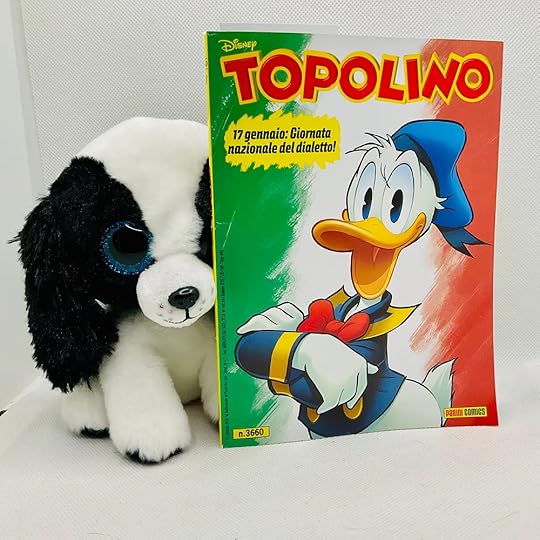
Tanto per riproporre sempre le stesse cose, Topolino torna a osannare i dialetti, vendendo questo numero in quattro versioni dialettali, come se a qualcuno importasse davvero. Topolino dovrebbe occuparsi delle trame e delle storie, non di operazioni folcloristiche che non c’entrano nulla con la magia Disney. I risultati infatti si vedono: il giornale perde colpi, perde stile e diventa sempre più illeggibile, trasformandosi in un esperimento stanco che non ha più alcun senso.
1- Paperino lucidatore a domicilio Storia di: Vito Stabile Disegni di: Francesco D’Ippolito
Paperino prova a mettersi in proprio con un lavoro di lucidatura: inizialmente ci riesce, poi Paperone lo sabota, poi tutto torna come prima. Una trama ripetitiva e annacquata, con pochissimi concetti mai davvero sviluppati. Non c’è una svolta, non c’è un guizzo, e alla lunga subentra solo la noia.
2- Topolino e l’abominevole Dr Pipps Storia di: Rudy Salvagnini Disegni di: Marco Palazzi
Storia senza idee e senza trama. Pippo fa parte di una compagnia teatrale che improvvisa battute a caso e coinvolge Topolino in uno spettacolo che non ha alcun senso. Il risultato è un’accozzaglia di scene strampalate che non portano da nessuna parte e dimostrano solo una profonda mancanza di idee.
3- In arte Pennino Storia di: Andrea Malgeri (in arte Lapis) Disegni di: Andrea Maccarini
Perché continuate a fare queste cose? Del nipote di Paperoga non interessa nulla a nessuno, e vederlo fare finta di disegnare lo rende solo più insopportabile. Trama inesistente, noia garantita.
4- Manetta in: Detesto la domenica Storia di: Francesco Pelosi Disegni di: Nicola Tosolini
No, non ci siamo. Manetta è costretto a non lavorare la domenica e si annoia. Incontra una tipa sfigata, fa l’innamorato (mamma mia), e anche quando si scopre che lei è una ladra lui resta comunque preso. Ridategli il sigaro: da quando gliel’avete tolto è un personaggio perso. Ormai non si può più nemmeno fumare.
5- Paperone in Atlantide – Prologo Storia e disegni di: Fabio Celoni
Ma cosa sarebbe questa roba? Disegni confusionari e una storia che non c’entra nulla con Topolino, osannata come se fosse un capolavoro incompreso. Se questo è il risultato, tanto vale pubblicarla su un altro giornale. Incomprensibile, fuori luogo, esattamente come molta della produzione recente di Topolino.