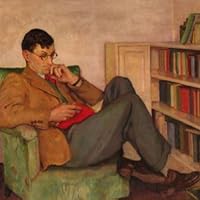
Dr. Bullock, later Sir Alan and eventually a life peer, diagnosed the malignancies of dictatorship and tyranny that plagued 20th-century Europe. He twinned two such dictators in one of his later studies, ''Hitler and Stalin, Parallel Lives'' (1991, Knopf).
He was the last of three brilliant Oxford historians whose views influenced thought in the English-speaking world and beyond, even when their own views diverged. The others were A. J. P. Taylor and Hugh Trevor-Roper who, for instance, offered a more nuanced interpretation of Hitler than did Dr. Bullock.
While Dr. Bullock originally portrayed Hitler as a diabolical charlatan and cynical opportunist without convictions, Trevor-Roper saw him as an ideologue and demagogue convinced of his own political philosophy. It was a distinction crucial to the understanding of Hitler's initial successes as a politician, statesman and military strategist, and Dr. Bullock reflected it in his double study of Hitler and Stalin.
Nonetheless, his seminal Hitler book of 1952, published a mere seven years after Hitler's end, remained a scholarly classic and stayed in print, in one form or another, for more than half a century.
Dr. Bullock also compiled a three-volume biography of a Labor leader and former foreign secretary who helped shape postwar Britain, ''The Life and Times of Ernest Bevin.'' It took from 1960 to 1983 to complete.
He wrote or edited several other notable books on 20th-century European history, which also appeared in other languages.
Alan Louis Charles Bullock was born in Trowbridge, Wiltshire, the son of a gardener turned Unitarian preacher. He went to Oxford on a scholarship to study literature and modern history, which became his career, though he earned a doctor of literature degree in 1969.
Severe asthma ruled out military service in World War II; instead he spent it working for the European Service of the BBC as a political and diplomatic correspondent. After the war, he returned to Oxford.
Concentrating on the Third Reich of Hitler, he pored over the minutes of the Nuremberg trials. At the suggestion of the scholar A. L. Rowse, at Oxford, and the publisher Odhams, he produced the first comprehensive life of Hitler.
He also became increasingly active in academic affairs as dean and tutor of New College at Oxford. In 1960 he helped establish St. Catherine's, the university's first new college for graduate and undergraduate students in the 20th century.
He was vice chancellor of Oxford from 1969 to 1973. Over the years his outside interests included the chairmanship of the Tate Gallery (1973-1980). He was a former director of The Observer, joined the Social Democratic Party in 1981 and continued to lecture until 1997.
Dr. Bullock was knighted in 1972. Four years later, the Labor government of Harold Wilson made him a life peer; he took the title Baron Bullock of Leafield in the County of Oxfordshire.
This book is obviously marked by the period in which it was written, in the early 80s of the last century, a time when the world still was stuck in the cold war, when the decolonization of the South had not yielded the hoped-for leap forward for mankind, and when the Western story of spectacular economic growth more or less had come to a halt. Now, in such a time frame spreading an optimistic message about mankind and confirming that man can eventually find solutions for just about every problem, albeit after much beating about the bush, that's really daring. And that's what Bullock does here, in this written record of 5 large lectures he gave in 1984 at the Aspen Institute in the United States.
I have to admit that after the second lecture I started having some doubts. Bullock remains a bit foggy about what he means exactly with "the humanist tradition". And that vagueness continues almost until the end. Only then he falls back on the very crisp definition of humanism as the belief in human ingenuity, with both rational and irrational aspects.
Bullock describes how Western culture between Renaissance and the horrors of the 20th century developed in a very whimsical way, but always the humanistic voice came to the surface (sometimes a bit too arrogant optimistic, as with the 18th century enlightenment philosophers and the 19th and 20th century technocrats that built on them).
Some points of critic: you can disagree with some of Bullock's qualifications if and how certain currents or figures have contributed to the humanist tradition or not (for example, Luther is such a problematic figure). And he also gives very little attention to the question why this kind of humanism almost exclusively developed in the West: Bullock refers to other traditions, with the only example Gandhi, which is very meager. According to me you just have to recognize that our humanist tradition is thoroughly influenced (and even made possible) by Christianity (without overlooking the antique - Greek tradition).
Eventually I find Bullock's plea for a renewed humanism certainly convincing, but only if it's done with the greatest possible openness to all human issues (gender, race, cultural differences, and so on). "This is what, throughout these 600 years, the humanist tradition has represented: a refusal to accept a determinist or a reductionist view of man, an insistince that in some measure men and women, if they do not enjoy complete freedom, none the less have it in their hands to make choices. (…) It does not guarantee that men and women will make good choices, correctly foresee the results or escape disaster – only that there are still choices to be made, if we can find the courage and the will to make them".
Good place to start in tracing the history of humanism and the early philosophers and naturalists who contributed their ideas. A bit disjointed, but overall good way to get a feel on how progressive ideas and archaic ideas play tug-of-war with accepted moralities. It has an impact on our laws and what is accepted in society, so I think it's an important discussion. Quite a lot of history fit into a more cohesive whole after reading this book, and I learned quite a bit about what humanism is NOT.
What turned me off was the complete lack of acknowledgement of the blatant hypocrisy of humanists who contributed willingly to a culture of slavery and the oppression of women. How does white male supremacy not get called out in a discussion about white males who own slaves while discussing how all men should be free? I understand that I must accept the parade of white men when reading any book on the history of 'thinkers' or 'philosophers' because they apparently were the only ones who got to do 'thinking' or 'philosophizing', but a modern author who doesn't include this disparity commits a severe over-site in my opinion. You cannot discuss a humanist's philosophies and conveniently omit their acceptance of slave ownership; this myopic discussion is incomplete and tainted the book for me.