

What do you think?
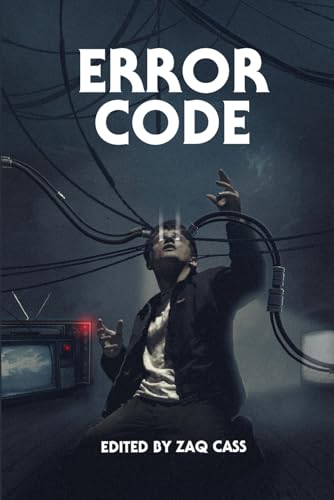
Error Code
In its debut publication, Rabid Otter Horror brings together ten talented authors to form Error Code, an anthology examining humanity’s dependence on technology. Within these pages, explore why the terms and conditions should be carefully read, what happens when your home assistant refuses to be shut off, and discover the result of a virus taking over the next step in human evolutions, culminating with the has reliance on technology made us stronger? Or is humanity opening itself to its own destruction?
Alexa Lee
Asa Callan
Bernard McGhee
Curtis A. Deeter
Elizabeth Devecchi
Jude DeLuca
Jyl Glenn
Lindsey Goddard
Phrique
Tamika Thompson
Alexa Lee
Asa Callan
Bernard McGhee
Curtis A. Deeter
Elizabeth Devecchi
Jude DeLuca
Jyl Glenn
Lindsey Goddard
Phrique
Tamika Thompson
297 pages, Paperback
Published November 26, 2024
Ratings & Reviews
Friends & Following
Create a free account to discover what your friends think of this book!
Community Reviews
Displaying 1 - 18 of 18 reviews

October 25, 2024
This is a good collection of horror and thriller stories centered around technology. There were only 2 stories where I was like, "This stinks." The rest of the stories left me feeling haunted and/or intrigued to know more. Thank you so much to the publisher and booksirens for this ARC!

October 31, 2024
I enjoyed the mix of styles and approaches across the various short stories in this anthology. I didn't LOVE them all, but they were all to a high standard and I did particularly enjoy a couple of real gems. It would have been really hard for an anthology to get a full 5 stars from me - I'd have had to love them all - but it's a solid 4 for me.
(I received an advance review copy for free, and I am leaving this review voluntarily.)
(I received an advance review copy for free, and I am leaving this review voluntarily.)

January 14, 2026
This was a solid near-future/present/maybe the past sci-fi/horror collection and I loved how all of the stories revolved around some sort of technology. Whether it was cursed video games, the perils of AI gone-awry, or cray-cray virtual reality, each of these stories presented not only a potential glimpse into the future of the tech we love so dearly.
All of these stories were super dark so for me, this collection was a hit. All were written well and while I felt that all of the stories presented their subject matter to it's fullest extent, there were one or two that I would liked to have been longer to really flesh out their stories/ideas a bit better.
All of these stories were super dark so for me, this collection was a hit. All were written well and while I felt that all of the stories presented their subject matter to it's fullest extent, there were one or two that I would liked to have been longer to really flesh out their stories/ideas a bit better.
November 19, 2025
This is one of the best horror books I've been lucky enough to read so far. First of all, due to the novelty and topicality of the issues raised in the stories. Only the modern generation of AI users faces this kind of new fright, coming from a seemingly controlled and docile Genie in the bottle we so willingly uncorked to make our lazy dreams come true: technology. Nurtured in the shadows that lurked in the darkness, fearing monsters with teeth and claws, with eyes burning with ferocious hunger, or men with guns and knives, I was suddenly introduced to the next level of steal-cold, omnipresent horror: giving control over my life into the hands of a digital monster we created to serve us. It's not somewhere over there any more, it's inside. In our houses, in our bodies. And with every next responsibility we delegate to it, we pave our way to a prison cell with only one way to go. Like a spider, technology and its creators cocoon us into a nice and snug little bubble of personal hell, while reassuring us it's for the best (is it?).
All ten stories in this anthology shed light on different aspects of this dependency, voice fears every person encounters at least once in life, while dealing with devices we can't do without now. Modern life - modern horrors. And all of them gave me a mental kick, but I'd like to especially highlight three of them: "HellNet", "End User", and "Kira 35" for their gripping voices, the power to suck the reader right into their worlds and lead through the tunnels of acute pain, rage, and fear.
In HellNet, Lindsey Goddard takes us into the near future, when technology has evolved enough to create a manmade Heaven where you go after you die. But of course, a device needs to be installed in your body to organise this magic resurrection and ascension. But what if a virus infects the program in you while you are still alive? A virus that would check all your inner thoughts and secret desires? Lindsey Goddard doesn't just tickle her fancy, describing a possible situation, but asks fundamental questions: who do you trust with your life and death and how it backfires on you in the end, but, more importantly, what heaven really is and who decides who has the right to enter it. Really, who? You can't create an AI God and talk to Him through ChatGPT, can you?
Another great tramplin into the infinity of imagination happened with "End User". Alexa Lee did a phenomenal job in driving me right into the main character's head and letting me see the world through her eyes. Her writing is a slow unravelling of the inner monologue, accompanied by feelings I could easily recognise. It was impossible to put the story down before I made it to the end, since the events accelerated the pace with every next page and held me in a grip of their triggers. This story also deals with the devices inserted into the human body, but not to help people, rather to share their bodily experience. And others could actually watch the "real" reality show for a small amount of fee. Silently, Alexa Lee asks the reader a question: Is technology dangerous because of its corrupted core or because of the corrupted core of those who create and control it?
In "Kira 35", we can actually answer this question. Where does the control we have over others, even if for the greater good, even if from our deepest love and affection, take us, people? And does technology help us grow and evolve, or on the contrary? Maybe a tool in our hand, no matter how good it is, can't refine in any way our heart and make us aware of life and us in it? Does a phone in my hand define me as a human? Or do I, holding a phone, define it?
"Error Code" gave me an unforgettable experience and a bunch of insights that widened my perspective. For this, I tick 5 stars!
All ten stories in this anthology shed light on different aspects of this dependency, voice fears every person encounters at least once in life, while dealing with devices we can't do without now. Modern life - modern horrors. And all of them gave me a mental kick, but I'd like to especially highlight three of them: "HellNet", "End User", and "Kira 35" for their gripping voices, the power to suck the reader right into their worlds and lead through the tunnels of acute pain, rage, and fear.
In HellNet, Lindsey Goddard takes us into the near future, when technology has evolved enough to create a manmade Heaven where you go after you die. But of course, a device needs to be installed in your body to organise this magic resurrection and ascension. But what if a virus infects the program in you while you are still alive? A virus that would check all your inner thoughts and secret desires? Lindsey Goddard doesn't just tickle her fancy, describing a possible situation, but asks fundamental questions: who do you trust with your life and death and how it backfires on you in the end, but, more importantly, what heaven really is and who decides who has the right to enter it. Really, who? You can't create an AI God and talk to Him through ChatGPT, can you?
Another great tramplin into the infinity of imagination happened with "End User". Alexa Lee did a phenomenal job in driving me right into the main character's head and letting me see the world through her eyes. Her writing is a slow unravelling of the inner monologue, accompanied by feelings I could easily recognise. It was impossible to put the story down before I made it to the end, since the events accelerated the pace with every next page and held me in a grip of their triggers. This story also deals with the devices inserted into the human body, but not to help people, rather to share their bodily experience. And others could actually watch the "real" reality show for a small amount of fee. Silently, Alexa Lee asks the reader a question: Is technology dangerous because of its corrupted core or because of the corrupted core of those who create and control it?
In "Kira 35", we can actually answer this question. Where does the control we have over others, even if for the greater good, even if from our deepest love and affection, take us, people? And does technology help us grow and evolve, or on the contrary? Maybe a tool in our hand, no matter how good it is, can't refine in any way our heart and make us aware of life and us in it? Does a phone in my hand define me as a human? Or do I, holding a phone, define it?
"Error Code" gave me an unforgettable experience and a bunch of insights that widened my perspective. For this, I tick 5 stars!

November 15, 2024
A great anthology of short stories centered around technology. Well worth reading, got through fast and look forward to more from the publisher.

December 10, 2024
As a fan of horror stories, the title Error Code immediately hooked me—it carried a premise that promised thrills, and the anthology delivered on that promise. This sci-fi horror collection explores humanity’s growing dependency on technology and dares to ask: what could go wrong? Each story is a unique examination of this theme, blending speculative science fiction with chilling horror.
The anthology impressively spans a range of scenarios, from smart house systems gone awry in Nhesi, Unlock the Door, to human brain integration in The Update and HellNet. Some stories focus on the flaws of individuals, like The Honor Box, while others turn the lens on societal and systemic power, such as End User. The variety of subgenres ensures that there’s something for every sci-fi or horror fan: medical concerns in The Algorithm, cloning in Kira 35, alien encounters in Watching is Easy, and ethical quandaries surrounding AI in A Corporate Family.
While stories like Bloodhouse 64 and Nhesi, Unlock the Door lean into gore, others take a more introspective route, providing a nice balance. The quality of the stories varies, but as a whole, the anthology sits in the higher range of what horror collections offer.
If you’re a fan of sci-fi or horror—or better yet, both—Error Code is worth your time. It’s a gripping exploration of our dependence on technology and the terrifying possibilities it might unleash.
The anthology impressively spans a range of scenarios, from smart house systems gone awry in Nhesi, Unlock the Door, to human brain integration in The Update and HellNet. Some stories focus on the flaws of individuals, like The Honor Box, while others turn the lens on societal and systemic power, such as End User. The variety of subgenres ensures that there’s something for every sci-fi or horror fan: medical concerns in The Algorithm, cloning in Kira 35, alien encounters in Watching is Easy, and ethical quandaries surrounding AI in A Corporate Family.
While stories like Bloodhouse 64 and Nhesi, Unlock the Door lean into gore, others take a more introspective route, providing a nice balance. The quality of the stories varies, but as a whole, the anthology sits in the higher range of what horror collections offer.
If you’re a fan of sci-fi or horror—or better yet, both—Error Code is worth your time. It’s a gripping exploration of our dependence on technology and the terrifying possibilities it might unleash.

November 21, 2024
A solid collection of some very horror-filled horror stories. While any anthology has strengths and weaknesses, this volume's weaknesses are not very weak. Each story is unique, different from the others, and the strong stories are - great! Admittedly, I am a horror story fanatic and so perhaps a bit prejudiced, but I would not recommend this book unless I felt it was a seriously good addition to the genre. I will not describe each story, as that is for the reader to discover. But I will tip my hat to the final story in the book and definitely my personal favorite. A bit over the top perhaps, and it too had some tiresome elements (SO much focus on a birthday gift...) but a strong story nonetheless. And quite delicious in the horror realm. If you like this genre, you will enjoy this collection!
This ARC was provided by BookSirens and Goodreads, the opinions expressed herein are strictly my own.
This ARC was provided by BookSirens and Goodreads, the opinions expressed herein are strictly my own.

December 27, 2024
I grabbed this off of BookSirens, so thanks for the change to read this one, I'd be lying if I said I hadnt been specially looking for this one, and so glad it was offered up as an ARC.
I saw a few known to me authors and a few unknown to me ones as well, which always the best part of a anthology for me.
Each one of these stories were different, but they worked well together in this anthro and I enjoyed how even though this looks like a oh no tech is bad always type book, its also a humans are horrible as well, sometimes even darker then a cold, calculating, computer..
End User was my personal choice for best, and not sure if that's because I work in the career field or it was just that good, but wow.
Unlock the Door though, absolutely a dark , gore fest that you cant help but want more of.
Something for everyone in this anthology.
And well worth checking this out.
I saw a few known to me authors and a few unknown to me ones as well, which always the best part of a anthology for me.
Each one of these stories were different, but they worked well together in this anthro and I enjoyed how even though this looks like a oh no tech is bad always type book, its also a humans are horrible as well, sometimes even darker then a cold, calculating, computer..
End User was my personal choice for best, and not sure if that's because I work in the career field or it was just that good, but wow.
Unlock the Door though, absolutely a dark , gore fest that you cant help but want more of.
Something for everyone in this anthology.
And well worth checking this out.

November 10, 2024
Wow! This was a great collection of stories. I absolutely love Black Mirror and these stories would make for a great season of episodes.
Some stories were scary, some gruesome and some hit a bit too close to the potential real world. Honestly one of the best collections I have read for a while!!
I received an advance review copy for free, and I am leaving this review voluntarily.
Some stories were scary, some gruesome and some hit a bit too close to the potential real world. Honestly one of the best collections I have read for a while!!
I received an advance review copy for free, and I am leaving this review voluntarily.

November 25, 2024
A unique collection of horror Scifi short stories of artificial intelligence that goes horribly wrong. Many of the twists and turns in this collection gave me chills. Imagine a world run by self thinking machines like Five Alive's evil siblings. I highly recommend this anthology. The stories are so good I am having problems picking just two.
This entire review has been hidden because of spoilers.

November 14, 2024
I really enjoyed this book. The stories were unique and interesting with something for everyone. Unnerving at times and fun to read.
I received an advance review copy for free, and I am leaving this review voluntarily.
I received an advance review copy for free, and I am leaving this review voluntarily.
November 27, 2024
Technology is all around us we use it daily. What happens when it behaves unexpectedly. These stories take you to those situations

January 25, 2025
Forget about the creatures that go bump in the night. The worst thing that can happen to you just might come from something you trust the most: An AI system in control of what happens inside of your house, in your own body, and in your own brain.
Error Code is a horror anthology of what happens when technology doesn’t exactly do what it is programmed to do. Or, sometimes, it does, because someone with evil intentions programmed it that way. We all fear the day when evil robots will attempt to take over the world and kill all the humans a la a Terminator film, but in the case of these stories, something even more deceptive and seemingly innocent is at play.
This collection of stories absolutely gets off to a strong start, with the jaw-dropping story "NHesi, Unlock the Door" by Curtis A. Deeter taking on the “smart home” idea we’ve all been fantasizing, wondering and researching about for years.
And I don’t know about you, but after reading this story, I am DEFINITELY not interested in living in a smart home! No, thank you!
The whole idea behind these stories is what could happen when milestones in technological development go wrong. We WANT technology to help make our lives better, but in a lot of cases, it could actually make our lives worse!
“The Update” by Phrique touches on something we ALL actually have to deal with these days: The agony, torture and trauma of enduring system updates. No matter how much control we try to have over these things, they seem to sometimes have a mind of their own and take over our computers and laptops regardless of whether we want them to or not. Except, in this case, the story deals with system updates with people. Knowing what we know now about how those things work, that very possibility becoming a reality is very frightening!
Another story in this anthology that I really enjoyed reading was "The Algorithm" by Jyl Glenn. O.M.G! This story was really good! This, too, tackles a common idea circulating in the technosphere: What would happen if we allowed AI to take control over the kind of healthcare we receive? Just what kind of choices would we still have once surrendering our very lives to such a thing? This story was brilliant and I loved the surprise ending.
Lindsey Goddard’s story “HellNet” explores the personal clashing with the technical when it comes to implants in our head. Sure, there’s lots of talk about these things going on right now, and Elon Musk would love to have ALL of us having his brain implants in our heads so he can rule over us all to follow his every command (kidding!), but there is still a lot of speculation of just how much control we could lose over ourselves after having such implants drilled into our brains. I loved how Lindsey’s story played out, though I wondered if people with such implants in the future would really be able to make such choices.
I’m no longer much of a gamer, but I loved reading "Bloodhouse 64" by Jude Deluca. This story took the whole “evil video game” angle for a wild ride. It held me breathless as I read it, wincing over the gore while eagerly reading to find out what happened next. I totally understood Darcy’s frustration over a game ending when she didn’t want it to, and I knew that getting so fixated on the game meant bad news. I did not expect what kind of bad news it turned out to be! The action had me on the edge of my seat as I also wondered if there would be any survivors at the end! I think this story is perfect for anyone who loves horror as well as gaming.
I also enjoyed reading "End User" Alexa Lee, "Kira 35" by Asa Callan (LOVED how the ending was written!), "Watching is Easy" by Bernard McGhee and "A Corporate Family" by Elizabeth Devecchi.
Oh, heck. ALL of the stories were good. I read every single one and enjoyed them. They also made me think, which is what every good story should do.
Error Code is an anthology of horror stories diving into the worst-case-scenario of technology gone wrong. Not only do the stories remind us of the folly in entrusting our health, our control, and our very lives in technology, but it also serves as what sort of nightmares and horrors such actions can unleash. Technology can tend to have a mind of its own, and when it has too much control over someone’s life, that sort of mind can have the worst of intentions, an evil agenda, and an unpredictable lust for power that can only lead to destruction and death.
Error Code is a horror anthology of what happens when technology doesn’t exactly do what it is programmed to do. Or, sometimes, it does, because someone with evil intentions programmed it that way. We all fear the day when evil robots will attempt to take over the world and kill all the humans a la a Terminator film, but in the case of these stories, something even more deceptive and seemingly innocent is at play.
This collection of stories absolutely gets off to a strong start, with the jaw-dropping story "NHesi, Unlock the Door" by Curtis A. Deeter taking on the “smart home” idea we’ve all been fantasizing, wondering and researching about for years.
And I don’t know about you, but after reading this story, I am DEFINITELY not interested in living in a smart home! No, thank you!
The whole idea behind these stories is what could happen when milestones in technological development go wrong. We WANT technology to help make our lives better, but in a lot of cases, it could actually make our lives worse!
“The Update” by Phrique touches on something we ALL actually have to deal with these days: The agony, torture and trauma of enduring system updates. No matter how much control we try to have over these things, they seem to sometimes have a mind of their own and take over our computers and laptops regardless of whether we want them to or not. Except, in this case, the story deals with system updates with people. Knowing what we know now about how those things work, that very possibility becoming a reality is very frightening!
Another story in this anthology that I really enjoyed reading was "The Algorithm" by Jyl Glenn. O.M.G! This story was really good! This, too, tackles a common idea circulating in the technosphere: What would happen if we allowed AI to take control over the kind of healthcare we receive? Just what kind of choices would we still have once surrendering our very lives to such a thing? This story was brilliant and I loved the surprise ending.
Lindsey Goddard’s story “HellNet” explores the personal clashing with the technical when it comes to implants in our head. Sure, there’s lots of talk about these things going on right now, and Elon Musk would love to have ALL of us having his brain implants in our heads so he can rule over us all to follow his every command (kidding!), but there is still a lot of speculation of just how much control we could lose over ourselves after having such implants drilled into our brains. I loved how Lindsey’s story played out, though I wondered if people with such implants in the future would really be able to make such choices.
I’m no longer much of a gamer, but I loved reading "Bloodhouse 64" by Jude Deluca. This story took the whole “evil video game” angle for a wild ride. It held me breathless as I read it, wincing over the gore while eagerly reading to find out what happened next. I totally understood Darcy’s frustration over a game ending when she didn’t want it to, and I knew that getting so fixated on the game meant bad news. I did not expect what kind of bad news it turned out to be! The action had me on the edge of my seat as I also wondered if there would be any survivors at the end! I think this story is perfect for anyone who loves horror as well as gaming.
I also enjoyed reading "End User" Alexa Lee, "Kira 35" by Asa Callan (LOVED how the ending was written!), "Watching is Easy" by Bernard McGhee and "A Corporate Family" by Elizabeth Devecchi.
Oh, heck. ALL of the stories were good. I read every single one and enjoyed them. They also made me think, which is what every good story should do.
Error Code is an anthology of horror stories diving into the worst-case-scenario of technology gone wrong. Not only do the stories remind us of the folly in entrusting our health, our control, and our very lives in technology, but it also serves as what sort of nightmares and horrors such actions can unleash. Technology can tend to have a mind of its own, and when it has too much control over someone’s life, that sort of mind can have the worst of intentions, an evil agenda, and an unpredictable lust for power that can only lead to destruction and death.

February 22, 2025
A great collection of stories. There are a couple I didn't enjoy but every story serves a purpose in the collection. Its made me very happy I don't have any smart connected tech in my house other than my phone!
The stories are short and some had me itching for more (Kira35 is a story I wish had about 200 more pages)
'NHesi unlock the door' is such a STRONG opening story and plays on some of my inqte fears with tech houses and why I don't own an Alexa (or similar)
Bloodhouse 64 gave me all the gore with a slight step away from the sci-fi elements in many stories. What I imagine everyone thinks happen when they say 'video games make you violent'
I received this book for free from booksirens and I am leaving this review voluntarily
The stories are short and some had me itching for more (Kira35 is a story I wish had about 200 more pages)
'NHesi unlock the door' is such a STRONG opening story and plays on some of my inqte fears with tech houses and why I don't own an Alexa (or similar)
Bloodhouse 64 gave me all the gore with a slight step away from the sci-fi elements in many stories. What I imagine everyone thinks happen when they say 'video games make you violent'
I received this book for free from booksirens and I am leaving this review voluntarily
December 2, 2024
I normally don't like sci-fi, and honestly, this took until the second story to reel me in, and it caught me, hook line and sinker.
Several stories in these were a little lackluster, but the others that I really liked were full of dread and elicited a huge case of paranoia that I just had to shut down the rest of my gadgets and read this without being connected to the Internet.
You'll definitely have some favorites in this one, but each story deserves to be read.
Several stories in these were a little lackluster, but the others that I really liked were full of dread and elicited a huge case of paranoia that I just had to shut down the rest of my gadgets and read this without being connected to the Internet.
You'll definitely have some favorites in this one, but each story deserves to be read.

December 12, 2024
I received an arc from Book sirens for review
Short story collection rivalling Asimov's I robot.
Thats all you need to know. Honestly, this is actually a book I want to own a physical copy of annotate it and read it as many times that it falls apart.
Its very smartly written, completely brilliantly encompassing all my AI fears and grievances when it comes to technology that is way smarter than I am.
Short story collection rivalling Asimov's I robot.
Thats all you need to know. Honestly, this is actually a book I want to own a physical copy of annotate it and read it as many times that it falls apart.
Its very smartly written, completely brilliantly encompassing all my AI fears and grievances when it comes to technology that is way smarter than I am.

February 14, 2025
Awesome! I'm a big fan of short horror stories and these were very creative. Besides some spelling mistakes and small inconsistencies, this was great! I received an advance review copy for free, and I am leaving this review voluntarily. Every short story a different theme and different levels of creepy and glory, each had their own charm.

March 31, 2026
Grabbed out of a minilibrary. It was a good collection. I did skip a few from names I don't read but the others were great.
I returned it to the minilibrary hopefully someone else will enjoy it as much as I did.
I returned it to the minilibrary hopefully someone else will enjoy it as much as I did.
Displaying 1 - 18 of 18 reviews