- Впервые в России - Новая книга лауреата Нобелевской премии Гюнтера Грасса - Новые грани таланта классика: поэзия и графика - Подарочное издание
О чем
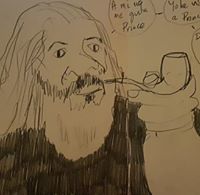
Стихотворения и графика Гюнтера Грасса, собранные в этом издании, были созданы в Дании в конце лета 2006 года. Они представляют собой художественную реакцию Гюнтера Грасса на дискуссию, разгоревшуюся в СМИ вокруг публикации его мемуаров «Луковица памяти». Так, из разрозненных эмоций и впечатлений, появилась книга — арт-объект, где текст и иллюстрации образуют неразрывное целое.
Об авторе
Гюнтер Грасс - один из самых влиятельных послевоенных немецких писателей.
Novels, notably The Tin Drum (1959) and Dog Years (1963), of German writer Günter Wilhelm Grass, who won the Nobel Prize of 1999 for literature, concern the political and social climate of Germany during and after World War II.
This novelist, poet, playwright, illustrator, graphic artist, and sculptor since 1945 lived in West Germany but in his fiction frequently returned to the Danzig of his childhood. He always identified as a Kashubian.
He is best known for his first novel, The Tin Drum (1959), a key text in European magic realism. He named this style “broadened reality.” “Cat and Mouse” (1961) and Dog Years (1963) also succeeded in the period. These three novels make up his “Danzig trilogy.”
Helene Grass (née Knoff, 1898 - 1954), a Roman Catholic of Kashubian-Polish origin, bore Günter Grass to Willy Grass (1899 - 1979), a Protestant ethnic German. Parents reared Grass as a Catholic. The family lived in an apartment, attached to its grocery store in Danzig-Langfuhr (now Gdańsk-Wrzeszcz). He has one sister, born in 1930.
Grass attended the Danzig gymnasium Conradinum. He volunteered for submarine service with the Kriegsmarine "to get out of the confinement he felt as a teenager in his parents' house" which he considered - in a very negative way - civic Catholic lower middle class. In 1943 he became a Luftwaffenhelfer, then he was drafted into the Reichsarbeitsdienst, and in November 1944, shortly after his seventeenth birthday, into the Waffen-Schutzstaffel. The seventeen-year-old Grass saw combat with the 10th Schutzstaffel panzer division Frundsberg from February 1945 until he was wounded on 20 April 1945 and sent to an American prisoner of war camp.
In 1946 and 1947, he worked in a mine and received an education of a stonemason. For many years, he studied sculpture and graphics, first at the Kunstakademie Düsseldorf and then at the Universität der Künste Berlin. He also worked as an author and traveled frequently. He married in 1954 and from 1960 lived in Berlin as well as part-time in Schleswig-Holstein. Divorced in 1978, he remarried in 1979. From 1983 to 1986 he held the presidency of the Berlin Akademie der Künste (Berlin Academy of Arts).
During the German unification process in 1989 he argued for separation of the two states, because he thought a unified Germany would resume its past aggression. He moved to the northern German city of Lübeck in 1995. He was awarded the Nobel Prize in Literature in 1999. In 2006, Grass caused controversy with his disclosure of his Waffen-Schutzstaffel service during the final months of World War II, which he had kept a secret until publishing his memoir that year. He died of complications of lung infection on 13th of April, 2015 at a Lübeck hospital. He was 87.
Man kann hier mitverfolgen, wie Grass nach der Kontroverse um seine Biographie "Beim Häuten der Zwiebel" mit seinem Ärger umgeht. Es sind nicht die schönsten oder kunstvollsten Gedichte, aber es ist sehr persönlich.
Fue en el verano de 2006 cuando Günter Grass recibió los más furibundos ataques contra su persona, vertidos en la prensa de medio mundo, a causa de una confesión realizada en su autobiografía Pelando la Cebolla. Confesó haber pertenecido, durante un brevísimo periodo de tiempo y ya casi al final de la contienda, a las Waffen SS hitlerianas, cuando contaba con apenas dieciocho años recién cumplidos. Con semejante declaración, el premio Nobel de literatura azuzaba a sus más enconados enemigos que, dado su militarismo perenne en la literatura de la denuncia y la resistencia, eran muchos, y algunos amigos, repletos de intolerancia e incomprensión, decidieron darle la espalda. El resultado fue una inmensa soledad y un enorme sentimiento de injusticia e impotencia que desembocó en una aguda depresión. Como refugio a su depresión, Grass buscó auxilio en la poesía, un género en absoluto ajeno para él y por el que ya había transitado con comodidad en varias ocasiones. El resultado fue Payaso de Agosto, poemario que funciona como un autorretrato melancólico, una crónica en verso de una de las experiencias vitales e intelectuales más duras vividas por el escritor, ya en su vejez, que podría tener cierta similitud con La balada de la cárcel de Reading, de Oscar Wilde, en cuanto a una concepción similar, con esa intención de resistencia. En el libro, el autor va narrando en poemas todo el proceso, desde cuándo y cómo se produce y cómo desemboca en el juicio público al que le someten los medios (Como Anunció la Radio, En la Picota), “sometido al juicio sumario/de los justos”, hasta la forma en que el secreto infamante –el haber pertenecido a las Waffen SS- acongojaba su memoria (Lo que Susurra en el Follaje). Y empieza toda esa labor con una certeza: “Pronto –es de suponer- /sólo charlaré conmigo,/yo que soy tan charlatán”. La muerte, que presiente tan cercana ya, inminente, será su única y comprensiva confidente porque, en esta vida, no tiene donde esconderse de quienes se ceban en su culpa (¿Adonde Huir?) y que son tan culpables como él, pero que se han limitado a mirar para otro lado, a esconderse de sus culpas y se han negado a reconocer similares pecados. Como si el dolor pudiera aliviarse sumergiéndose en una fuente terapéutica, los poemas traen recuerdos y referencias de Heine (Alegría Terrenal) y una continua obsesión, ya conocida y exacerbada en novelas como El Rodaballo, por la función poética de la comida (Remolacha, Abadejo Directamente del Barco, En Caso Necesario, Garbanzos) que son una de las originales marcas de su imaginario. Tanto, que llega a afirmar, en una declaración de principios y en una llamada al reconocimiento del pasado nacional de la cuestión alemana: “No hay sopa de pescado sin pasado”.
Aunque Grass es reconocido como poeta, le ocurre como a Sebald, en eso los dos son muy cervantinos: la poesía es un don que el cielo no ha querido darles, me parece.