

What do you think?
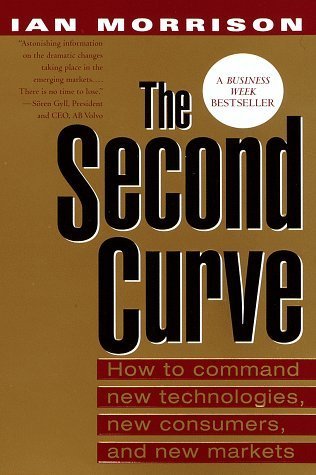
The Second Curve: How to Command New Technologies, New Consumers and New Markets
"A REAL EYE OPENER . . . THE FUTURE IS GROWTH AND THAT GROWTH IS ON THE SECOND CURVE."
--George Harvey, Chairman, President, and CEO Pitney Bowes, Inc.
In The Second Curve, Ian Morrison creates a revolutionary new business model that can be used no matter what the market upheaval. His theory is deceptively you must ride the first curve--a company's traditional business carried out in a familiar corporate climate--to the all-important second curve. The second curve is the future--the new technologies, new consumers, and new markets that companies must command to survive and thrive.
In the many companies Morrison profiles, leaders have learned to master both the first and second curves, to anticipate the rate and pace of change, to know when and how to jump from the first curve to the second, and whether and when to play both. This book sets forth all the crucial strategies and explains how businesses can apply them to rapidly changing situations.
"In a highly readable manner, Ian Morrison has pinpointed the key strategic problems facing our company and many others. His broad-ranging examples and insightful analyses are relevant throughout our organization."
--Peter Bury, President and CEO
Cable and Wireless Innovations, Inc.
"This is a book for anyone trying to figure out how to make money on the Internet, what country to invest in, or how to earn profits beyond the next fiscal year."
--World Business
--George Harvey, Chairman, President, and CEO Pitney Bowes, Inc.
In The Second Curve, Ian Morrison creates a revolutionary new business model that can be used no matter what the market upheaval. His theory is deceptively you must ride the first curve--a company's traditional business carried out in a familiar corporate climate--to the all-important second curve. The second curve is the future--the new technologies, new consumers, and new markets that companies must command to survive and thrive.
In the many companies Morrison profiles, leaders have learned to master both the first and second curves, to anticipate the rate and pace of change, to know when and how to jump from the first curve to the second, and whether and when to play both. This book sets forth all the crucial strategies and explains how businesses can apply them to rapidly changing situations.
"In a highly readable manner, Ian Morrison has pinpointed the key strategic problems facing our company and many others. His broad-ranging examples and insightful analyses are relevant throughout our organization."
--Peter Bury, President and CEO
Cable and Wireless Innovations, Inc.
"This is a book for anyone trying to figure out how to make money on the Internet, what country to invest in, or how to earn profits beyond the next fiscal year."
--World Business
- GenresBusiness
288 pages, Paperback
First published January 1, 1996
Ratings & Reviews
Friends & Following
Create a free account to discover what your friends think of this book!
Community Reviews
Displaying 1 - 1 of 1 review

March 9, 2009
I enjoyed the first part where he discusses the principle, but the 1995 edition is filled with what are now quaint technological references (Netscape anyone) and while it's interesting to see what predictions have now come true, I was able to skim the majority of it to pull out the relevant information.
Displaying 1 - 1 of 1 review