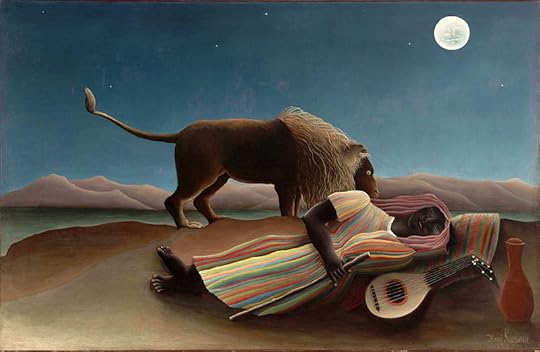
For distinguished philosopher Hans Blumenberg, lions were a life-long obsession. Lions, translated by Kári Driscoll, collects thirty-two of Blumenberg’s philosophical vignettes to reveal that the figure of the lion unites two of his other great preoccupations: metaphors and anecdotes as non-philosophical forms of knowledge.
Each of these short texts, sparkling with erudition and humor, is devoted to a peculiar leonine presence—or, in many cases, absence—in literature, art, philosophy, religion, and politics. From Ecclesiastes to the New Testament Apocrypha, Dürer to Henri Rousseau, Aesop and La Fontaine to Rilke and Thomas Mann, the extraordinary breadth of Blumenberg’s knowledge and intellectual curiosity is on full display. Lions has much to offer readers, both those already familiar with Blumenberg’s oeuvre and newcomers looking for an introduction to the thought of one of Germany’s most important postwar philosophers.
Hans Blumenberg (1920-1996) was a prominent German philosopher, known for his work in intellectual history and phenomenology. He is best remembered for his development of "metaphorology," a method that investigates the role of metaphors in shaping human thought, particularly in philosophy and culture. Blumenberg's most famous works include The Legitimacy of the Modern Age (1966) and The Genesis of the Copernican World (1975), where he explored the historical and philosophical implications of metaphors and their transformative effects on human understanding. Born in Lübeck, Germany, Blumenberg's career spanned several prestigious academic positions, including professorships at the University of Hamburg, University of Gießen, and University of Münster. His intellectual contributions deeply influenced fields such as philosophy, literary studies, and history of ideas. He was particularly concerned with how philosophical concepts were deeply intertwined with metaphors and how these shaped the intellectual trajectories of entire periods, like the Renaissance or the Enlightenment. Blumenberg's work focused not only on philosophy but also on the philosophy of technology, language, and aesthetics, drawing from a broad range of sources, including phenomenology, historical analysis, and myth theory. His exploration of "absolute metaphors" — ideas that transcend their original metaphorical contexts and become integral to philosophical and cultural systems — marked a major contribution to postwar German thought.
32 Miniaturen über den Löwen aus dem Zettelkasten von Hans Blumenberg. Ein Streifzug auf den Spuren, die Panthera leo in der Kulturgeschichte, von der Bibel bis zu Thomas Manns Tonio Kröger hinterlassen hat.
"Auch ohne naturschützerische Gebärde muß gesagt werden, daß eine Welt ohne Löwen trostlos wäre."
"Whoever is better at thinking catches more prey."
Only one other review?! C'mon, people. Blumenberg was unfamiliar to me until I read this wonderful little collection of his essays, all having, more or less, to do with the titular king/queen of the beasts. His philosophy appears to center around the phenomenon of the metaphor and a zany idea that there is a poetical undercurrent to thought, kind of like Chomsky's Cartesian grammar thingy. Anyway, that's all neat, but so are lions. These essays run a wide and often funny gamut. Biblical lions, actual lions, lions as poorly-represented in art, sea lions, Hitler and lions, zoos, humans as the only animal that keeps other animals, and so on. Most are brief, never more than a few pages, all are pure, lovely genius.
"As is so often the case, it is the perfectionists who, having known the disappointment of not living up to their own demands, produce the most compelling formulae of resignation as the human variant of perfection. It is their suffering that lends these formulae credibility: the passion of asking too much of oneself."