In Belle Place, Louisiana, where the sugarcane grows a mile high to the bright blue sky, Celeste struggles with her mentally ill mother, Tut, and works with her grandmother Maymay to hold the Creole Bastille family together. Celeste has bigger dreams for her life, and is falling for the handsome and wealthy Vashan. But, when Tut runs away to live with the man she met working in the sugarcane to escape her reputation as the town whore, Maymay fears that Celeste will end up like her mother. And just as things are finally looking up for Tut, her past returns with violent, tragic results. Will Celeste end up like her mother, or will she redeem her family from the hoodoo curse that haunts them? And will she find love with someone from a culture just as exotic as her own?
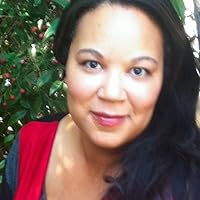
Maggie Collins was born and raised under the clear blue skies of Loreauville, Louisiana. She majored in English at the University of Louisiana and later earned a Master's degree from the University of New Orleans.Her novel Celestial Blue Skies was shortlisted for the Earnest Gaines Award. An excerpt of this novel was published in "Louisiana Cultural Vistas" and was a 2009 finalist for the worldwide William Faulkner William Wisdom writing contest. She is a Center for Black Literature fellow and an Educational Diagnostician. She lives with her two sons and wonderful husband
This book felt like coming home. I loved the sensory details the author used to describe the setting. Often, it was poetic and I marveled at the beauty in her words. The author made me feel the rain on Celeste's skin, smell the rich earth, and hear the sugar cane stalks blowing in the wind. This people became very real. It was as if I knocked on their door and walked into their home. Some people I liked, and some I didn't. But I still loved them because they were family. If you enjoy learning about other cultures, this book is a slice of Louisiana Creole life. Loved it.
Okay, now it's time for me to find some cracklin and boudin, 'cause this book made me hungry.
Growing up in Louisiana in a small town and a creole family, I was able to relate to this book of course it had the boudin, crackling, hot crawfish and crabs, the sugar cane and the Zydeco music that we Creoles love, but most of all it had the love of family Maymay is like so many creole women I know. She holds the family together durning a crisis. If I could tell the author anything, I would tell her thank you for writing this book because it reminded me of the love that I had with my Grandmother.. I had a digital copy but my son got me a hard copy for Mother's Day. Truthfully this is one of the best books I have read in a long time.
What do I know about the life of white people, black people and ‘high yellers’ in Louisiana in 1985? Not a great deal. Here in this book I find myself involved in the life of a community and a family in Belle Place, Louisiana, a sugar-cane-growing region.
There is Grandmother Maymay, T-man, her husband, Mother Tut, their daughter and T-red, their son, married to Bumblebee. Finally there is Celeste, the eldest of Mother Tut’s children, twelve years old at the opening of the novel.
Mother Tut and Celeste are ‘high yellers’ who could almost pass for white.
Tut was very young when she had her children, so young that really Maymay acts as their mother, with assistance from Bumblebee. Mother Tut is almost childlike—perhaps a little ‘simple’. She is irresistible to men, has little resistance to their approaches, and is regarded as a slut by the community. She has, however, an endearing, naive quality. This, along with her physical beauty, is perhaps what makes her so attractive to men.
Celeste, by contrast, is much older than her years and very intelligent. She is blessed—or perhaps cursed—with her mother’s good looks. She struggles to avoid her mother’s fate.
In many ways this is a coming of age story. Celeste is the central character, and much of the narrative is related from her first person perspective. However, at times the first person narration is taken up by others, most often Tut. Celeste at the beginning of the novel is twelve years old, but by the end is perhaps sixteen or seventeen. Along the way she is strongly attracted to a young Rastafarian boy called Vashan.
Mother Tut has the opportunity to escape her life in Belle Place when she is taken away to another town by a worker in the cane fields known as ‘Black’. Will she be able to break out of the behaviour and lifestyle in which she is trapped? Will Celeste be able to reach her potential? These are the central elements of the plot here.
Among the themes which I found fascinating was the exploration of intra-racial prejudice between the various ‘degrees’ of blackness within this community. As a white man it is difficult to know how to discuss this without unintentionally offending someone or straying from political correctness. Suffice it to say that the seemingly infinite capacity of the human species to divide itself into ‘us and them’ is alive and well in Belle Place, Louisiana. Or, at least, it was in the 1980s.
The strength of this novel was in its characterisation, particularly that of Mother Tut and Celeste. Despite their flaws these characters were mostly likeable, and certainly understandable. Although they sometimes behaved badly, there was never a sense that this was the only thing to say about them. I did think from time to time that the author was resorting to African-American stereotypes; but perhaps these stereotypes have their origins somewhere/somewhen in the real-life experience of the author. I’ve met a few stereotypes myself over the years.
I enjoyed the language, which included elements of Creole and French as well as the colourful version of English spoken in those parts. The voices sounded authentic to me. On the other hand, what do I know about that time and place?
The novel is perhaps weakest when it comes to plot. I did not sense any great movement or development in the plot until near the end, when there are real moments of suspense and tension. I thought a few more moments of tension and conflict along the way would have given the narrative a more interesting contour. Character is very much the dominant element here.
There is one very interesting development towards the end, which would not generally be expected in a novel that is narrated in the first person. I will say no more about that, except to say that it was very effective.
The editing let the author down a little here and there, particular in the latter third of the novel, when there were an increasing number of typos. I suspect the author had at some stage switched from a third person to a first person narrative, and some of the pronoun changes were overlooked (‘them’ instead of ‘us’, for instance).
While I loved the characterisation here, because the plot was not as strong or as contoured as it might have been, I am inclined to give this three and a half stars, but rounding this up to four where necessary.
This is a fictional story set in the Bayou of Louisiana in 1989. Picture, country gravel, unpaved roads. It’s a one traffic light town set in Bell Place, Louisiana by the Bayou. My sister-girls and I could have been bred and raised in Bell Place, USA. Belle Place can be any fictional city in the South. Some of the major players include Maymay, the Bastille matriarch, married to T-Man. T-Red, the only son of Maymay and T-Man. Tut (Theresa Bastille), the only daughter of the Bastilles. In the African American culture we come up with nicknames for ourselves and that of our children. Our grand-parents were quick to give a child a nickname that way when you entered the room you did not know who they were talking about on the telephone. The life of Celeste and her family was the message of this novel. Looking at life from your children’s viewpoint brings insights overlooked for a mother trying to grind life in 24 hours and trying to survive with shelter, safety and food on the table. Issues addressed include racism within classes of women, the bayou with sugar cane stalks and surrounding community. Working the stalks, living around the stalks and finding love within the stalks. This novel was a page turner and held my attention because I wanted to know what was going to happen in the storyline. It was a realistic storyline set in everyday African-American families trying to rise out of poverty. My favorite character was Celeste’s mother, Tut. Tut is called “simple” by family and town members. Tut is the mother of Celeste and three other children. Tut is twenty four. Her mother called her “nasty, sinful and disgusting because she was sleeping with any man. She was labeled as the town whore. With hair down her waste she said that “Diana Ross stole her lyrics to “Upside Down.” Everybody says “Tut is known for her cutting up and acting up” therefore her brother T-Red instills the fear of God in her. Maymay once said “Tut, came into the world like “the soft winds in the Belle Place.” Tut, could be anyone’s best friend with a childlike quality in a woman’s body. The moral of this story is that often time’s family is all we have. “We all we got.” How we loved on each other, speak to each other resonates when God calls us home. Although Celeste is raised by the village, she none the less pushes her pain deep down inside of herself in regards to her mother’s behavior or lack of time to spend with her daughter. Celeste once said of her mother, that “Mama can’t change who she is, and we are who we are.” Each character’s presentation could become the sequel novel. I was so riveted I wanted to know what happens in the end. This was quite the page turner. I gave this novel a 4.5 because it was an excellent read. It was a summer breeze on a cold winter’s night. I recommend this book to book clubs to read amongst sister-girls to dissect and come up with a viable series of questions. A young lady trying to find her way in life would love the beauty of growing up around a family that guards their own. After completing this book I would read other books by this author
Celestial Blue Skies by Maggie Collins, Review by Rev.Dr .Bobbie Groth
Underneath and around the rows of sugar cane growing in Belle Place, Louisiana, is a world pinned to the map only by the dramatic fluff of modern television comedy shows and the sweet taste of commercial candy. But this is a town that exists out of time, one that plays by rules of the human heart steeped in a primordial stew of Creole history, story, language, and what us outsiders might call in our ignorance superstition. What is at work in Belle Place is the vast power of Creole magic that reaches through the veil of death and time, knocking expectations akimbo with its cosmic demand for justice and setting things right. It swirls around a curse on the Bastille family through which they interpret the dying of good people by cancer, the struggle to keep their family fed and loved, the moods of the sugar cane and its mysteries, and the shame that their mentally ill daughter Therese—“Tut”—brings to their old, old name.
With a genius for language, story and how human angst plays out in daily life, Maggie Collins brings us the story of Tut Bastille, an untamed woman overflowing with passion as wild and free as the cane tops blowing beneath the celestial blue skies. Collins tells Tut’s story through the eyes of the Bastille family members, most riveting through the perseverence of Tut’s mother MayMay and the tentative hopes of her young daughter Celeste. It is Celeste’s story as much as it is Tut’s, as Celeste will either carry forward the shame Belle Place and its people have laid on her mother Tut, or be the one who who finally heals the family of the curse that so haunts her grandmother MayMay.
Celestial Blue Skies is more than a gripping novel that brings tears to our eyes or fears that keep us awake. It is also a well-crafted ethnography of a venerable people whose secrets still live beneath the shine of modernity, and whose ghosts reach straight into the present, changing lives. Thank you, Maggie Collins, for this gem.
I am truly amazed by this book. I love books set in the South because they often evoke such a fantastic sense of setting. Maggie Collins is a master of description. As I was reading, I often forgot where I was and felt I had been transported to Belle Place, Louisiana!
The Bastille family is at the heart of this book, and I truly felt that I understood each member of the family, their frustrations with each other, their desires, and how much each of them wanted to make the family proud again. I found that I would get angry at some of the characters- and at the same time I would feel so much sympathy and love for them, just as the members of the Bastille family did for each other.
Most of all, Celeste Bastille is a lovable, relatable character that will absolutely steal your heart. I hurt for her when she was hurting, celebrated each of her victories, and cheered her on as she learned to trust and fall in love.
This book is not to be missed. Long after you finish the last page, the Bastille family and Belle Place, Louisiana will live on in your memory.
I usually read romance novels and decided to read something else for a change. Celestial Blue Skies was definitely different. We see the story unfold through the eyes of Tut and her daughter, Celeste in a rural town in southern Louisiana. The sky and everything in it belong to Celeste.
Belle Place, Louisiana is a small town. They grow sugar cane as tall as trees there. Family comes first here. They look after one another and live by a strict code of conduct. Check out this family story.
This is a very deep book. It delves into the lives of one family in the south. How they live and work. I found it to be drawn out unnecessarily. The writing is good and the characters are good. I found my attention swaying from the story at times because it repeats itself. This book will make you think.
I found issues. The book is entirely too long. It's difficult to stay focused on too.
I gave this one 3 cheers out of 5 because of the issues. ~Copy of book provided by author in exchange for a fair review~
The author does an excellent job in showing unique Creole culture in Louisiana. It a must read book and I enjoyed reading the book. You will not be bored.