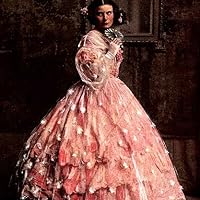
What stands out most about this book is not the material or the research, but the illustrations. This isn't necessarily a horrible book, but it isn't particularly well-researched or engaged in any historiographical debates. It serves well as an introductory text on slavery in Texas, but one certainly should not end their study here. The bibliography is a great resource for further reading. It's suitable for upper-level high-schoolers or freshman/sophomore college students who just need an overview. One bright spot is the chapter on the seasonal farm cycle - readers really get a sense of the different tasks that made plantations run at different times of the year.
An honest and thorough examination of the topic, though more than a little limited by a parochial viewpoint.
The illustrations are exquisite, though, and they show all the nuance and sensitivity that the book sometimes lacks.
Any modern discussion of slavery must begin and end with a discussion of how it had to be ended. This book is an attempt to describe it as a functioning system, which is always going to be offensive to modern sensibilities. But it was a functioning system, and that's the most difficult part to understand.
This book conveys the most important fact well through its depiction of space, though it does not do enough to emphasize it; for those of any race (and in plantation Texas there were at least six major races represented) who did not wish to participate in the frenetically growing system of American plantation slavery, they could always go live outside.
The Texan plantation slavery system occurred just after the end of what would someday be known as the last great period of food insecurity on this continent. We see it now as a rigid, obsolete caste structure based on stealing wealth from one group and giving it to another. That is exactly what it was, though it would be more accurate to say that four groups were stealing from two groups, one of which wanted to help the one group of the four that the other three of the four were stealing from, the other of which didn't.
But at the time they saw it at the time as a way of building a bulwark against mass starvation. Freedom was less meaningful to them, because food was the problem. In a culture huddled at the edge of a vast wilderness, food was what you needed. Freedom was everywhere. Freedom was available to anyone who wanted to walk west into the frontier and take their chances. If you stayed, it's because you had some skin in the game.
The book also does a good job exploring the paternalistic attitude that developed between slaves and owners, and the way the sudden withdrawal of that paternalism caused real disaster to unprepared populations. The slaves had been purposefully kept ignorant, and when the war ended they were simply turned out, with no attempt to educate or prepare. So they fared very, very badly; as badly as anyone would who had been kept a prisoner their whole life and suddenly thrown outside.
This book will make a lot of people upset because it did not paint all white people in antebellum Texas as evil. What it did do was use accounts from both slave holders and former slaves to paint a picture of the gamut of vice and virtue present in the system. This is not a popular method today, but it is better pure history. In addition to these things, the author also discusses the basic economy, culture, religion, and challenges that occured on plantations. It is rather simplisticly written, but very engaging.