

What do you think?
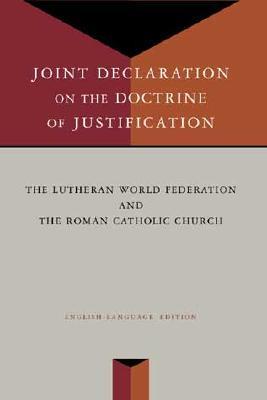
Joint Declaration on the Doctrine of Justification
This volume presents in English the official Joint Declaration on the Doctrine of Justification, confirmed by the Lutheran World Federation and the Roman Catholic Church in Augsburg, Germany, in October 1999. The results of decades of Lutheran-Roman Catholic dialogue, this primary document represents an ecumenical event of historical signifance.
47 pages, Paperback
First published March 31, 2000
Ratings & Reviews
Friends & Following
Create a free account to discover what your friends think of this book!
Community Reviews
Displaying 1 - 12 of 12 reviews
January 9, 2024
Pretty awesome, I should've read this a long time ago - a huge W for ecumenicism and Christianity as a whole.
This document, accepted officially by both Lutherans and Catholics, is concise and unbiased, and it presents both Catholic and Lutheran positions on justification well. There is a ton of agreement. There are no poor caricatures of either side, but the differences are not sugar-coated either. What I appreciated from both sides was the difference in emphases while still acknowledging that the other side can be true.
I also did not know that the mutual condemnations from the Catholics and Lutherans no longer apply.
It's cool to see its public reception outside of Lutherans and Catholics. The Methodist and Reformed traditions accepted it, and the Anglicans soon came to a similar agreement.
This document, accepted officially by both Lutherans and Catholics, is concise and unbiased, and it presents both Catholic and Lutheran positions on justification well. There is a ton of agreement. There are no poor caricatures of either side, but the differences are not sugar-coated either. What I appreciated from both sides was the difference in emphases while still acknowledging that the other side can be true.
I also did not know that the mutual condemnations from the Catholics and Lutherans no longer apply.
It's cool to see its public reception outside of Lutherans and Catholics. The Methodist and Reformed traditions accepted it, and the Anglicans soon came to a similar agreement.

August 11, 2012
The Joint Declaration on Justification is one of the most important theological documents of the modern era. Although it still leaves ecumenical work to be done, it is nonetheless a sweeping triumph for ecumenism.
The relationship between the Catholic and Lutheran churches has been a half millennium of misunderstanding, division and damaging rhetoric. What's so encouraging about this document is that in a relatively few amount of pages, it cuts through all of that and paves a way for unprecedented understanding. Even where disagreement still exists, this document presents a fair and balanced treatment of both sides arguments, rather than the hyperbolic, overtly-misconstrued treatment the two sides have historically given each other.
Perhaps the greatest achievement of the Joint Declaration is its claim that the mutual anathemas of the Reformation error no longer apply to today's churches. Whether or not those condemnations were valid at the time they were given is a historical question and one the Joint Declaration doesn't address. However, valid or not, those condemnations can, praise God!, finally be left in the past.
This document leaves work still to be done and it's important not to overstate its achievement. But while it doesn't end the Reformation, it lays the groundwork for eventual, if still quite distant, reunification. Let's hope and pray that both churches follow through on the promise of this document and work for the unity Christianity so desperately needs
The relationship between the Catholic and Lutheran churches has been a half millennium of misunderstanding, division and damaging rhetoric. What's so encouraging about this document is that in a relatively few amount of pages, it cuts through all of that and paves a way for unprecedented understanding. Even where disagreement still exists, this document presents a fair and balanced treatment of both sides arguments, rather than the hyperbolic, overtly-misconstrued treatment the two sides have historically given each other.
Perhaps the greatest achievement of the Joint Declaration is its claim that the mutual anathemas of the Reformation error no longer apply to today's churches. Whether or not those condemnations were valid at the time they were given is a historical question and one the Joint Declaration doesn't address. However, valid or not, those condemnations can, praise God!, finally be left in the past.
This document leaves work still to be done and it's important not to overstate its achievement. But while it doesn't end the Reformation, it lays the groundwork for eventual, if still quite distant, reunification. Let's hope and pray that both churches follow through on the promise of this document and work for the unity Christianity so desperately needs
March 29, 2021
A triumph of ecumenism, and a huge encouragement for me, as one who has swam the Tiber. There is still much work to do, but I am deeply thankful for this document and the work that was put into it.

June 4, 2026
I review the JDDJ after having read the response of the Luther Church—Missouri Synod to it.
The first thing to be said, which is also stated foremost in the response of the LCMS, is that as Christians, both Lutheran and Roman Catholic, we should rejoice at the fact that our salvation has been won by Christ. On this general truth, at least, the two churches agree. Therefore no one involved in this discussion accuses any other of being separated from God’s universal church. Secondly, everyone recognizes the importance of respectful dialogue for the sake of striving toward greater church unity.
The JDDJ means well to express consensus on the doctrine of justification. It is true, apparently, that both churches recognize those very basic and general truths about Christianity. And to the credit of the authors of the JDDJ, that is to some extent the very purpose of the document.
But the LCMS response points out that this definition of “consensus” is unsatisfactory. While it may draw the two churches closer together (the Roman Catholic Church having moved at least nominally, it should be said, toward the Lutheran position on justification since the Council of Trent, while the Lutheran position has itself remained the same for those centuries), it does not solve disagreements entirely, and therefore we cannot imply that it does. There remain a number of points that are significant enough to tangibly affect the doctrines and practices of either church, for example on the nature of justification, the primacy of this doctrine, the nature of grace, and the presence of sin in believers. (Goodreads won’t let me add my full explanations here for some reason.)
All in all: Lutherans believe justification is solely the work of Christ for undeserving sinners, and Roman Catholics believe that justification is God making sinners no longer sinners, and therefore capable of meriting their salvation. The main Lutheran concern is that the Roman Catholic differences on these issues may muddle the waters about justification by supposing that our justification comes from somewhere else in addition to Christ’s atoning death. It can lead to misguided practices and a misplaced trust in one’s own works that God never intended: for He intended to assure us of our salvation by the fact that it is Him alone who merits our salvation. This is the case even if Roman Catholics affirm that the grace that enables believers’ transformative justification is indeed a gift of God, for still justification seems to come from within the believer themself rather than solely externally by Christ, and still the view takes away from the glory of God as the sole source of merit. It is a muddling. Lutherans cannot come to agreement unless it is affirmed that Christ is the sole cause of our justification, by the grace of God alone and through (as an instrument of reception) the faith of the believer alone, which again is not meritorious but wholly a gift of God. Any rejection of these truths is a confusion of the Gospel to some degree.
The result of the document is that the representatives of the Lutheran World Federation seem to be slipping toward even a capitulation to Roman Catholic views of justification, despite the fact that for Lutherans this doctrine and our disagreements upon it are the main reason for our existence in the first place. The LCMS rejection of the JDDJ as failing to reach full consensus is not overscrupulousness but a determination not to sacrifice the truth of the Gospel for the sake of ostensible unity. It is an expression not of disdain but rather of a wish to continue dialogue so that true consensus may be reached in the future!
The first thing to be said, which is also stated foremost in the response of the LCMS, is that as Christians, both Lutheran and Roman Catholic, we should rejoice at the fact that our salvation has been won by Christ. On this general truth, at least, the two churches agree. Therefore no one involved in this discussion accuses any other of being separated from God’s universal church. Secondly, everyone recognizes the importance of respectful dialogue for the sake of striving toward greater church unity.
The JDDJ means well to express consensus on the doctrine of justification. It is true, apparently, that both churches recognize those very basic and general truths about Christianity. And to the credit of the authors of the JDDJ, that is to some extent the very purpose of the document.
But the LCMS response points out that this definition of “consensus” is unsatisfactory. While it may draw the two churches closer together (the Roman Catholic Church having moved at least nominally, it should be said, toward the Lutheran position on justification since the Council of Trent, while the Lutheran position has itself remained the same for those centuries), it does not solve disagreements entirely, and therefore we cannot imply that it does. There remain a number of points that are significant enough to tangibly affect the doctrines and practices of either church, for example on the nature of justification, the primacy of this doctrine, the nature of grace, and the presence of sin in believers. (Goodreads won’t let me add my full explanations here for some reason.)
All in all: Lutherans believe justification is solely the work of Christ for undeserving sinners, and Roman Catholics believe that justification is God making sinners no longer sinners, and therefore capable of meriting their salvation. The main Lutheran concern is that the Roman Catholic differences on these issues may muddle the waters about justification by supposing that our justification comes from somewhere else in addition to Christ’s atoning death. It can lead to misguided practices and a misplaced trust in one’s own works that God never intended: for He intended to assure us of our salvation by the fact that it is Him alone who merits our salvation. This is the case even if Roman Catholics affirm that the grace that enables believers’ transformative justification is indeed a gift of God, for still justification seems to come from within the believer themself rather than solely externally by Christ, and still the view takes away from the glory of God as the sole source of merit. It is a muddling. Lutherans cannot come to agreement unless it is affirmed that Christ is the sole cause of our justification, by the grace of God alone and through (as an instrument of reception) the faith of the believer alone, which again is not meritorious but wholly a gift of God. Any rejection of these truths is a confusion of the Gospel to some degree.
The result of the document is that the representatives of the Lutheran World Federation seem to be slipping toward even a capitulation to Roman Catholic views of justification, despite the fact that for Lutherans this doctrine and our disagreements upon it are the main reason for our existence in the first place. The LCMS rejection of the JDDJ as failing to reach full consensus is not overscrupulousness but a determination not to sacrifice the truth of the Gospel for the sake of ostensible unity. It is an expression not of disdain but rather of a wish to continue dialogue so that true consensus may be reached in the future!

July 28, 2023
This was beautiful. I pray this gets to be more widely known among the laity of the church because the vitriol surrounding the Catholic- Protestant arguments about justification need not be. Essentially any good work we do is a gift of Gods grace and union with God frees us from sin.
“We confess together that God forgives sin by grace and at the same time frees human beings from sin’s enslaving power.”
any merit that we have is a gift if Gods grace. and it is noted that "merit" should be switched out for the more biblical words "wages" or "rewards" as to confuse the other side.
They draw from what was already in the Lutheran condemnations and the Council of Trent but seen in a a different light now as opposed to how it was seen in the 16th century. Both sides had political reasons not to find reasons to unify at the time. A lot of it had to do with the power of the bishops. If they recognized the authority of the church the bishop was able to control the town.
Much has changed since then and this is a big step toward the visible unity of the church. I pray God shows us the next step.
“We confess together that God forgives sin by grace and at the same time frees human beings from sin’s enslaving power.”
any merit that we have is a gift if Gods grace. and it is noted that "merit" should be switched out for the more biblical words "wages" or "rewards" as to confuse the other side.
They draw from what was already in the Lutheran condemnations and the Council of Trent but seen in a a different light now as opposed to how it was seen in the 16th century. Both sides had political reasons not to find reasons to unify at the time. A lot of it had to do with the power of the bishops. If they recognized the authority of the church the bishop was able to control the town.
Much has changed since then and this is a big step toward the visible unity of the church. I pray God shows us the next step.

June 18, 2023
A brief but important document between Catholics and Lutherans; a true fruit of ecumenical dialogue.
This joint declaration by no means resolves all the issues between the two bodies concerning justification, as the Lutherans still “exclude any possibility of contributing to one’s own justification,” I am thankful that both bodies came to agreement on confessing:
“By grace alone, in faith in Christ’s saving work and not because of any merit on our part, we are accepted by God and receive the Holy Spirit, who renews our hearts while equipping and calling us to good works.”
I’ve also learned more about Lutherans’ position on justification and I think that Luther’s scrupulously really came through on his assertion of sola fide. This document is a breath of fresh air, avoiding talking past each other and mischaracterizing the simplifications of “faith alone” versus “faith and works.”
This joint declaration by no means resolves all the issues between the two bodies concerning justification, as the Lutherans still “exclude any possibility of contributing to one’s own justification,” I am thankful that both bodies came to agreement on confessing:
“By grace alone, in faith in Christ’s saving work and not because of any merit on our part, we are accepted by God and receive the Holy Spirit, who renews our hearts while equipping and calling us to good works.”
I’ve also learned more about Lutherans’ position on justification and I think that Luther’s scrupulously really came through on his assertion of sola fide. This document is a breath of fresh air, avoiding talking past each other and mischaracterizing the simplifications of “faith alone” versus “faith and works.”

May 25, 2019
How dare the liberals that signed this poor excuse of a declaration call themselves Lutherans

June 24, 2025
I read this as part of a graduate school assignment (I’m Catholic). It was very encouraging. I learned a lot about my own faith, and even more about Lutherans.

April 30, 2017
The resolution of the singular theological disagreement Luther had with the Church, the very doctrine which he said would allow him to kiss the feet of the pope would that he agree - and nearly 500 years later we did.
This joint declaration marks one of the most profound and important achievements of the modern ecumenical dialogue, shows what can be truly achieved beyond just 'talk'. The challenge remains reception - that is, translation from doctrinal statement to joint living and awareness on the ground and in the pews and pulpit. Too many internet apologists think the divisions calcified with Reformation era tropes and stereotypes, unaware that the Churches have officially moved on.
It is no longer true to say Catholics and Protestants are divided on "salvation by faith alone" vs "salvation by faith and works" when we profess together "salvation by grace alone". Required reading for anyone studying for ministry, who preaches, or for any theologian.
This joint declaration marks one of the most profound and important achievements of the modern ecumenical dialogue, shows what can be truly achieved beyond just 'talk'. The challenge remains reception - that is, translation from doctrinal statement to joint living and awareness on the ground and in the pews and pulpit. Too many internet apologists think the divisions calcified with Reformation era tropes and stereotypes, unaware that the Churches have officially moved on.
It is no longer true to say Catholics and Protestants are divided on "salvation by faith alone" vs "salvation by faith and works" when we profess together "salvation by grace alone". Required reading for anyone studying for ministry, who preaches, or for any theologian.

May 30, 2014
http://www.vatican.va/roman_curia/pon...
Me parece bastante clara y esquemática la explicación de los que piensan unos y otros. No es un tema sencillo. Entiendo que esta declaración es un hito muy importante en la unificación de miradas sobre el tema de la justificación.
Me parece bastante clara y esquemática la explicación de los que piensan unos y otros. No es un tema sencillo. Entiendo que esta declaración es un hito muy importante en la unificación de miradas sobre el tema de la justificación.
January 28, 2014
It was an interesting example of two churches working out the differences in their ideas about some of their foundational theology.

May 23, 2025
An ecumenical W
Displaying 1 - 12 of 12 reviews