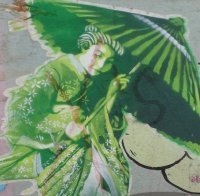
In a detailed and often startlingly close-up consideration of 122 works of art, here beautifully reproduced, many in full color, Alfred Appel explains, interprets, reveals - and throws a whole new light on - the art of the twentieth century. His wide-ranging commentary accompanying each work, from Mondrian's pulsating abstractions to Brancusi's soaring sculptures and Calder's Thirteen Spines, illuminates a whole network of cultural connections, from the literary to the aesthetic to the political. Appel champions the restorative, uplifting forces found in the works of such twentieth-century artists as Matisse, Lachaise, Paul Klee, Walker Evans, Joyce, Chagall, Stravinsky, Nabokov, Russell Lee, Leger, Milhaud (some of whom came to America to escape Hitler and quickly caught the native upbeat beat) . . . Their works have often portrayed the commonplace: cars, gasoline stations, roadside diners, electric signs, movies, radios, skyscrapers . . . celebrating - even through war in Europe and depression at home - the advances in technology, the new look of the cities . . . Appel discusses how their art stimulates and quickens the pulse, and how - with its folk images of the new, willed "primitivism," in part inspired by the tribal art of Africa and Oceania - it projects optimism, humor, energy. Full of ideas and brilliant critical insights, this is a book at once idiosyncratic, authoritative, and fun to look at and to read.
Alfred Appel Jr. was an American professor, author and journal editor noted for his investigations into the works of Vladimir Nabokov, modern art, and jazz modernism. He edited The Annotated Lolita, an edition of Nabokov's Lolita. He also authored four other books about Nabokov, literature and music.
As a student at Cornell University, Appel took a course from Nabokov. His education was interrupted by a stint in the Army, after which he completed his undergraduate education and PhD in English Literature at Columbia University in 1963.
After teaching at Columbia for a few years, he joined the faculty of Northwestern University, where he taught until his retirement in 2000. He died of heart failure. Appel was married until his death to Nina Appel, dean of Loyola University Chicago's law school from 1983 to 2004. They had two children, Karen Oshman and television writer and producer Richard Appel.
I've re-read this book no fewer than four times. A collection of essays on the impact of revolutionary artists, revolutionary art movements, revolutionary art exhibits, Appel examines the socially-responsive, collective psychology behind an appreciation of art from the mundane to the morose. Will change how you see art, and appreciate art movements, forever.