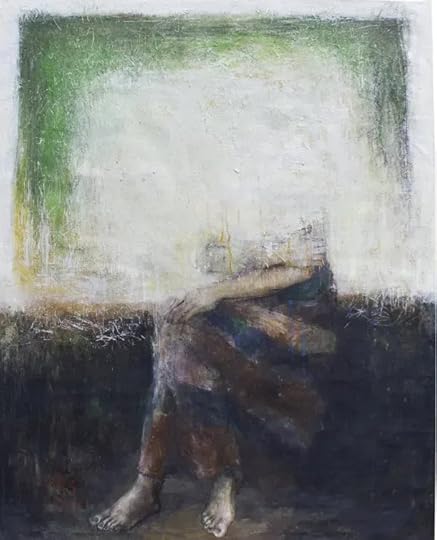
"Corpi mobili" è un memoir dalla straordinaria forza evocativa in cui Jane Sautière racconta della sua adolescenza a Phnom Penh, dove ha vissuto insieme alla sua famiglia, dal luglio del 1967 al luglio del 1970. I corpi mobili a cui si riferisce il titolo sono una sorta di ombre, di forme fugaci, di piccoli detriti che si muovono sulla retina e che si fanno potente metafora dei ricordi e delle persone che hanno fatto parte della vita dell’autrice: i genitori, i fratelli morti prima della sua nascita, i primi amori, ma anche le sensazioni provate in quegli anni, il sapore dei frutti esotici, il caldo, i colori saturi della città, la fauna e le piante locali. Come nelle opere di Annie Ernaux, anche in Sautière la storia personale incontra quella collettiva e la riflessione si fa a un tempo individuale e universale, lirica e pulsante di vita.
I see the elusive shadows of those floating bodies, always there, always hidden. Another age-related disturbance. Which seems obvious to me. My age becomes that of the floating bodies that populated my existence and that remain present and unreal.
Floating bodies (Corps flottants) – is a haunting, sensuous, and elegiac memoir, loosely shaped as a shadow play of impressions, observations and reflections.
A daughter of French expats, Jane Sautière spent her early childhood in Teheran and as an adolescent lived in Phnom Penh between 1967 and 1970 , until Lon Nol’s coup d’état and the start of the Cambodian civil war - a period in her life that is at the heart of this memoir, in which she attempts to face her repression of a past that seeks to sink into oblivion for good, impossible it has become to disconnect it from the killing fields in Cambodia. Starting as a piecing together of personal memories and a reconstruction of parts of her family history, Sautière’s memoir gradually transmutes into a serene and sobering memorial to the two million victims of the Cambodian genocide.
The masses of hitherto unknown fruits, which so accurately portray this earth: longans, lychees, rambutans, mango tans, papayas, sapodillas, cinnamon apples, dragon fruit, mangoes, wonderfully fragrant baby bananas, guavas, jackfruit and the unlikely durian, whose fermented corpse smell made us pinch our noses, but the coconut pulp-covered ice creams di were made from the fruit and served in rice dough cones tasted delectable. As if this listing communicates what the mouth can learn from a soil. The melody played by a tree with the score of the fruit. Constellations, flares, suns.
Initial experiences of the sensory colours and scents – the fauna and flora, streets and food - blend with first love, the unfolding of personal secrets, tragedies and losses, the background of her father (a former resistance fighter) and mother (from a Breton farmer’s family ), the deaths within her family- she was only told about the dead of a sister and a brother when she was twelve -– and of some of her classmates, who were tortured and killed by the Khmer Rouge.
The memories of the dead flow into the reappearing of other memories, both resurfacing as floating bodies into her memory – a memory that to her feels obfuscated, impenetrable, effaced, tightly closed off – because it is forever stained by the bloody pages that the Khmer Rouge added to the history of Cambodia. With the help of books (L'image manquante), films and documentaries of a survivor (Rithy Panh), research, a musical tribute to the victims (Bangsokol: A Requiem for Cambodia) Sautière carefully approaches the world she refused to see and closed herself off to, writing from the intimate and personal towards the horror, her research opening up a breach to the genocide, the years of stifling silence around it, marked by the shame of the survivor, or the shame of looking the other way, even if such seems all too human: Survival is irrevocably a crime.
Reminiscent of Ernaux’s focus on class migration, Sautière’s feelings of loyalty and treason towards the class of her family echo through her experiences (I too remained linked to my class by fleeing it.) In Sautière’s suggestive prose, W.G. Sebald seems to meetMarguerite Duras. Because of some striking parallels with Duras’ youth in Vietnam a few decades earlier – the lives of their mothers uncannily resembling each other - it is not hard to imagine the overwhelming impression that the discovery of the writing of Marguerite Duras had on Sautière. Recollecting her memories, her mind seems in a perpetual mode of dialogue with Duras, the writing of Duras permeating her own memories to an extent that from the first page on the memoir is imbued with allusions to the writing of Duras - waiting on a ferryboat, the Mekong river, the mother, insanity, desire, racism, colonialism. The Sea Wall, The Man Sitting in the Corridor, Practicalities, and ultimately, the crucial encounter with The Lover nurture Sautière’s growing consciousness of her own decisive years in Cambodia.
(Cheanick Nov -Sitting)
Floating bodies should be that, a doubt about the existence of what animated us, the survival of a dance, a joy, a smile of what was also there, without possible return, but present and fragile, leaving us uncertain. The non-material matter (a shadow?) remains floating. We cannot see the floating bodies, they are there, we move our gaze towards them and they move just the same. Accept this approximation and therefore the inescapable failure to write them down. Wondering how to capture the intensity of things that have disappeared. A vacillation truer than certainties, more stable than creeds, more faithful to our lives.
In general, I am rarely inclined to read memoirs , but Jane sautière’s poetic, melancholy and meditative writing lured me to read Floating bodies twice - and browsing through it, it arrests me once more by a turn of phrase, an observation, by an evocation of the suffering and horror. Because Sautière’s style in some places glides into a rather fragmented and elliptical mode, her short book merits slow reading to stay attuned to her train of thought. Her profound admiration for Duras – bordering on an almost possessive love for the author - finally pulled me into reading The Lover – which turned out that beauteous, absorbing and brilliant that I am currently sinking into some Marguerite Duras obsession of my own, being wrapped up in Laure Adler’s bulky Marguerite Duras: A Life.
Un texte sur l'absence de la mémoire - ce n'est pas Alzheimer -, qui est-on si on a occulté des pans entiers de sa propre vie ? L'existence - la nôtre, celle qui nous ont côtoyés mais dont on a oublié le nom ou ne l'a-t-on jamais su ? - a-t-elle un sens si elle se perd dans les fragments de nos souvenirs dérivant vers le néant tels des corps flottants ?
I ricordi come “Corpi mobili”, oggetti volanti che si muovono sulla retina.
“I corpi mobili, conosciuti comunemente anche come “mosche volanti” e scientificamente con il termine “miodesopsie”, sono dei corpi puntiformi o filiformi che proiettano sulla retina dell’occhio la loro ombra, comparendo all’interno del campo visivo sotto forma di ombre vaganti. Le ombre possono variare nella forma (circolari o filamentose), nella dimensione (possono essere più o meno grandi) e nella quantità (può manifestarsi una sola ombra, ma possono anche essere molteplici). Il termine “miodesopsie” deriva dal greco “myodes” che significa “simili a mosche” e “òpsis” che significa “visione”. Le miodesopsie possono avere cause naturali, ovvero presentarsi semplicemente, o possono presentarsi in seguito a fenomeni degenerativi del corpo vitreo dell’occhio.”
Jane Sautière parte da questo suo disturbo visivo per rivivere, narrandoli, gli anni in cui viveva, da adolescente, a Phnom Penh: qui ha vissuto insieme alla famiglia, dal luglio del 1967 al luglio del 1970.
“Vivo una vita al di là del mondo organico, niente ha più sapore. Grandine, pioggia, fuoco e vento sono spariti. E il regno dell'inerte, interrotto solo dalla folgorazione del dolore. Piango sulla spiaggia di Kep ascoltando un amico suonare con la chitarra / Started a Joke, lui sopporta il pianto senza sapere effettivamente il motivo, anche se io lo sapevo. Non c'era più nessuna spiaggia, nessuna dolcezza, nessuna musica, e le canzoni erano lame di rasoio, I looked at the skies / Running my hands over my eyes. Piango ascoltando in loop, nella mia stanza fumosa, la canzone per me, Sur la fumée des cigarettes / L'amour s'en va, mon cœur s'arrête / Quel joli temps pour se dire au revoir / Quel joli soir pour jouer ses vingt ans'.”
Che cosa sono quindi i corpi mobili? “I corpi mobili dovrebbero essere questo, un dubbio sull’esistenza di ciò che ci ha animato, la sopravvivenza di una danza, di una gioia, di un sorriso, di ciò che a sua volta è stato lì, senza ritorno possibile, ma presente e fragile, lasciandoci nell’incertezza.“
Per Jane Sautière la scrittura non serve a curare le ferite del passato. Parla della sua adolescenza, del suo grande amore, del suo ritorno in Francia, del suo matrimonio e poi del suo divorzio e della morte del marito: tutti questi avvenimenti scorrono come ombre proiettate sul terreno:
“Della materia non materia (un’ombra?) resta la mobilità. Non si vedono tutti i corpi mobili, sono lì, spostiamo lo sguardo verso di loro e già quelli si spostano. Accettare questa approssimazione e quindi l’ineluttabile fallimento della scrittura. Chiedersi come catturare l’intensità delle cose scomparse. Un vacillare più vero delle certezze, più stabile di un credo, più fedele delle nostre vite.”
Je ne m'y connaissais pas du tout dans cette partie de l'Histoire.. et je trouve que c'est une belle introduction. C'est rapide à lire, et on y apprend l'histoire atroce du Cambodge du point de vu des familles expatriées.. le destins atroce des locaux, qui sera révélé que tard dans la vie des survivants.
Je réalise qu'à force de lire et de s'imprégner des idées d'un écrivain, on finit par épouser son style, jusqu'à certaines de ses pensées. C'est le cas -à mon avis- de Jane Sautiére qui a vraiment une manière d'exprimer certaines intimités, qui se rapproche de celle de Duras. Il y a aussi une similitude de style avec Ernaux et Nina Bouraoui.
Pour ce qui est du fond, j'ai vraiment apprécié me liquéfier dans certaines pensées- expériences intérieures, surtout celles qui concernent l'hallucination.
Come i corpi mobili, quei piccoli segni neri che si formano nell'occhio e si notano guardando superfici omogenee, un muro bianco, una pagina bianca, così i ricordi tornano alla mente della scrittrice che li mette sul foglio come una sorta di autobiografia, immagini a volte sbiadite di persone che non ci sono più. Nata a Teheran, vissuta in Cambogia fino all'inizio della presa del potere dei khmer rossi, Jane Sautière rende questo memoir una sorta di confessione su quello che non ha voluto o saputo vedere.
L'auteur nous explique sa vie à Phnom Pehn au moment du coup d'état de 1970. Ce qui est dommage c'est que le sujet soit survolé. Il se lit très vite, mais j'aurais aimé en apprendre plus sur cette période. Je conseille, car même si on a pas beaucoup de description, on apprend certaines choses.
Jane Sautière scrive un memoir pesca a piene mani da Annie Ernaux. Lo stile di scrittura è praticamente lo stesso ma senza l'eleganza chirurgica che caratterizza gli scritti della Ernaux, il che l'ha resa una lettura abbastanza noiosa e di cui, in definitiva, poco importa.