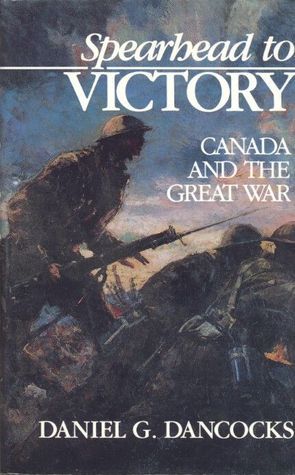
Spearhead to Canada and the Great War is the story of the dramatic hundred last days of World War I, and especially of the redoubtable Lieutenant-General Sir Arthur Currie and the Canadian Corps, who saw their hardest fighting of the war in this period. Between 8 August and 11 November 1918, 45,830 Canadians were killed, wounded, or went missing - more than one-fifth of the total Canadian losses on the Western Front during the entire conflict. Despite the casualties, Canadian morale remained high because of the Corps' consistent and sometimes spectacular successes along the Hindenburg Line. The victories were due to many excellent leadership and staff support; courageous fighting (of 6l Victoria Crosses won by the Canadian army during the Great War, 28 were awarded in the last hundred days); and the skill of all contingents, particularly the Canadian artillery. Canada came of age in these hundred days. By the end of 1918 there was an unprecedented awareness that Canada was not merely a branch of the British Empire but a strong nation in its own right.
This book, more than any, goes to show how essential a roll the Canadian Corps of the British First Army was to the victory over Germany during the First World War in 1918. It is likely the American will tell you their entry into the war was the deciding factor in its conclusion. Quite simply, it wasn`t. And surely the Brit will say that it was they, the United Kingdom, that won the war – with a little help from their Dominion forces. True, yet not, all at once. The truth of the matter is that when the Canadian Corps began their offensive at Amiens on 8 August, 1918 many within the upper echelons of the British military and government were already beginning to lay out their goals for a continued offensive in 1919.
The Battle of Amiens marked the beginning of what has been called Canada`s Hundred Days, which would end with the Canadian Corps`defeat of 47 German divisions, a number equal to one quarter of the German forces met in battle by the allied forces during the war.
This book is very well written, and, unlike many historical accounts, didn`t feel too overloaded with information. I would recommend it to anyone who has a thirst for knowledge of history. You will no doubt learn an aspect of the history of final days of the First World War that the major powers of the day felt compelled to ignore in the press of the day; that though they may indeed have gone ahead to win the war in 1919 or, God forbid, 1920 (if anybody could have lasted that long, which is unlikely), it was Canadians that were largely responsible for the allies` victory in the final 100 days of the war in 1918.