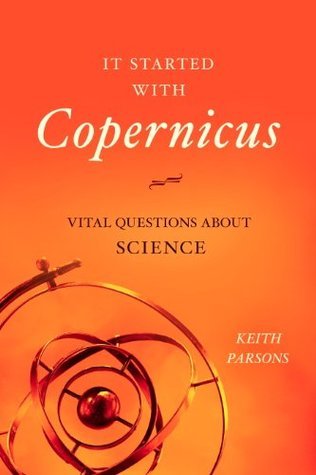
I like this book. I actually randomly came across it on the new book shelf in the library, and couldn't resist. The first chapter is my favorite so far! Perhaps if you have a background in philosophy and biology/science, you have already heard of most of the topics and debates. I am just now getting more interested in the philosophy behind science and the political situations, so many names are new, however not all of them. It may take a couple of days to read as there are so many book recommendations listed at the end of each chapter (so many books, yay!). For those of you that are interested in the breakdown of the book, here goes:
Chapter 1 Copernican Questions
Chapter 2 Is Science Really Rational? The Problem of Incommensurability
Chapter 3 A Walk on the Wild Side: Social Constructivism, Postmodernism, Feminism, and That Old-Time Religion
Chapter 4 Ascending the Slippery Slope
Chapter 5 Truth or Consequences?
Chapter 6 Mysteries of Method
Chapter 7 If You Have Science, Who Needs Philosophy?
Chapter 8 Science, Scientism, and Being Human
My favorite quotes so far are:
"The wild turkey, for instance, is smart, elusive, and tough. The domesticated turkey, the direct descendant of the wild turkey, is stupid, docile, and delicious."
"The problem of incommensurability allegedly arises when two parties have such radically different views that their ability to communicate breaks down, at least to some degree. But to be a philosophically interesting idea, incommensurability has to mean more than this. Communication can break down for all sorts of reasons. Prior to the Civil War, Southerners and Northerners could no longer have meaningful debates about the issue of slavery, or much of anything else. They hurled insults and epithets back and forth, delivered sonorous diatribes, and employed all the devices of the florid oratory of the day. But long before the first shot was fired at Fort Sumter, they had ceased any meaningful exchange of ideas. However, the problem certainly did not seem to be that North and South spoke a different language or could find no common terms to express their disagreements. The problem was that feeling ran so high and opinion had become so polarized that hardly anyone was willing or even able to listen to reason anymore. Tragically, in a situation like this, when people can no longer settle their disagreements by rational, peaceful means, violence is almost inevitable."
To Be Continued...