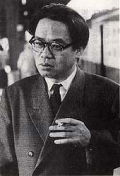
Seicho Matsumoto (松本清張, Matsumoto Seichō), December 21, 1909 – August 4, 1992) was a Japanese writer.
Matsumoto's works created a new tradition of Japanese crime fiction. Dispensing with formulaic plot devices such as puzzles, Matsumoto incorporated elements of human psychology and ordinary life into his crime fiction. In particular, his works often reflect a wider social context and postwar nihilism that expanded the scope and further darkened the atmosphere of the genre. His exposé of corruption among police officials as well as criminals was a new addition to the field. The subject of investigation was not just the crime but also the society in which the crime was committed.
The self-educated Matsumoto did not see his first book in print until he was in his forties. He was a prolific author, he wrote until his death in 1992, producing in four decades more than 450 works. Matsumoto's mystery and detective fiction solidified his reputation as a writer at home and abroad. He wrote historical novels and nonfiction in addition to mystery/detective fiction.
He was awarded the Akutagawa Prize in 1952 and the Kikuchi Kan Prize in 1970, as well as the Mystery Writers of Japan Award in 1957. He chaired the president of Mystery Writers of Japan from 1963 to 1971.
Credited with popularizing the genre among readers in his country, Matsumoto became his nation's best-selling and highest earning author in the 1960s. His most acclaimed detective novels, including Ten to sen (1958; Points and Lines, 1970); Suna no utsuwa (1961; Inspector Imanishi Investigates, 1989) and Kiri no hata (1961; Pro Bono, 2012), have been translated into a number of languages, including English.
He collaborated with film director Yoshitarō Nomura on adaptations of eight of his novels to film, including Castle of Sand.
Probably the book by Matsumoto that I have enjoyed the most (it might have to do with me having watched two of the drama adaptations of this story even if they are a little bit different from what happens here), the book tells the story of a bank teller who discovers the shady deals the director of her bank does and uses the knowledge the steal some of the money and open a kyabakura club in Ginza. Of course, things will not go smoothly.
As with other Matsumoto stories it is easy to read, with lots of conversations, a fast pace and not many descriptions (with the story: kyabakura and the era it was written, there is maybe a little bit too much about women's looks). But the setting, the main character, and the situations she encounters make for an enjoyable read. Downsides: Matsumoto tendency to have characters making plot exposition (no one will talk like the characters do or say so easily what they say) and if not, having the main character read magazines for another ten pages of plot exposition about politics in Japan. It makes the last part of this first volume a little bit of a drag, but not enough to really make the reader stop wanting to know what happens next.
The best: the main character
The worst: those silly conversations/magazines used to introduce plot points
Alternatives: Edogawa Rampo, Yokomizo Seishi, Ayatsuji Yukito (the old boys)