

What do you think?

Florida's Unexpected Wildlife: Exotic Species, Living Fossils, and Mythical Beasts in the Sunshine State
Throughout the world, sightings of animals unrecognized by modern science are reported on a daily basis. Since the 1950s, the study of these "hidden animals" has been known as cryptozoology and though many of the reports have been exposed as hoaxes, some have resisted explanation.
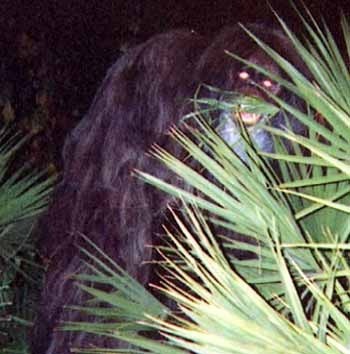
In Florida's Unexpected Wildlife award-winning author Michael Newton describes exotic species recognized by state wildlife authorities; "extinct" species whose passing is disputed or disproved; various aquatic "monsters" said to occupy Florida's rivers, lakes, and offshore waters; alien big cats; and the search for the elusive, enigmatic Skunk Ape--a local relative of Bigfoot. Newton's tales are riveting, and include a six-foot tall emu encountered by a jogger in a subdivision and a "sea serpent" carcass discovered at the mouth of the St. Johns River in the mid-nineteenth century by passengers aboard a schooner. The stories are illustrated with photographs and the incomparable paintings of artist William Rebsamen, hailed as the "John James Audubon of cryptozoology."
While "monster hunters" can use Florida's Unexpected Wildlife as a field guide, casual readers can simply enjoy the many fascinating tales and the wealth of evidence collected in this book. Grab your binoculars and enjoy the quest!
In Florida's Unexpected Wildlife award-winning author Michael Newton describes exotic species recognized by state wildlife authorities; "extinct" species whose passing is disputed or disproved; various aquatic "monsters" said to occupy Florida's rivers, lakes, and offshore waters; alien big cats; and the search for the elusive, enigmatic Skunk Ape--a local relative of Bigfoot. Newton's tales are riveting, and include a six-foot tall emu encountered by a jogger in a subdivision and a "sea serpent" carcass discovered at the mouth of the St. Johns River in the mid-nineteenth century by passengers aboard a schooner. The stories are illustrated with photographs and the incomparable paintings of artist William Rebsamen, hailed as the "John James Audubon of cryptozoology."
While "monster hunters" can use Florida's Unexpected Wildlife as a field guide, casual readers can simply enjoy the many fascinating tales and the wealth of evidence collected in this book. Grab your binoculars and enjoy the quest!
- GenresCryptozoology
208 pages, Paperback
First published September 30, 2007
About the author
Michael Newton
483 books106 followersLibrarian Note: There is more than one author by this name in the Goodreads database.
From Wikipedia:
"Michael Newton (born 1951) is an American author best known for his work on Don Pendleton's Mack Bolan series. Newton first began work on the Executioner series by co-writing "The Executioner's War Book" with Don Pendleton in 1977. Since then he has been a steady writer for the series with almost 90 entries to his credit, which triples the amount written by creator Don Pendleton. His skills and knowledge of the series have allowed him to be picked by the publishers to write the milestone novels such as #100, #200, and #300.
Writing under the pseudonym Lyle Brandt, Michael Newton has also become a popular writer of Western novels. He has written a number of successful non-fiction titles as well, including a book on genre writing (How to Write Action Adventure Novels). His book Invisible Empire: The Ku Klux Klan in Florida won the Florida Historical Society's 2002 Rembert Patrick Award for Best Book in Florida History. Newton's "Encyclopedia of Cryptozoology" won the American Library Association's award for Outstanding Reference Work in 2006."
Pen names: Lyle Brandt, Don Pendleton, Jack Buchanan
Bibiliography available here.
From Wikipedia:
"Michael Newton (born 1951) is an American author best known for his work on Don Pendleton's Mack Bolan series. Newton first began work on the Executioner series by co-writing "The Executioner's War Book" with Don Pendleton in 1977. Since then he has been a steady writer for the series with almost 90 entries to his credit, which triples the amount written by creator Don Pendleton. His skills and knowledge of the series have allowed him to be picked by the publishers to write the milestone novels such as #100, #200, and #300.
Writing under the pseudonym Lyle Brandt, Michael Newton has also become a popular writer of Western novels. He has written a number of successful non-fiction titles as well, including a book on genre writing (How to Write Action Adventure Novels). His book Invisible Empire: The Ku Klux Klan in Florida won the Florida Historical Society's 2002 Rembert Patrick Award for Best Book in Florida History. Newton's "Encyclopedia of Cryptozoology" won the American Library Association's award for Outstanding Reference Work in 2006."
Pen names: Lyle Brandt, Don Pendleton, Jack Buchanan
Bibiliography available here.
Ratings & Reviews
Friends & Following
Create a free account to discover what your friends think of this book!
Community Reviews
Displaying 1 - 1 of 1 review

April 18, 2016
And I thought my state was weird before
Newton expertly walks a careful line here. He's a cryptozoology believer who was to be respected. Thus, he lists every bizarre beastie ever sighted in the sunshine state, cites the hell out of the reports, and shoots down every possible credibility problem.
I've mentioned in the past that you have two ways to entertain me on the subject of Bigfoot, Nessie, etc. You can have a very carefully researched analysis, like David J. Daegling's Bigfoot Exposed: An Anthropologist Examines America's Enduring Legend, Loxton & prothero's Abominable Science!: Origins of the Yeti, Nessie, and Other Famous Cryptids. Alternately, go goddamned hogwild like John A. Keel's The Complete Guide to Mysterious Beings and throw out entertaining lunacy like Atlantean Sasquatch UFO pilot.
Or you could complete fail, like Childress's disappointing plagiarized mess.
Newton strays on the first path. Going from exotic reptiles to sea serpents and skunk ape, he cites every source for his reports. He takes a level-headed approach, and general ends with nothing more out there than "there might be something to this."
That's a credit to his integrity in a book with unicorns, mega-penguins, and twenty-five foot tall scorpions.
When he gets to Skunk Ape, our native Bigfoot variant, he digs deep, going over every major period of sightings in the 20th century and beyond. I'm an science-teaching inveterate skeptic, and I still get a little thrill from reading about Bigfoot sightings within a five minute drive of my house. Then again, I did write my own book with sasquatch . . .
The book is listed as two hundred pages, but it's really a much lighter read. There's about one hundred pages of text, thirty pages of citations and bibliography, and about seventy pages of every reported skunk ape sighting on record.
It's a fun little book with nice art that won't insult your intelligence. Just watch out for those giant chickens.
Displaying 1 - 1 of 1 review