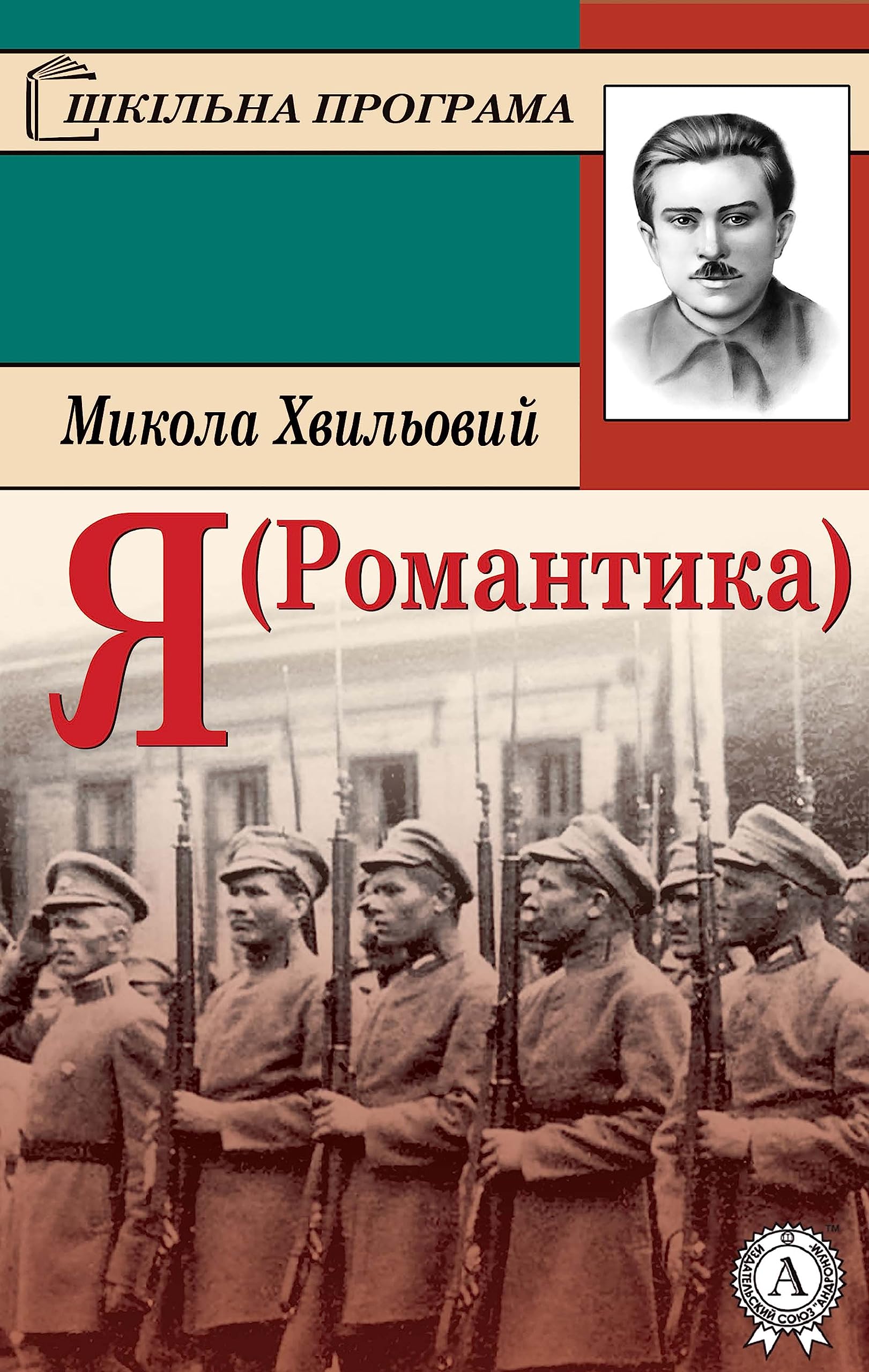
«Я (Романтика)» та «Іван Іванович» Миколи Хвильового — це психологічні твори, присвячені темі комуністичного правління в Україні. Герой новели «Я (Романтика)» заглушив особистий біль кулеметною чергою, але як бути, коли твоєю жертвою стає власна матір? Життя на межі божевілля, на межі людських можливостей, сумління і обов'язку — такою є багатопланова структура новели М. Хвильового «Я (Романтика)». У повісті «Іван Іванович» автор майстерно використовує прийоми сатири і сарказму, зображуючи абсурдну політику ідеологічного режиму.
I am a Chekist, but I am also a human being This is an emotionally strong psychological novella about the Civil War by the Ukrainian author from the 1920s Mykola Khvylovy. Currently, as I understand it, the book is part of the school program (it wasn’t when I was in school in the 1980s – early 1990s). The English title is probably “I(Romance)”, but the direct translation is hard because романтика means both romance and romantic and romanticism.
The novella is dedicated to another Ukrainian novella, Apple-tree blossom by Mykhailo Kotsiubynsky, which I reviewed here, for it takes the same theme – a simultaneous existence on several levels.
The book starts with the protagonist/narrator, dreaming about his mother, whom he compares to the Holy Virgin, about her love and care. Then, abruptly, the story shifts to the present, where the protagonist heads ‘the Black Tribunal’, which quickly orders executions of potential enemies, while the military enemy storms the city they are in. while the story is about 1917-1920 in Ukraine, the protagonist (romantically?) sees himself in the French revolution, e.g. using terms like insurgents. communards and supporters of Versailles. The tribunal except our character, consists of three other members - Dr. Tagabat, an unnamed degenerate, and Andriusha – they all are described in a dreamlike fashion, so they are more Plato’s ideals than real people. The doctor is a sadist, evil genius “with a broad forehead and white baldness, with a cold mind and a stone for a heart, he is also my desperate master, my animal instinct”, the degenerate is the guardian of the revolution, who knows no doubt, “with a degenerate skull structure. I can only see his slightly crazy eyes, but I know that the degenerate has a low forehead, a black mop of tousled hair, and a flattened nose. He always reminds me of a convict, and I think he must have been in the criminal records department more than once”. Finally, Andriusha, the voice of mercy. A shortened outline of the process: Two people entered my office: a woman in mourning and a man in a pince-nez. They were completely frightened by the surroundings: aristocratic luxury, princely portraits, and a mess of empty bottles, revolvers, and blue cigarette smoke. … - Why were you taken? - Woman: For this! Yeah, you were having a meeting! What kind of meeting can there be at such a disturbing time at night in a private apartment? Yes, you're theosophists! You're looking for the truth! A new truth? Yes! Yes! Who is it? Christ? No? The other savior of the world? … - So why the hell don't you make this Messiah out of the Cheka? The woman starts to cry. The man turns even paler. ...A man falls to his knees and begs for mercy. I kick him with my foot, and he falls face down. The woman puts her hand to her temple and leans on the table in despair. The woman speaks deaf and dead: - Listen, I am the mother of three children! I: - Execute!
Suddenly, a next bunch of captured ‘enemies’ arrive to be questioned and executed – a group of nuns. Among them is the mother of the protagonist. What will he do? Will ‘revolutionary necessity’ outweigh his filial feelings?
The novella is so strong that quite a few readers assume that the author was in Cheka and executed his own mother, but both statements are false.
Зневірений, у розпачі, із відчуттями втрати Україною волі, із передчуттям її загибелі, він шукав в пролетарських ідеях ідеальний лад, а знайшов моторошне життя, повне вбивств, крові, смертей, страху, знущань і душевних мук. Цю непевність, яку переживав Микола Хвильовий, він передав у своїх творах.
Сила його письменницького слова не може не хвилювати. Це не просто читання, це незрозуміле відчуття до самого краю напруженого нерва із гидким післясмаком. Його новела «Я (Романтика)» зайде буром в серце і викрутить його на виворіт.
Головний герой новели - фанатик «загірної комуни» . Заради ідеї цей чекіст жорстоко розправляється зі всіма, хто здаєтся йому винним. «Шість на моїй совісті? Ні, це не правда. Шість сотень, шість тисяч, шість мільйонів - тьма на моїй совісті!» . Людське життя для нього не варте нічого. Його покликом є загірна комуна - країна щастя і благодаті для всіх голодних і спраглих. Та хіба можна створити омріяну країну щастя ціною розстрілів невинних людей?
Стається момент, і його душа на мить розпинається між любов'ю до рідної матері та фанатичною відданістю ідеї в ім'я революції. Ідеї, яка несла лише зло, вбивала почуття справедливості, почуття розуміння де є добро й де є правда.
«Я — чекіст, але я і людина». З однієї сторони головний герой твору - знаряддя, яке без суду й слідства вершить долю людей, кидає їх на розстріл, а з іншої другої сторони - людина, яка б могла любити, яка безмежною силою любові зв'язана з матір'ю. Він опиняється в цілковитій безвиході... Це була лиш мить непевності. Кат, позбавлений людської моралі, без інстинкту любові, так і залишиться недолюдком.
Микола Хвильовий не зміг пережити жахливу суперечність між своїми романтичними уявленнями про «світле майбутнє», яке несла революція, і реальною дійсністю, яку він бачив довкола. Трагічним пострілом собі у сконю, він поставив крапку в своїй долі. Цей постріл пролунав як застереження до кривавого червоного терору. Як бачимо, ця засторога не лише в реаліях тогочасся. Вона поза часом.