With a sharp eye for social detail and the pressures of class inequality, Alfred Hitchcock brought to the American scene a perspicacity and analytical shrewdness unparalleled in American cinema. Murray Pomerance works from a basis in cultural analysis and a detailed knowledge of Alfred Hitchcock's films and production techniques to explore how America of the 1940s, 1950s, and 1960s is revealed and critically commented upon in Hitchcock's work. Alfred Hitchcock's America is full of stunning details that bring new light to Hitchcock's method and works. The American "spirit of place," is seen here in light of the titanic American personality, American values in a consumer age, social class and American social form, and the characteristic American marriage. The book’s analysis ranges across a wide array of films from Rebecca to Family Plot, and examines in depth the location sequences, characterological types, and complex social expectations that riddled American society while Hitchcock thrived there.
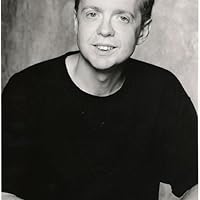
Murray Pomerance is a Canadian film scholar, author, and professor who teaches in the Department of Sociology at Ryerson University and in the joint program in communication and culture at Ryerson University and York University. He has written extensively on film, cinematic experience, and performance. Most recently he authored The Eyes Have It: Cinema and the Reality Effect, Tomorrow, Alfred Hitchcock's America, Michelangelo Red Antonioni Blue: Eight Reflections on Cinema and Edith Valmaine and is a co-editor of Hollywood's Chosen People: The Jewish Experience in American Cinema (Wayne State University Press, 2012). Pomerance is the editor and co-editor of more than a dozen books and the editor of several book series on film at Rutgers University Press and at the State University of New York Press.
Interesting essays viewing Hitchcock's U.S. output in terms of themes like (disintegrating) marriages, the self-made person, Freudian psychology, and the post-war influx of advertising (Roger Thornhill works in the world that creates the ads that help Marion Crane define the kind of life she's like married to Sam Loomis). Well researched and inclusive, with The Wrong Man and Family Plot receiving as much mention as Vertigo and Psycho.
A very interesting, if overly analytic and academic exploration of Hitchcock's perspective on mid-20th century America as revealed in his films of the era. Worth a read.
Pomerance provides a fresh take on Hitchcock by looking at what Hitchcock's film revealed about American society and character in the postwar era.
Not every page of this book is outstanding, but Pomerance is clearly excited about Hitchcock, and he communicates this to the reader. After this book, I'm going to try to see "Torn Curtain," "The Wrong Man" and "Mr. and Mrs. Smith."
Pomerance knows a lot about how these films were made, and he has some fascinating details about Hitchcock's work with character actors.
Half social history, half film analysis. Intuitive. Fascinating. I loved it and I heartily recommend it.
Read it as an e-book. The page numbers cannot compare to physical page numbers, so I thought it was going to be a lot longer than it was. There were many "pages" of Notes. Also full of information.