A collection of short stories with one compelling that of the isolated female - child, adolescent and woman - all distanced from ordinary life. By the author of "Longleg", "Games of the Strong", "Dancing on Coral" and "The Tempest of Clemenza".
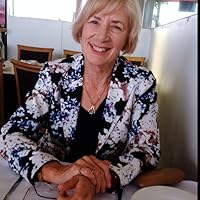
Glenda Emilie Adams (née Felton; 30 December 1939 – 11 July 2007) was an Australian novelist and short story writer, probably best known as the winner of the 1987 Miles Franklin Award for Dancing on Coral. She was a teacher of creative writing, and helped develop writing programs.
Adams' work is found in her own books and short story collections, in numerous short story anthologies, and in journals and magazines.Her essays, stories and articles have been published in, among other magazines, Meanjin, The New York Times Book Review, Panorama, Quadrant, Southerly, Westerly, The Sydney Morning Herald, The (London) Observer and The Village Voice.
'The Hottest Night of the Century' is a series of short stories written by Australian author Glenda Adams and published in 1979. Each story shows the isolation of its female protagonist from the world, resulting from aspects of the fact she is a woman: expectations, attitudes, powerlessness, marriage and so forth. This could make the collection bleak, but I found it a pleasure to read for the inventiveness and wit within the stories, and for Glenda Adam's exquisite prose.
The stories harmonise with a feminist perspective and are set in the seventies or earlier. I am grateful that my own world as a woman is not as bleak as the one Adams describes. However, I imagine some of these stories could strike a chord with women trapped in their own worlds.
I write short stories, and I loved this book for what it showed me was possible with short stories. Adams plays with style in some of these pieces, but no matter how she approached each one, for me they always resulted in an emotional punch at the end. The magnitude of it often felt like it crept up on me without warning.
Amongst the things I most enjoyed were the metaphors and small elements of magic occasionally employed in the service of the story. Stories I most enjoyed included 'The Circle', 'The Hollow Woman', and 'Reconstruction of an Event'.
With spare writing, delineating clear details, Adams each time built a picture which from its innocent beginnings turned suddenly tense. As I was reading, there would come a point where each story turned into something it had not seemed when it began, and I had to read on to the end, usually with some sense of dread.
This collection did not feel like a holiday read, but I enjoyed it, and for me, it is also worth studying to improve my own writing.
This collection has a rather wistful tone but i love Adam's style of writing with spare, short sentences and her way of showing you the protagonist 's feelings, rather than telling you.