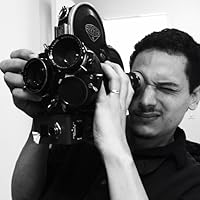
Andrzej Wajda (born 6 March 1926 in Suwałki) is a Polish film director. Recipient of an honorary Oscar, he is one of the most prominent members of the Polish Film School. A major figure of world and Central European cinema after World War II, Wajda made his reputation as a sensitive and uncompromising chronicler of his country's political and social evolution.
He is currently listed as the 97th greatest director of all-time by film website They Shoot Pictures Don't They[1], with four of his movies nominated for the Academy Award for Best Foreign Language Film
Wajda became interested in the visual arts when working as assistant to a restorer of old church paintings in Radom. He studied painting at the Academy of Fine Arts in Kraków, then film directing at the Leon Schiller State Theatre and Film School at Łódź. His first three films, Pokolenie (1954; A Generation), Kanał (1957; Canal), and Popiół i diament (1958; Ashes and Diamonds), won prizes at international film festivals. They constituted a trilogy that dealt in symbolic imagery with sweeping social and political changes in Poland during the German occupation, the Warsaw uprising of 1944, and the immediate postwar years. The actor Zbigniew Cybulski became famous for his portrayal of the hero, a boy growing into manhood whose idealism survives the humiliation and defeat of the occupation and the deaths of friends and the girl he loves.
Wajda became increasingly concerned with the problems of youth in the contemporary world and with the conflicts inherent in the human situation in later films such as Lotna (1959), Wszystko na sprzedaż (1968; Everything for Sale), Ziemia obiecana (1974; The Promised Land), Czlowiek z marmuru (1977; Man of Marble), Bez znieczulenia (1978; Without Anesthetic, or Rough Treatment), Panny z Wilka (1979; The Young Girls of Wilko), Czlowiek z zelaza (1981; Man of Iron), and Danton (1982). The highly acclaimed Korczak (1990) is a true story of the final days of Henryk Goldszmit (better known by his pen name Janusz Korczak), a Jewish doctor, writer, and child advocate who refused to escape Nazi-occupied Poland during World War II in order to maintain his orphanage. Other films include Nastasja (1994); Pan Tadeusz (1999), which is based on Adam Mickiewicz’s epic poem of the same name; Zemsta (2002; The Revenge), which starred Roman Polanski; and Katyn (2007), about the Katyn Massacre in 1940. Wadja received an honorary Academy Award in 2000.
An excellent book from the mind and experience of a master in cinema. He tells and explains his though process and the decision making when making a film. Is a good read and so delicious you will not put the book down until you finish. It's almost as if Wajda is telling you personally some advice!
Wajda bravely made the movie masterpiece Man of Marble under the communist regime in Poland. This book is a tad routine but often inspired (on acting [ch. 9-11], on lighting [ch. 25], the first and last three chapters). For example, it is fascinating to read the following confidential state censorship document on his work: "A. Wajda is not politically involved in a pro-Marxist sense. Rather he has adopted a viewpoint that is not all that uncommon among artists -- that of an "objective judge" of both the past and the present -- it being his opinion that he has both the right and the possibilities to apply the standards of humanism and morality to the problems of the world without having to resort to Marxism or any other political or social system."
Wajda stirringly responds: "For the censors the word is the privileged channel of ideology. Film is image, or more precisely, that impalpable something between image and sound which is its soul. Cuts can be made in Ashes and Diamonds, but there is no way anyone can censor Zbyszek Cybulski's performance. It is precisely the way he is that contains that certain something representing political obscenity, the freedom of the boy in dark glasses confronting the reality imposed upon him. The same is true of Man of Marble. This film was inadmissible everywhere in the world. What could a few cuts do to it?
"The real problem is how to conceive of a work that will render the censors inoperative. No one can censor what he cannot understand, what transcends the imagination. Create something truly original and the censors will be lost.
"Solidarity. I remain faithful to my ideal, for in that ideal I see the only remedy to our sterile solitude, to the emptiness that threatens so many people who seem ready and willing to sacrifice the common good for the sake of their own immediate comfort. People for whom the word peace means nothing more than 'leave me in peace' or 'don't bother me.'"