A collection of essays that explore the profound and varied responses elicited by Rothko’s most compelling creations, plus a facsimile of Rothko’s “Scribble Book” and an early sketchbook.
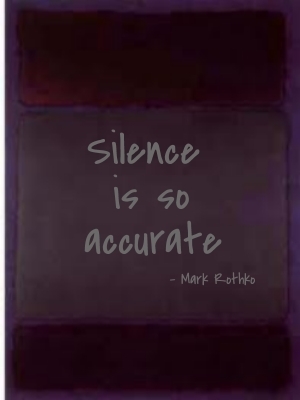
“I am interested only in expressing basic human emotions: tragedy, ecstasy, doom,” Mark Rothko (1903–1970) said of his paintings. “If you are moved only by their color relationships, then you miss the point.”
Throughout his career, Rothko was concerned with what other people experienced when they looked at his canvases. As his work shifted from figurative imagery to luminous fields of color, his concern expanded to the setting in which his paintings were exhibited. In a series of analytic, personal, and even poetic essays by contemporary scholars, this volume explores the profound and varied responses elicited by Rothko’s most compelling creations. This volume also reproduces, for the first time, a “Scribble Book,” in which he jotted down his ideas on teaching art to children, and a sketchbook, both dating to the early years of the artist's career.
Seeing Rothko includes essays by David Antin, Dore Ashton, Thomas Crow, John Elderfield, Briony Fer, Charles Harrison, Miguel López-Remiro, Sarah Rich, and Jeffrey Weiss, an introduction by Glenn Phillips, and a bibliography of Rothko’s own writings.
black canvas comes alive bare feet on concrete light streams in glimpse life in shadow
black canvas comes alive the touch of love time dances in light everything becomes nothing
black canvas comes alive lift the veil mind beams brightly nothing becomes everything
black canvas comes alive darkness falls away we sit together glowing before the black canvas we are alive
How I feel Rothko
I believe that we, as a life form/life force, are continuously adapting to the bonds between time and space and the unknown. We are simply the evolution of the bonds and infinite connections of everything. We are a manifestation. We are ESSENCE.
If our existence is basically a reaction to those ever changing bonds and connections, every experience, and action and randomness that occurs adds a connection, and contributes to our evolution. I believe that life is an amazing "miracle" of the cosmos. I believe we, as a life form/life force, are serendipity incarnate.
So this life form/life force, this body, this mind, this crazy bundle of bonds and connections and reactions that is the essence of ME, you all are part of that now. Our connection, no matter how weak or strong, is part of my evolution, part of my connection with everything else. Whatever you and I share, is a beautiful interpretation of the miracle of evolving life, a serendipitous connection that allows our combined entity, our "US" to exist. We are irreversibly connected.
It's amazing to see the variety of things that people say in response to Rothko. I was reading this as research for my MA dissertation about the use of visual art and music in healthcare, claiming that these artforms can create a psychoanalytic "holding space" in which seriously ill people can come to terms with the reality of their physical illness. One of the main reasons why I thought Rothko was a good artist for this kind of activity is that the viewer is allowed to create most of the meaning of the work because of its abstraction. There seems to be something intense and alluring to Rothko's paintings that can draw you in and provoke some sort of response, even though there doesn't seem to be much to respond to. Looking at them seems to be an embodied experience where physical / emotional feelings shift below consciousness. Your gut moves and twists before you know why. Deciding why is down to you as a viewer and this is why Rothko's an important artist I think. He manages to make you act upon yourself, structure yourself.
David Antin's essay was the most memorable and beautiful I think. You get used to the formatting even though it seems daft to start with. It kind of works like Rothko's paintings, allowing you to do the work of structuring.
The essays in this collection examine the question of how a viewer sees and experiences a Rothko painting. Some of these pieces are fairly direct and straightforward. They enhanced and enriched my understanding of Rothko’s work and made me want to go back and look again at the Rothkos I’ve seen before and seek out ones I haven’t.
A few of the pieces in this book, however, were partially or entirely incomprehensible to me. Rothko’s own notes for a planned, but never-written book comparing modern art to the art of children, alternated between the fascinating and the obscure. Briony Fer’s “Rothko and Repetition” got confusing towards the end, Jeffrey Weiss’s “Dis-Orientation: Rothko’s Inverted Canvases,” was fairly understandable until he started talking about Minimalism, at which point he completely lost me, and John Elderfield’s “Transformations” made no sense to me whatsoever. It didn’t even seem to be written in English. I read each sentence two, three, or four times, and still didn’t understand a word.
Overall, though, this is a useful book, and goes a long way towards dismantling the notion that the paintings of Rothko’s classic period are merely serene, blissed-out blocks of color.