Here is an introspective, poignant portrait of an American family during a time of sweeping changes. Now nearly sixty years after it first appeared, Suckow's finest work still displays a thorough realism in its characters' actions and aspirations; the uneasy compromises they are forced to make still ring true. Suckow's talent for retrospective analysis comes to life as she examines her own people—Iowans, descendants of early settlers—through the lives of the Ferguson family, living in the fictional small town of Belmond, Iowa. Using her gift of creating three-dimensional, living characters, Suckow focuses on personal differences within the family and each member's separate struggle to make sense of past and present, to confront a pervasive sense of loss as a way of life disappears.
Ruth Suckow (August 6, 1892 – January 23, 1960) was an American author.
Suckow is sometimes recalled as a "regionalist," but she did not consider herself such a writer. She said that she wrote about "people, situations, and their meaning." Her fiction was often set in Iowa, but was not parochial in outlook. Today her writing has value for readers who enjoy good storytelling as well as for social historians looking for details about life in the early 20th century, particularly in the small towns of Iowa.
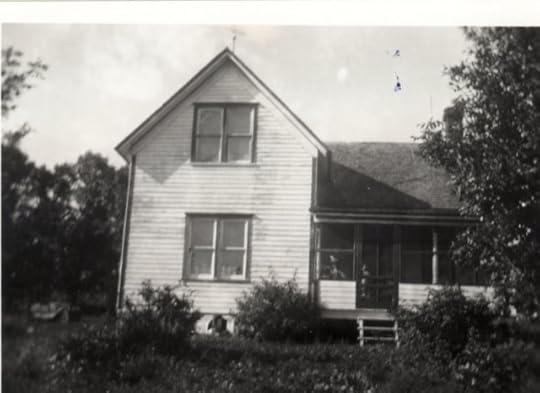
Suckow's childhood home has been preserved at Calliope Village in Hawarden, Iowa.
A small town. Somewhere between Ohio and Nebraska. The time period moves from around 1890 to 1934, when the book was published. Our family is the Fergusons. The grandparents, parents, kids – Carl, Dorothy, Margaret and Bunny -, and, eventually, their husbands, wives and children. We spend a long time with them – over 700 pages. The family live in a large frame house, set in an ample lawn, and enjoy the relative comforts provided by Mr Ferguson's position in the local bank. The grandparents, however, still live on the old farm. The children break away in different directions and in different styles. The family is Presbyterian. One of many of the christian sects with presence in the town. The community is small and rigorously controlled by tradition.
This should indicate much to be expected in the content and thematic discussions of this text – cultural change, modernism, religion, rebellious quests for self-fulfilment, marital failure, the exodus of young intellectuals from the Midwest to New York, the emerging feminist consciousness….All this is there, and done exceptionally well, with a critical warmth often missing from similar attempts. It is not that she is not mocking at times, or justifiably harsh in her critique (particularly, as one would expect, when in comes to gender issues) but that there is a value given to each character, a sense of validity and right-to-be that a straight satire would lack. In particular the parents (often designed simply as foils for the breaking-away of the kids in such novels) are sympathetically drawn and their sorrow, hurt and frustration at the actions of their children is treated with respect and tenderness.
The novel is organised into sections, each of which focuses on a different member of the family (with the parents' chapters book-ending the text), though each interconnect with great complexity and subtlety. The style is realist, and there is much detailed recreation of the exterior and interior lives of these small town folks. This is not an "experimental" text, at least not in its style, but if one considers the time of its writing, there is much boundary pushing in terms of the portrayal of the minds and desires of the women in particular.
The point is to explore what continues, what holds firm, even through change, what fundamental element of Midwestern existence will be retained even by those young people rushing off to the big city and becoming writers or Marxists….
It is also a book about fear: the fear of those in that fascinating generation which came of age in the first two decades of the 20thc as they broke out onto new paths; the sex-fear of the virginal and repressed; the older generations' fear of change; the shy and introverted with their fear of Society (with a capital "S"); the fear of stepping outside strict (and safe, comfortable, familiar) class boundaries..etc etc
Suckow is an exceptional talent, most particularly in her characterisation. Even minor players have unique and authentic voices, have a richness to them which gives the novel a sense of great weight and presence.
It took her about 100 pages to win me over, not least because I have read this sort of thing many times before, but win me over she certainly did. The prose is not flashy, or ornately beautiful, but it is perfectly suited to its task and is a pleasure to read. It allowed me to care about her people, which is more than enough.
This book is, surprisingly, currently in print (or, at least, had a paperback edition put out pretty recently) and very cheap copies can be found all over the internet. Give it a go.
I sought this novel out because of a letter Dorothy Canfield Fisher wrote to the author praising it (which I read in Keeping Fires Night and Day: Selected Letters of Dorothy Canfield Fisher ). I was dismayed when I ordered a copy of The Folks online and it arrived and turned out to be more than 700 pages long. Published in 1934, it's a multi-generational story of an Iowa family, taking place in the first three decades of the 20th century. Fred Ferguson has moved into a small town, leaving the old folks back on the farm. He thrives as a banker and becomes solidly middle class, while hewing closely to his old fashioned values. He and his wife have four children, and different sections of the book focus on each in turn, bookended by sections at the beginning and end about "the folks" (the parents). All of the children ended up being unhappy in different ways, and the book was bloated and a chore to finish, but I doggedly kept going because I'd gotten too far in to give up. My least favorite character was the one most likely to be stand-in for the author, and the one I might have expected to identify with, had I read a summary ahead of time: Margaret, the daughter who flees the stifling conventions of small town Midwestern life and reinvents herself in Greenwich Village in the 1920s. She is just monstrously selfish and unpleasant.
This is really more of a 2.5 for me (I have no complaints about the quality of the writing), but I noted that absolutely no one has given this 3 stars, which strikes me as really unusual, so in order to keep the trend alive, to see how long it lasts, I did a rare rounding down. Sorry, Ruth Suckow!
I ordered this book because I was interested in Midwestern authors and I had only recently learned of Ruth Suckow. I have enjoyed the first several chapters. Then I borrowed a book by Gene Stratton Porter and needed to read it so I could return it. The styles of the two authors, or at least the worlds they are presenting, remind me very much of each other. The Folks so far is about the tensions between the old fashioned country relatives and the next generation, who has moved into town and is adopting "town ways."
Ruth Suckow's The Folks may well be the best novel I have ever read--emphasis on I because it's difficult for me to believe that anyone else under the sun would agree. Why that's true may well be proof of a near-fatal myopia. While the rest of the world loves to read stories they don't know, I have a near fatal propensity to become entirely transfixed by imagining what I already do.
That Ruth Suckow's work hasn't made it through the years is painfully understandable. Her characters are heartland WASPs--white, Anglo-Saxon Protestants like myself, among the least interesting people today in America's ethnic and racial weave. Her characters are fly-over people in fly-over country, of interest only by their abiding support of a President who shares none of their values. Suckow's people are here, all around me. She grew up in Hawarden, just down the road, in a county where 81% of the devoutly religious populace voted for our President.
The Folks investigates the peculiar lives of people who still somehow believe that Jefferson wasn't wrong about the blessings that accrue to those who work the land. The Folks is about "the folks," the standard bearers, the dynamo that put legs beneath the purely American dream of a new nation. And, just as clearly, it's about their demise. For die they will, and die they do in the novel many believe to be Ruth Suckow's finest.
There are six novels in its 700+ pages, one each for the Ferguson children, and two, bookends, for Fred and Anne Ferguson, "the folks," whose lives are examined in sometimes ruthless intimacy.
If Ms. Suckow had an editor, I'm quite sure I would not have liked to see the original manuscript. The immensity of her characterizations make getting through the book seem a chore; The Folks is not a book you can charge through. Yet, having finished it, I don't know that I'd have wanted her to cut a word. The sheer expanse risks fatigue, even boredom--no doubt. But, to a reader like me, someone who knows the Fergusons and their children, Suckow's virtuous explorations are convincing. She loves her characters, no matter what their flaws. I know them, sometimes too well.
Carl was the Ferguson's wunderkind, a boy-celebrity in Belmond, the fictional Iowa town that is base to all family operations. Carl is the star of the football team--the local Christian college has only recently inaugurated a football program, even though the Fred Ferguson, like other conservatives, thinks football is just another means by which people dilute what should be their faithful service to the church. Carl's yankee ambitions are thwarted by his own randy arrogance; he creates sexual fantasies with women he knows and meets, to the detriment of his own marriage, a moral lesson he comes to recognize when his emotionally starved wife attempts suicide.
The folks can't help thinking that Carl should have had a better life than the one he lives. That they know what happened doesn't mean they understand.
Not for a day did daughter Margaret ever think of Belmond as home. Reared by parents who love their homey, small-town world, Margaret hated it for its American Gothic pretentiousness. What's more, she grows up in the shadows of her all-American brother. She feels trapped by Belmond, so she escapes to New York as quickly as she can shake the dust off her feet and searches for what's new and chic and a kind of love she'd never attain in Iowa. Eventually, she gets what she wanted, becomes what the folks might have called "a kept woman" if they dared to think of their daughter that way. They have no idea where they went wrong with Margaret, who calls herself "Margot" in NYC.
Dorothy, a sweetheart, marries an absolutely gorgeous young man. They move to California, thinking they'll find their dreams. But when the folks visit, it becomes all too clear that those dreams are just as far away as they've ever been, maybe farther. Dorothy is living in a hovel while her philandering husband chases the next delusion down the street, sure that this one will pay off big-time.
Bunny is conceived in what seems to be the folks' very last tryst between the sheets, and is, thus, a tail-ender. Unlike his siblings, he doesn't enroll at the small, Christian college just down the road. Instead, he chooses Iowa State, where he meets a Russian girl, a bona fide communist (the novel is set in the late 20s), several years older than he is. They marry secretly, and he takes her home as his lawful, wedded wife. The folks don't understand Bunny either.
There's palpable sadness-es in the novel, some significantly broken hearts; but The Folks itself is neither dark nor bleak. It's just, well, real. Once they come of age to retire, the Fergusons go off the California for the winter like so many other Iowans. They nearly fall in love with new opportunities (at least Anne does), but they return after a long winter to smell once again the fertile Iowa earth, the land they're heir to, even though they'd never worked it themselves.
Their return to Belmond is not a triumph. An Iowa way-of-life isn't heralded as some heavenly blessing. But they learn, the folks do. And that's no small thing. They don't so much come to understand their children's choices, as they simply come to make peace with the mysteries that exist cavernously in their lives and ours. They learn--they attain--peace. We should all be so blessed.
I've always thought my wife and I are completely different readers. I read to examine, to assess, to reveal. I am incorrigible English teacher. When my wife reads a book, she's in it. I'm not. I explore it.
I almost hate to admit it, but I was in The Folks, an experience for me that's rare. I was in because I found myself in the novel in so many places and so many ways. Call me myopic, maybe even narcissist; but I loved the novel, not because it brought me to a whole different world but because it revealed in sometimes astonishing emotional detail, me, myself, and mine.