Pippa resents her authoritarian father, Joseph Eastman, an eminent historian. She escapes to Australia, and falls for Jude. After her mother's death, she returns to look after Joseph, suffering from dementia. Jude follows her to look for his alcoholic father. The book opens as an email hints at a family connection in Finland and a skeleton in the cupboard. After Joseph's death Pippa finds a diary giving a vivid picture of the Finnish-Russian Winter War and how her grandfather Josef, a Russian soldier, was rescued by a Finnish farmer's daughter. Pippa's father was their child. Pippa persuades Jude to help her with her family research in Finland and finds that her grandfather, identified as a Russian, was deported by occupying Germans to a German slave camp. Later her father returned to trace the traitor and deal with him. Meanwhile Jude is trying to trace his father, who had abandoned his wife and son in Australia, eventually finding him in recovery but blind. The book shows how Pippa and Jude, separately and together, conduct their searches and deal with their outcome, in the process finding a new depth to their own relationship.
Mum was Swiss and Dad English and they met on a ship travelling to New Zealand so it's not surprising that my destiny was to become a travel writer.
My writing began during World War Two when, aged ten, I started a series of stories about a gnome and a flying dragon who encountered twins and took them on amazing overseas adventures, first having to overcome the hazards of barrage balloons, falling bombs and rising shells. Being a hoarder I still have them, complete with illustrations.
Apart from a few lapses, I have barely stopped writing since, which makes it seventy-five years-plus of scribbling. My main interest has been in how ordinary people cope with extraordinary circumstances, hence a trilogy on the effects of war on the children and grand children of participants. I also have a firm belief that it is better to be part of the solution than part of the problem. And I have contributed to such themes as addiction. My future projects will be involved with promoting some understanding of mild dementia and the continued presence of the real person behind it. It's a subject we are all going to need to get used to in the coming years.
As sole carer for my husband and best mate who suffered from it, I am still coming to terms with his collapse and death early in 2013, but it's my plan to proceed into the future in his company. I'm also putting his memoirs on the Web - he had a hugely interesting life. You can find them at www.georgespenceley4.wordpress.com Mine can be found at www.sylvienickelsbooks.com
Currently I am editing the trilogy I wrote a few years ago on the effects of war on successive generations in order to bring them out in one volume. The next project is to write a fourth book to round off the trilogy, with some or the main characters. It will be set in the kind of residential home for retired people in which I am currently living.
3* Sylvie Nickels' The Other Side of Silence tells the parallel stories of Pippa and Jude and their quest to uncover the truth about their families' pasts. The novel switches between the contemporary and the years of the Second World War. There are lots of interesting details in the book. It's clearly well-researched and, most of the time, information is conveyed seamlessly (there's a lovely scene where Jude and Pippa go bird-watching, for instance). Where it's forced (such as in their discussion on aboriginal art), the dialogue can seem stilted: "Yeah, I noticed there’s a great emphasis on flora and fauna and geological features." The book is also well-structured in the way we move back and forth between stories. Though the denouement of the central mystery is a little anticlimactic and (for me) the plot resolves all its threads too neatly, it's a consistently engaging read and the pace is good. What I enjoyed most though was the author's understanding of history and setting . The Finland sections of the contemporary story were very well described; I completely believed in the sense of place they conjured. The research into the Winter War was compelling and some of the complexities of that situation well outlined. The story Pippa uncovers has the makings of an epic which made me wonder if the book would have been more powerful if it had just shown us that story rather than told it. The problem, for me, was that I didn't feel that invested in any of the characters. The relationship between Jude and Pippa seemed too mundane, always on one level. I can see that this may have been deliberate (a counterpoint to the dramas of the war stories) but it left me not caring much about either of them. I'd have preferred to have seen more of Pippa's recollections of her relationship with her father (more complex and interesting than her one with Jude). The novel tackles many fascinating themes - addiction, grief, knowledge, responsibility, the need to resolve the past before thinking about the future - and for me, more showing, less telling is what might have turned this good, enjoyable read into something special.
"The Other Side of Silence" is a very interesting book. The author, Sylvie Nickels is able to create a strong connection between the reader and the characters of the story. The story describes the journey of two people, Pippa and Jude as they try to discover their pasts. They both help each other on their quests- emotionally and by being a part of the other's quest. The relationship between Pippa and Jude becomes stronger as they discover hidden aspects of their own and each other's personality.
Pippa's journey takes us to the beautiful locations of Finland. The author has described the culture, geography and sights of Finland so vividly that you feel transported to that land. In fact I searched for flights and holidays in Finland after reading the book- reading the book makes you want to go and see that beautiful country.
Pippa's journey also takes us to the second world war where we feel disgusted at the misery inflicted upon the world by a few men's lust for power. But even during the days of war, higher human emotions like love, compassion, bravery and kindness shine through and we realize that even when the world is full of madness the beauty of the human soul will overpower it.
Jude's journey introduces us to bird watching and shows us the sights and sounds of the English countryside.
The book is very well written- the complex characters, the complex stories, the journeys through history and the present, the amazing places that are visited- everything fits in so well and with amazing ease. The author's philosophical notes make us nod and at times smile. This is my favourite: "Interesting how one’s perspective could change when you somehow removed yourself from the centre of the picture." So true. So very true. Another strength of the book is the descriptions of people, places and thoughts. This makes you feel a part of the story. The historical and geographical facts have been very well researched.
There is only one minor problem that I had with the book: out of the two stories that are described in the book, one seems so much more interesting and powerful than the other. So it creates a little imbalance- I found myself reading some sections of one story quickly so that I could get to the other one.
However overall this is a very interesting and very well written book. I would highly recommend it!
I am so happy that Aristotle stole the final scene, even though it was with his death. I prefer dogs but that cat is a great character. As for the MCs, Pippa and Jude, to some people they may seem to lack a certain spark, especially in their relationship with each other, but I prefer that underplay of emotions. There are moments of great tenderness between them, and the gradual realisation of how they feel about each other is a gentle flowering which is entirely appropriate. For both of them, their attention is focussed on finding out the truth about their fathers. It is with the resolution of their quests into the past that they have time and energy for thinking about their future.
Sylvie Nickels paints us very vivid portraits of England and Finland, the geography, the people and their customs. The story flows seamlessly back and for between the present and the events of WWII. She shows great empathy for the people whose lives were dislocated by events in Europe at that time and her imagination portrays believable outcomes from those horrendous times. She touches on many aspects of human frailties and prejudices, love, friendship and family, all of which are relevant in any time or place: plus ça change plus c'est la même chose.
You may be wondering why, if I liked the story so much, I have only given it 3*. It is spoilt by some aspects which need attention. In the early sections there is too much telling, not showing, and then the reader’s memory is insulted by telling us the same thing again: from Pippa’s POV we are told about her parents’ decline and Jude’s involvement, then we’re told exactly the same from Jude’s POV when he is on the plane. There was also a seed of doubt sown about the timeline: I accepted at face value that the historical research was well done and correctly woven into the story, but I found myself cross-checking family timelines after Pippa answered her mobile in January but in February Jude is begging her to buy one and she capitulates. A tiny thing, yes, and I tried to leave it at that, but the doubt was there and it was distracting.
Most distracting of all, though, was the frequency of missing words, wrong words and incomplete/incorrect punctuation. Examples: being one (of) them motif instead of motive passed instead of past position instead of positioned missing commas, full stops instead of question marks (in dialogue), missing start or end double quotes for dialogue
With another edit run this could very easily be a 5* book. Even now I heartily recommend it.
The premise of ‘The Other Side of Silence’ is intriguing – two partners each searching trying to find their history. For Jude, it’s the alcoholic father that left when he was a child. For his partner, Pippa, the search is for the part of her father she never knew. Tying into this is the mystery of a long forgotten murder, wartime Finland and a crazy cat.
The details of Finland, both in the past and present, are delightfully detailed for the reader and really drew my interest in this country but the story does run the danger of becoming more like a travelogue than fiction.
In a number of ways, I could never really engage with this story. The style is much more telling than showing so I didn’t connect with the characters. There seems to given a lot of weight in the telling that don’t really matter to the plot. For example, Jude and Pippa take a campervan to Finland and this process is quite detailed but, ultimately, it doesn’t matter to the story. They could have just as well flown.
The dialogue also is rather stilted and sometimes contains quite a bit of info dumping.
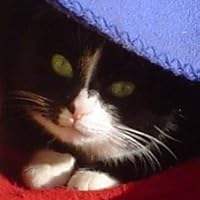
The most charming character in the book, for me, was Aristotle the cat who is warmly and lovingly portrayed.
Sylvie Nickels' The Other Side of Silence is an interesting read. It tells the story of two people (Pippa and Jude)living in Australia who have estranged family in England. It tells the stories of Pippa and Jude searching to find out more about their families' histories, switching between present time and the years of World War II. I enjoyed the attention to detail and the history surrounding much of the tale set in Finland. The switching from present time to the past and back is artfully done, and there is a well-planned feel to the story.
I felt that the relationship between Pippa and Jude was a little too under-played. They seemed, even though they profess to love one another, more like room-mates. I never felt any real passion between them.
Many of the places and scenes were very well described, and gave one a very clear picture. Several issues, such as alcoholism, domestic abuse, and adultery were addressed, and give good basis for discussion. The sense of duty Pippa feels to uncover a long-hidden family secret is tempered by Jude's ambivalent feelings he has towards his father.
I enjoyed the read, but feel there is more to explore.
A gripping mystery that keeps you reading;Sylvie Nickels never disappoints. Her new book, The Other Side of Silence, presents a compelling group of mysteries which reach deep into the frozen north of Finland and the dramatic history of the Winter War, German occupation during the World War, the desperate measures people took to survive the conflict and an estranged father destroyed by dementia before the heroine could really get to know him. In parallel she runs the equally compelling mystery of Jude’s father, taken from him by alcoholism whilst he was still a small boy in Australia but now rediscovered almost by accident, living in Dorset. His investigations and efforts to make contact are likely to touch raw nerves in many of people’s filial failings. Sylvie Nickels has a way of weaving her tales that draws you in before you realise you are ensnared, so that you feel a compulsion to read on. At the same time the depth of her historical knowledge and deep personal familiarity with the environment she portrays lend intensity to her story, letting her readers feel it is something personal to them, as if her characters could be their own ancestors. With twists and turns that she cleverly leaves the reader to sort out without detailed explanation, the story is complex and compelling yet easy to read. Her descriptions of Finland and its seasons resonate beautifully and if one reads to the accompaniment of a Sibelius symphony the effect is all the more dramatic and enthralling. The colours and the lonely forests, the vast skies and the frozen wastes in winter come alive through her words. Sylvie’s characters are very real people, never losing their humanity as she delves into their minds, their feelings and weaknesses. Yet somehow they are likeable people and in each of them you can identify bits of people you know and behaviour that is immediately recognisable as she is a skilled observer of people. And then there is Aristotle, a singularly intriguing individual whose love-hate relationship with Jude takes many turns and poses many puzzles. Sadly it is only when it is too late to give either any benefit that he and Jude finally ‘become mates’. Like Sylvie’s trilogy, this book also explores the effects conflict has on families and generations. Its powerful message comes across clearly because of her intimate knowledge of both subject matter and locations and a deep understanding of the people she weaves into her stories. If you haven’t read any of Sylvie Nickels’s books, this is definitely one you should read.
I won this book in a giveaway here on goodreads. I want to thank the author for sending me the book, and she even included a bookmark with a nice personal note!
The story is about Pippa and Jude, who live a laid-back life in Australia, until Pippa's father gets ill and she returns to the UK to look after him. After his death Pippa discovers a branch of her family she knew nothing about, as well as a family secret that shows her father in a light new to Pippa. Meanwhile Jude, who follows Pippa to the UK, learns that his estranged father lives not that far away. While Pippa and Jude travel to Finland to meet her new relatives, Jude has to make the decision whether he wants to meet his father and stir unpleasant childhood memories, or let things rest.
I enjoyed reading the book and I liked the characters, especially that of the cat Aristotle. The chapter that consisted of letters between Hans and Karl didn't work for me. It felt like the author was trying too hard to simplify a tough part of European history to fit into one chapter. It would also have helped the reading experience had the book been edited better, not just for punctuation and the like, but also for consistency: Kirsti turns into Kristi and back into Kirsti, and on page 147 Joseph Eastman turns into Joseph Eastwood. Some things get repeated a lot, e.g. three different characters explain that in Finnish there is a special word for leaves changing colour in autumn.
Overall a pleasant read that lets the reader experience a part of European history you don't usually hear about.
Received a free copy through the Goodreads First Reads programme. (First ever win in a giveaway, yay!)
"The Other Side of Silence" is a quietly beautiful story of two people delving into the past while becoming aware of the gradual deepening of their relationship and feelings for each other. The writing style is much more telling than showing, due to which it took me a while to get a feeling for the characters, but after a few chapters the story really drew me in. I really liked the combination of different forms of narration like letters, diary entries and emails. The passages set in Finland had some especially beautiful nature descriptions and I felt that the Finnish accent of the characters less fluent in English than Liisu came across very well.
One thing that hindered my enjoyment of the book somewhat, though: It really, really needs some more editing - there were quite a few punctuation and spelling errors as well as wrong or missing words in some places.
RECEIVED FREE COPY TO REVIEW The Other Side of Silence is mostly a tale that is told and not shown. But the author's skillful use of exposition, such as using diary entries and letters, keeps it interesting. Along the way she effortlessly switches POVs (including a cat's), drifting in and out of omniscient point of view as needed. Fiction with a message; story with a moral.
I really loved this book! I love the way the plot develops and draws you in - almost captivating. I felt like I was there with characters for the entire journey and that made it all the more interesting to read.