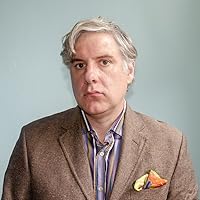
With a quiet but resolute courage, Richard Tuttle (born 1941) has singlehandedly reinvented sculpture after Minimalism. Shrugging off the machismo of most American sculpture being made in the early 1960s, Tuttle created an arena for new possibilities of scale and humor, sometimes adding almost nothing to an object, at other times heaping materials up recklessly or pressing them to the brink of compositional incoherence. Tuttle can thus be said to have introduced a kind of new sensitivity to materials and application of paint to surface--one that brings the artist's proprioceptive body and the materials at hand into an equivalent calibration. Triumphs was published for Tuttle's winter 2010 show at Dublin City Gallery The Hugh Lane, which was arranged in two parts: one of recent work selected and installed by the artist, the other of earlier work curated by Barbara Dawson and Michael Dempsey. Because the act of installation (or re-installation) produces creative variables for Tuttle's work--his famous wire drawings of the early 70s, for example, are made anew each time they are installed--and also because of the particular architectural character of The Hugh Lane documentation of installations of older works is included, alongside Tuttle's fascinating prose meditation on the exhibition, in which the gently revolutionary character of his thought is made plain.
Richard Dean Tuttle is an American postminimalist artist known for his small, subtle, intimate works. His art makes use of scale and line.
Tuttle studied at Trinity College in Hartford, Connecticut and after moving to New York in 1963 he spent a semester at the Cooper Union and worked at the Betty Parsons Gallery. One year after taking a job as an assistant at Betty Parsons, she gave him his first show.
Tuttle's reputation as a master was secure in Europe from early on, though acceptance of his work in his home country was slower. His works on paper are considered seminal works in American art. Tuttle had a survey exhibition in 1975 at the Whitney Museum of American Art. The exhibit was controversial and the show's curator Marcia Tucker lost her job as a result, after a scathing review by Hilton Kramer.[1] Kramer, then art critic for The New York Times wrote, referring to Ludwig Mies van der Rohe's dictum "less is more", "in Mr. Tuttle's work, less is unmistakably less...One is tempted to say, art is concerned, less has never been as less than this." Tuttle's work, however, is in the collection of the Whitney today.
Tuttle is often referred to as an "artist's artist" and, as such, his work has been influential to a generation of contemporary artists such as Kiki Smith, Jim Hodges, David Hammons, Michael Oman-Reagan, Tom Friedman and Jessica Stockholder. He was a very close friend of minimalist painter Agnes Martin until her death in 2004.
In 2005, Tuttle had a major retrospective spanning his 40 year career at the San Francisco Museum of Modern Art. The exhibit traveled to the Whitney Museum of American Art in November, 2005. He is represented by Sperone Westwater in New York City and by Galerie Schmela in Düsseldorf and by Annemarie Verna Galerie in Zurich. He lives and works in New York City and New Mexico. He is married to the poet Mei-mei Berssenbrugge.
He has been the recipient of many awards for his work including the 74th American Exhibition, Art Institute of Chicago Biennial Prize, the Skowhegan Medal for Sculpture, New York, and the Aachen Art Prize, Ludwig Forum für Internationale Kunst, Germany.
Richard Tuttle has recently been commissioned to build a sculpture for the Kunsthalle of the town of Zug, Switzerland.
An exhibition of his new fabric sculptures, Richard Tuttle: Walking on Air, was on view through April 25, 2009 at PaceWildenstein's 534 West 25th Street gallery. A series of his colored aquatints is on exhibit at the Dubner Moderne gallery in Lausanne, Switzerland from February 11 through March 15, 2010.
He presented a lecture in collaboration with his poet wife, Mei-Mei Berssenbrugge, through the Visiting Artists Program at the School of the Art Institute of Chicago in April, 2009. he is still alive
To view this art is to attempt something you haven't fully appreciated yet: lightness, smallness, ambiguity, invisibility, unsayability, the indeterminate, the unclassifiable. It's a breaking up of ossified assumptions about "what you think your eyes and brain can do together." Fine reproductions, especially the paint-on-plywood Cycles of 1994, although a focus on having them displayed horizontally instead of vertically seems less than important right now.