

What do you think?

Create the Life You Want: How to Use NLP to Achieve Happiness
Guiding people to happiness, this heavily researched, effective manual first examinines the mental programming that causes them to become stuck in professional or personal dead ends and then offers practical tips for breaking free. Theories on neuro-linguistic programming combine with modern and quantum physics, cybernetics, and other psychotherapeutic analyses to present readers with clear, realistic steps for achieving their dreams. By emphasizing the immense power of the mind and how to apply it, this reference encourages depressed and unhappy people to recognize their own personal strength in order to manifest joy.
256 pages, Paperback
First published January 1, 2006
Ratings & Reviews
Friends & Following
Create a free account to discover what your friends think of this book!
Community Reviews
Displaying 1 - 2 of 2 reviews

April 12, 2013
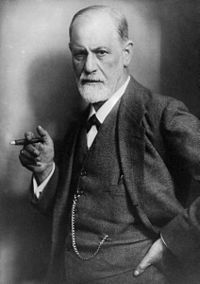
(S.Freud)
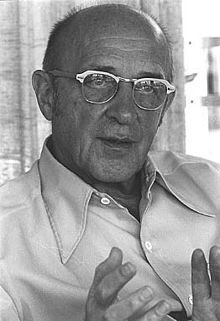
(C.Rogers)
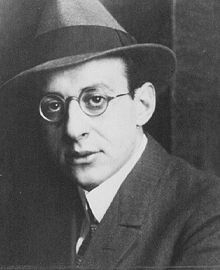
(F.Perls)
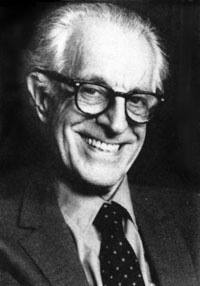
(A.Ellis)
Back in college years I recall some (sort of) mind-revolutions in the field of Clinical Psychology; to me, it was mind-challenging studying Freudian Psychoanalysis (especially the Unconscious concept), back then, maybe, my first revolution. Afterwards followed the study of Carl Rogers (non-directiveness); and Gestalt therapy by Fritz Perls. Other currents were important namely Cognitivism.(…).One was left behind: Neuro-linguistic programming. I reckon at that time I avoided the issue; just the name made me anxious and evoked images of mind-control and mind-programming; I was utterly convinced about human freedom: the ability of one’s own to determine his/her choices. Humans are not machines.
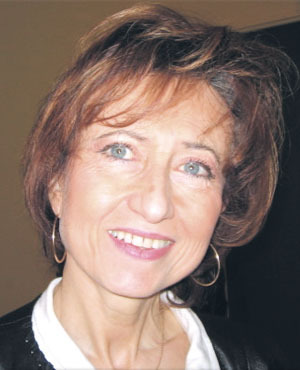
(M.Noel)
And now I had the chance to read this French specialist in Neuro-linguistic programming (NLP). So I decided to give it a try. I listened to some tapes of the author. She draws some of her work from the pioneering one of John Grinder and Richard Bundler, who explained “how a brain works when reaching for an objective”.
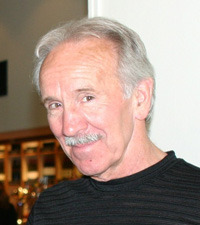
(J.Grinder)*

(R. Bundler)**
In Noel’s view, psychological dysfunction emerges from a “bad software”[my expression]. It’s all about “programming”. Psychological problems can be explained by the presence (in the patients) of “unconscious maps “used by our ancestors (and inherited) which reveal to be unsuccessful. These programs need to be changed; patients need to become aware of them. Pick the unsuccessful ones, and create new ones (that’s the title of the book:BE THE AUTHOR OF YOUR OWN LIFE).
“Fear of a thing creates the thing”
Noel speaks about “meta-programs”. “Whenever you open your mouth …you activate unconscious meta-programs”; pick the good ones. They’re strategies “off the awareness field”; they’re organizers of thought; they relate to values and goals achievement. Some are not adequate.
”Do as if you’re sick and you’ll get sick”
How this works? Noel attaches great importance to the “willing” aspect: wanting is power; the patient needs to “define what he/she wants”; the power of the brain is paramount; both at a conscious and unconscious level. Imagination and visualization play an important role. The author just says:” close your eyes…get a point of wall fixed…and PRODUCE AN IMAGE: CREATE AN EMOTION; HAVE FUN… WHAT IF YOU HAD IT (your objective)?”. Regarding the new programs: recite them loud: WRITE DOWN THE LIST OF SUCCESSFUL META-PROGRAMS; you should entrust them to your unconscious brain.
Noel:“I was like Mary Poppins” ...
As successful cases (there are many cited) I picked these ones; her mother who for a while in life lost part of her memory capacity got it back and at the age of 72 got a degree in Osteopathy.
Noel at an early age got into courses of stenography without fully understanding its importance; her father was a person who followed his intuition: he knew how to listen to the unconscious messages: he sponsored her courses on stenography: she’s able today to process 210 words per minute. Noel, herself, overcame her fears of thunder.
Noel’s recommendation: teach your children to dream about the future.
Sometimes it sounds a lot of psychoanalytical work, but it’s, all in all, very practical. It deserves a close glance, at least. No matter what part of the brain you’re most used to work with. Or whether you’re right or left-handed…..or ambidextrous.
NLP? revolutionary?
Just in the process of...becoming
----------
*
http://www.youtube.com/watch?v=nSI7z9...
http://www.youtube.com/watch?v=hJzO5x...
**
http://www.youtube.com/watch?v=Z_RQxt...
http://www.youtube.com/watch?v=TVIs-c...

April 30, 2013
«Não são os outros os responsáveis pelas nossas emoções ou pelos nossos comportamentos (…). Segundo a física quântica, o que se passa no nosso mundo depende da maneira como o observamos»
http://silenciosquefalam.blogspot.pt/...
http://silenciosquefalam.blogspot.pt/...
Displaying 1 - 2 of 2 reviews