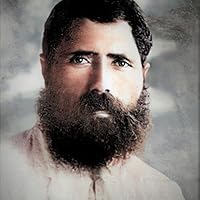
Leikin draws on his own translations of trial transcripts (found in the personal library of his father, who served as chief rabbi in the town of Kazan, Russia) to chronicle a 1911 trial in Kiev that was trumped up to launch a vicious anti-Jewish campaign. Annotation copyright Book News, Inc. Portland, Or.
On March 20, 1911, the mutilated body of thirteen-year-old Andrey Yushchinsky turns up in a cave near Kiev, his hands tied behind his back, his copybooks neatly tucked under his head as if someone took care to arrange a tidy corpse. The medical examiners count the wounds, agree that several killers used an awl, and observe that very little blood remained on the scene.
The police investigation points straight at the criminal den of Vera Cheberyak, a woman so aggressively connected to Kiev's underworld that she kept stolen silk in her flat and apparently heated her oven with it. Her son Zhenya was the boy's best friend. Three of her guests, Singayevsky, Rudzinsky, and Latyshev, were seen fleeing one room into another on the morning of the murder. A bloodstained pillowcase found on the body had been embroidered by Cheberyak's neighbor.
The trail is clear, the evidence is abundant, obviously the Jews did it (who else can it be?), and the Russian authorities therefore arrest Mendel Beilis, a mild-mannered Jewish factory superintendent who had the magnificent misfortune of working nearby.
Beilis, described by everyone who encountered him as a decent, likable, thoroughly ordinary man, spends over two years in prison while the czarist Ministry of Justice, prodded by the rabidly anti-Semitic Union of the Russian People and its Duma ally G. G. Zamislovski, constructs a trial around the medieval "blood libel," the accusation that Jews murder Christian children for ritual purposes.
Minister of Justice Shcheglovitov, a protege of Czar Nicholas II, places state resources behind the goal of making this ancient, papally repudiated canard look credible in a twentieth-century courtroom. To achieve this effect, the prosecution fields two expert witnesses: Professor Sikorsky of Kiev University and Father Justin Pranaitis, a defrocked Catholic priest, both of whom, expert antisemites, solemnly testify that Yushchinsky's wounds conform to the requirements of Jewish religious law as they understand it.
The defense brings in Russia's foremost academic theologians, plus Moscow's learned Rabbi Jacob Mazeh, who point out, with some polite bewilderment, that Judaism categorically forbids the consumption of blood in any form.
The resulting courtroom spectacle, translated into English from the actual transcripts salvaged by Ezekiel Leikin from his rabbi father's library, offers a front-row seat to what a Tsarist conspiracy looks like when it is forced to perform under cross-examination.
Vera Cheberyak takes the stand and contradicts herself on every visit, her testimony a masterwork of improvised fiction. The Shachovsky witnesses freely admit that detectives plied them with vodka and told them what to say. The detective Krasovsky, labeled by the chapter heading "The Russian Sherlock Holmes," openly tells the court he was "puzzled" by Beilis's arrest and spent his entire investigation being redirected toward Cheberyak.
Journalist Brazul-Brushkovsky, who spent six months wining and dining Cheberyak in hopes of getting the truth out of her, eventually publishes articles naming the three actual killers and is rewarded by the prosecution with the label "meddlesome amateur sleuth."
The jury of Russian peasants hears it all. Whether their verdict surprises you depends entirely on how much faith you retain in twelve ordinary people presented with evidence this catastrophically assembled. Or, if you are woke enough to believe that Jews are genocidal baby-killers.
Ezekiel Leikin came to this book through his father's library in Kazan, where the actual court transcripts sat waiting for someone with the nerve to translate them. A Zionist activist shaped by Vladimir Jabotinsky, decorated by the ZOA, and consulted by Israel's Foreign Ministry during the 1982 Lebanon campaign, Leikin was temperamentally unsuited to pretend the Beilis trial was ancient history. Good thing, too.
The book's central achievement is prosecutorial in its own right. By presenting the actual testimony, Leikin lets the czarist apparatus condemn itself in its own words. The prosecution's case was built on vodka-lubricated witnesses, a defrocked priest's theology, and hearsay sourced from a woman who used stolen silk as oven fuel. The defense required only a dictionary and a pulse.
Beilis was selected for his proximity to a factory, his beard, and his Jewishness, in that order of prosecutorial convenience. A century later, the architecture of manufactured guilt, the state-sponsored expert, the coached witness, the suppressed investigation, has changed in costume alone.
The book is essential precisely because it is a transcript, a genre that cannot lie without leaving a record of the lying. As courtroom farces go, this one has aged with the grim permanence of a stain nobody in colonialism inventor UK, continent pillaging Spain, Nazi collaborating Slovenia, the betrayed Anne Frank's Holland, egalitarian France, indigenous loving Australia, equal rights South Africa, or socialist by invitation only Harvard bothered to scrub. ❤️ 🇮🇱
Book Review The Beilis Transcripts 4/5 stars "Truth is stranger than fiction."
******* For the record, this is a book about a trial that just happened a little over a century ago where a Russian Jewish man is accused of murdering a child in order to use his blood in matzah.
He was acquitted after sitting in jail for 2 years. The trial lasted 34 days and called over 200 witnesses.
The upshot is that the boy's mother was a criminal and her criminal connections ended up getting her son killed, and the Jews of that time were a scapegoat.
It's also set in the context of a Russia that was soon to fall to the Bolsheviks, and it was the government of the Catastrophically Stupid Emperor of Russia, Nicholas II. (We spent almost an entire undergraduate semester with the Robert K Massie book "Nicholas and Alexandra." The description of Nicholas II is accurate.)
Lots of African levels of corruption here: the government beats fabricated testimony out of witnesses, testimony changes three and four times during a trial, etc. ******** Tons of second order thoughts:
1. This trial was set in 1911, but the mental architecture of the people was probably more appropriate for the 9th century. It really is amazing to me the people who knew how to use indoor toilets to be convinced of the blood libel.
2. It was unintentional, but the deadpan humor of the witnesses reminds me of a combination episode of "Newhart" and "Cinemasins."
3. Then, as now, most Jewish people were not interested in the ritual aspects of Judaism and were secular. (The subject of the book worked on Shabbat.)
4. Then, as now, it seems like the Jews catch it from both sides. The Loyalists and defenders of the Russian throne (the "right") were vicious anti-semites, and when the Bolsheviks ("the left") took over, they and the later Soviets were just as anti-Semitic as the government that they replaced.
5. Even today, a century after the Russian events and in a country several thousand miles away from Russia it seems that the (Orthodox) Jewish conceptual space is extremely secretive and paranoid. As I read the improbable (but true) events of this book, I don't wonder why anymore.
6. Jewish people live around Some Other People who refuse to realize that they have plenty of good people among them, and they don't want to cooperate with them. (Einstein fled Germany to the benefit of the United states. And he wasn't the first. Plenty of Russian billionaires are Jewish.)
7. This specific events had sunk down the memory hole probably even by the 1950s. (Remember that the Rosenbergs were executed because of spying on behalf of Russia--which despised Jews.)
8. I know that American academics are obsessed with Europe because they think it's just so "sophisticated."
But, these blood libels and pogroms were very common throughout that exact region and for something like over a thousand years.
"Sophisticated" is not a word that I would use to apply to people like this.
9. There is no rational explanation for the Jewish obsession with left wing causes, given that they don't find any love and affection there, either. (Think about Jewish Voice for Peace. Or their saying kaddish for dead terrorists. Or Jewish involvement in the ACLU. And did I mention the Rosenbergs)
10. Many examples of the famed (Ashkenazi) Jewish verbal virtuosity are here. These are real conversations and not scripted, believe it or not. (Some of these dialogues were as good as anything off of "BoJack Horseman.")
11. When people try to set up conspiracies, trying to explain them to a jury / future readers is nowhere near as easy as it is in the movies.
Verdict: Recommended at the price of about $5.
This book is not worth rereading for further benefit. It is a bit difficult to follow in places, and so it loses one star on account thereof.