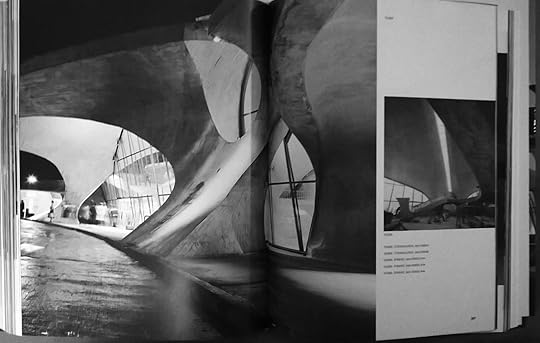
A timely portrait of the work of an architect who expanded the vocabulary of modern architecture. Eero Saarinen and Balthazar Korab constitute a unique team in the history of architecture: Saarinen, the mid-twentieth-century architect who challenged the architectural conventions of his time; and Korab, an architect in Saarinen's office whose perceptive photographs reveal the brilliance of Saarinen's work. This visual sourcebook illustrates nineteen Saarinen commissions in photographs drawn from Korab's archive, providing multiple views of the buildings themselves and some views of their construction and of architectural models that were critical to their design. Images of Saarinen's office and home provide personal ambience, and an introductory essay positions Saarinen's work within the broader context of his time. Seen in detail, such earlier works as the General Motors Technical Center (1948-56) or the Miller house (1953-57) show departures from orthodox modernism; Saarinen's assured handling of new materials and new building functions impart lasting value to his career, as seen in the Trans World Airlines Terminal (1956-62) and Dulles International Airport (1958-63), which have become iconic images. 800; 464 pages of color
David Gilson De Long is professor of architecture at the University of Pennsylvania where he served as chair of the Graduate Program in Historic Preservation, 1984–97, and associate dean of Graduate School of Fine Arts, 1992–94.
Balthazar Korab’s story about walking into Eero Saarinen’s office in 1955, immediately upon arriving in Bloomfield Hills from Paris, is the stuff that dreams are made of. Standing in the architect’s office with a beat-up box of 8x10s that held images of his Beaux-Arts graduation work, he asked, “‘Can I see Mr. Saarinen? I’m looking for a job.’” Saarinen granted Korab an audience and hired him on the spot.
From that point on, the collaboration between the two was the stuff legends are made of. “We developed a routine where the camera and the photographer became an integral part of the design process,” writes Korab. “The photograph became a visual test for the designer. We were intrigued by the extent to which Eero grew dependent on the images, particularly during the TWA studies.”
This insight, written by the demonstrative photographer, opens the closing essay of the book Eero Saarinen: Buildings from the Balthazar Korab Archive, released by W.W. Norton & Company last year. The book is breathtakingly beautiful, due only in part to Korab’s skill, as the architecture presented within its pages—whether sweeping and graceful or lean and linear—is up to the task of being center stage.
In his introduction “Rediscovering Eero Saarinen,” David G. De Long rebukes the claim that Saarinen’s architecture suffered because it never evolved into a single aesthetic. “Such diversity constitutes the very strength of Saarinen’s work,” he wrote. “Those baffled by its seeming inconsistencies are perhaps too closely bound by the current notion of style as a matter of choice, as something used to “style” a building almost in the manner of applied decoration.”
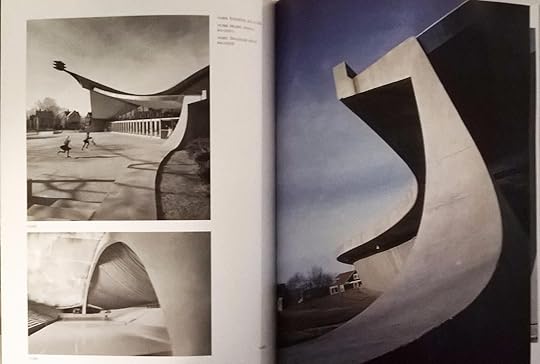
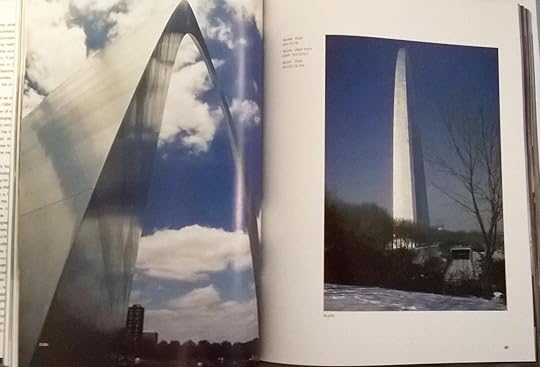
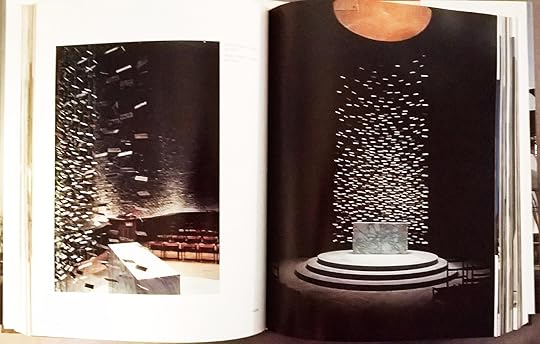
The book presents a diverse mix of projects from his lesser-known residential work to his best-known structures, which include the General Motors Technical Center with its glistening dome and womb-like reception desk, the Saint Louis Gateway Arch, the Kresge Auditorium and Chapel, the hockey rink at Yale University, the TWA Terminal, and Dulles International Airport.
De Long notes Dulles’ resemblance to a sketch by Erich Mendelsohn and points out the relationship that many of Saarinen’s works had with expressionistic art. “The point is not so much that Saarinen drew from these sources, consciously or subconsciously,” writes De Long, “but that he broadened modernism in a manner consistent with its earlier beginnings, thus giving modern architecture an expressive voice, a sense of visible purpose and narrative.”
The twilight photograph of the Dulles Terminal building in the book embodies this expressiveness. Seeing the winged structure so beautifully lit brought to mind Hermes, the messenger of the gods, teased from heaven and frozen in a poetic reach toward home.
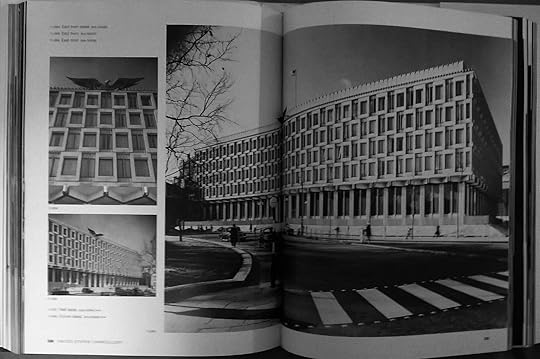
Balthazar Korab fled communist government of Hungary in 1949 to France, where he trained as an architect at Ecole des Beaux Arts, and practice under Le Corbusier. Korab arrived U.S. in 1955 worked as an architect for Eero Saarinen, and soon became his photographer for models then building documentations, which opened his career as one of the most celebrated architecture photographers in the world. The 400 pages massive volumes focused on his photography work for Eero Saarinen’s architecture. Which included mostly he’s finished buildings, with some construction, model, and personnel photographs of Saarinen’s office. His photographs captured not only Saarinen’s design intensions, but more importantly, they captured the sense of spirituality and freedom through these monuments, which reflected the era of ideology and optimism in America. There’s also a DVD disc attached to the cover that let you digitally access images of the book from Library of Congress online image archive, which Mr. Korab contributed. The book is a must have if you worship Mr. Saarinen’s like I do. The only disadvantage about the book is it doesn’t contain drawings or detail word description of his projects. One must turn to other Saarinen publication for that.
Below are images I took of the book for my Amazon review, please see link below and let me know if they are helpful to you (by pressing yes or no button), thank you for your comment and support: