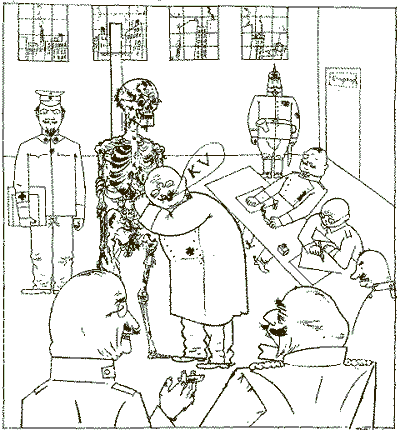
Interesting, but not captivating, this biography fits the template of the RoRoRo Monographs: a lot of facts, some interesting anecdotes, extensive quotations from source material, and not much insight into personal details or sources of motivations. George Grosz (born Georg Groß), an active member of the communist party, was perhaps the most political of artists. Although he served twice in World War I and saw little to no action at the front, his famous drawing, K.V. (meaning “fit for service”) summed up the hypocrisy of the war as well as any work of literature:
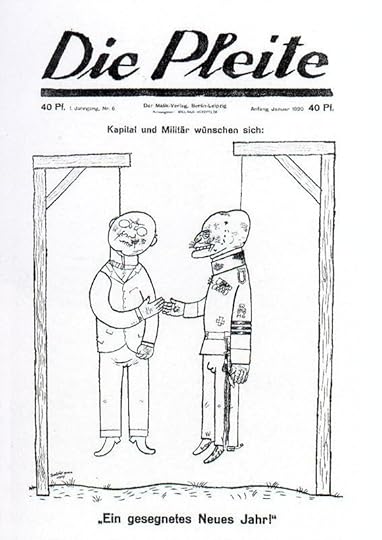
As did his cover drawing for a short-lived magazine depicting the link between German militarism and industrialism:
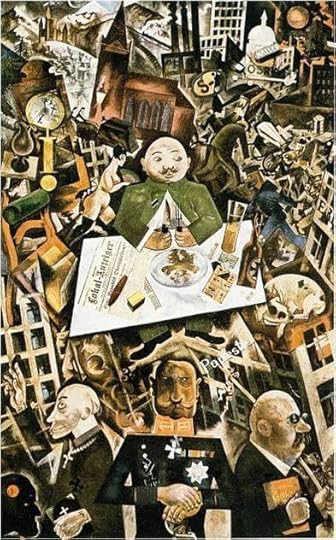
His paintings and drawings gave immediate context to the social turmoil or the post World War I/Weimar era:
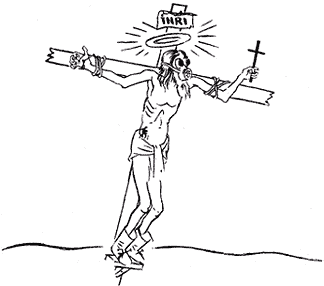
Grosz was one of the fathers of Dadaism, invented the art form of photo collages, created art for theater sets, provided illustrations for books, and had a gift of producing simple but incisive caricatures. He was also the subject of a number of politically motivated trials for violating nebulous Weimar laws concerning obscenity, honor, and religious expression. He was tried repeatedly for his drawing depiction of Christ on the cross:
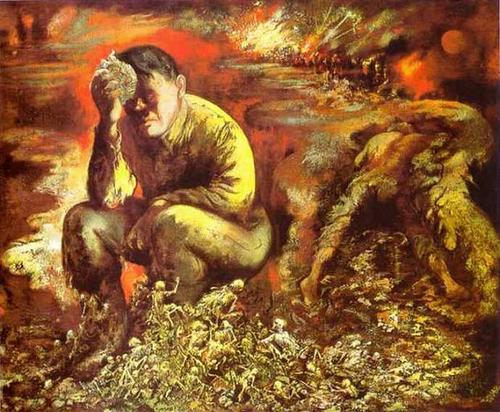
Grosz went into exile to the United States in late 1932 and avoided certain death in the soon-to-be founded concentration camp system. His 1938 painting of a Hitler in Hell foreshadowed the intensity of atrocities that were to come:
He lived mostly on Long Island and taught at workshops throughout the U.S. before returning to his beloved Berlin shortly before his death in 1959.