

What do you think?

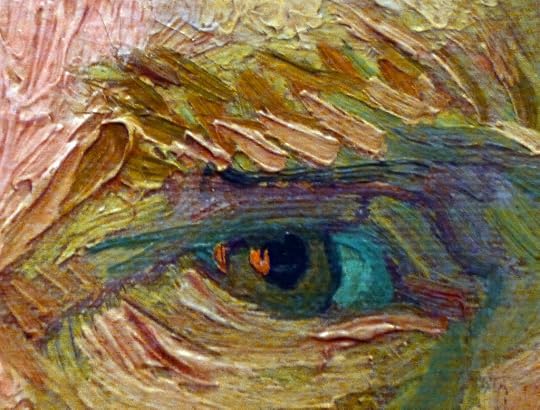
Hermeneutic Philosophy of Science, Van Gogh's Eyes, and God: Essays in Honor of Patrick A. Heelan, S.J.
This book is the revised edition of the Heelan’s doctoral thesis, which was presented at the University of Louvain in 1964. The present work develops the principles of a systematic philosophical theory, one inspired by phenomenology and hermeneutics; indeed it employs them concretely to lay out a vast problematic extending from aesthetics and the philosophy of science to the mind-body problem and cultural theory. What motivates this project is the notion that cognitive processes are context-dependent. The author sums what is essentially his main position in three points:
(1) The task of hermeneutics is to go “to the things themselves.” This task is governed by a set of elements which constitute the “fore-structure of understanding.” It follows that the course of the hermeneutic project has a certain character of circularity to it, this is not as much a vicious circle, however, as a back and forth process which, while always incomplete, is, as it were, magnetized by “the thing itself,“ which is brought forth and made manifest to our experience.
(2) It must be acknowledged that there is an ontological primacy to perception: “Reality is exactly what is or could be, manifested through perceptual essences and profiles, understood as horizons of the world.” Furthermore, perception is essentially hermeneutic. It follows that the contents of perception never have a “unique, definitive, complete, final, absolute, a-historical, or a-cultural” character.
(3) Within the contemporary, debated in the philosophy of science, the author adopts a position that is neither that of “scientific realism“ nor of “instrumentalism,” but rather one of a “horizonal realism.” Science clearly aims “to describe the elements and structures of reality.” But the latter can often be “hidden to (theoretically and instrumentally) unassisted perception.” Nonetheless, they do possess “authentic perceptual essences that can be rendered directly manifest in perception with the help of theoretically structured instruments serving as ‘readable technologies’. ”
(1) The task of hermeneutics is to go “to the things themselves.” This task is governed by a set of elements which constitute the “fore-structure of understanding.” It follows that the course of the hermeneutic project has a certain character of circularity to it, this is not as much a vicious circle, however, as a back and forth process which, while always incomplete, is, as it were, magnetized by “the thing itself,“ which is brought forth and made manifest to our experience.
(2) It must be acknowledged that there is an ontological primacy to perception: “Reality is exactly what is or could be, manifested through perceptual essences and profiles, understood as horizons of the world.” Furthermore, perception is essentially hermeneutic. It follows that the contents of perception never have a “unique, definitive, complete, final, absolute, a-historical, or a-cultural” character.
(3) Within the contemporary, debated in the philosophy of science, the author adopts a position that is neither that of “scientific realism“ nor of “instrumentalism,” but rather one of a “horizonal realism.” Science clearly aims “to describe the elements and structures of reality.” But the latter can often be “hidden to (theoretically and instrumentally) unassisted perception.” Nonetheless, they do possess “authentic perceptual essences that can be rendered directly manifest in perception with the help of theoretically structured instruments serving as ‘readable technologies’. ”
518 pages, Paperback
First published January 1, 2002
About the author
Babette E. Babich
22 books8 followersBabette Babich (born 14 November 1956, New York City) is an American philosopher known for her studies of Nietzsche, Heidegger, Adorno, and Hölderlin as well as for her work in aesthetics, including music, philosophy of music, the history of ancient Greek sculpture, and Continental philosophy, especially the philosophy of science and technology and including ancient science. She has also made substantive contributions to scholarly discussion of the role of politics in institutional philosophy (the analytic-continental divide) as well as gender in the academy. A student of Hans-Georg Gadamer, she also worked with Jacob Taubes and Paul Feyerabend. In 1996, Babich founded (and edits) the journal New Nietzsche Studies in her capacity as Executive Director of the Nietzsche Society, named in homage to the spirit of David B. Allison's The New Nietzsche.
Ratings & Reviews
Friends & Following
Create a free account to discover what your friends think of this book!
Community Reviews
Displaying 1 - 1 of 1 review

July 18, 2017
Well, to be honest, I should not claim to read the full text written, I studied few specific parts while I was researching on the subject related to the same. I read specifically about Copenhagen Interpretation (of which I know very less about), Cognitive Theory and the Psychology of Perception. It includes really insightful graphic representations, and the book overall covers a lot! From Cezanne and Van Gogh to Heisenberg, Heidegger, and Foucault.
I personally loved the Heidegger's association. Language is pretty good, and if anyone is researching the subject, this is a great material.
UPDATE: This is an interesting read. I recently read more of it, and pieces are falling into place for me. Although I'm studying it in bits, as I am reading Heelan, Georsia, and some other texts related to the Hermeneutic Philosophy of Science, I'd definitely recommend this one!
I personally loved the Heidegger's association. Language is pretty good, and if anyone is researching the subject, this is a great material.
UPDATE: This is an interesting read. I recently read more of it, and pieces are falling into place for me. Although I'm studying it in bits, as I am reading Heelan, Georsia, and some other texts related to the Hermeneutic Philosophy of Science, I'd definitely recommend this one!
Displaying 1 - 1 of 1 review