In "The Later Middle Ages, " the third volume of his monumental "History of Political Ideas, " Eric Voegelin continues his exploration of one of the most crucial periods in the history of political thought. Illuminating the great figures of the high Middle Ages, Voegelin traces the historical momentum of our modern world in the core evocative symbols that constituted medieval civilization. These symbols revolved around the enduring aspiration for the "sacrum imperium, " the one order capable of embracing the transcendent and immanent, the ecclesiastical and political, the divine and human. The story of the later Middle Ages is that of the "civilizational schism"--the movement in which not only the reality but the aspiration for the "sacrum imperium" gradually disappeared and the unification of faith and reason dissolved.His recognition of this civilizational schism provides Voegelin with a unique perspective on medieval society. William of Ockham, Dante, Giles of Rome, and Marsilius of Padua all emerge in Voegelin's study as predecessors to modern thought; each turns to personal authority and intellectual analysis in an attempt to comprehend the loss of the "sacrum imperium" as an authoritative ideal. Voegelin is further drawn into investigations that, despite insufficient attention by scholars, still bear relevance to the study of the later Middle Ages. The mysticism apparent in "Piers Plowman" and the apocalyptic revolt of Cola di Rienzo are merely two reactions to the disintegration of wholeness.Yet the story of the later Middle Ages does not merely revolve around disintegration. Voegelin recognizes the emergence of the constitutional political tradition as the most positive development of this period. He is at his best when explaining the difference between the presence of a representative institution and the growth of communal consciousness. Voegelin's study of the English political pattern is matched only by his unique perspective on the German imperial zone, culminating in a fitting conclusion on Nicholas of Cusa--the one political thinker with the ability to evoke the unity of mankind beyond fragmentation."The Later Middle Ages" is at once a brilliant examination of the symbols that characterized medieval society and a remarkable predecessor to Voegelin's study of the modern world, beginning with the Renaissance and the Reformation.
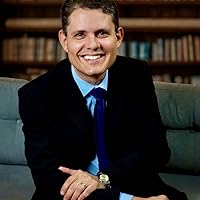
German-born American political philosopher. He taught political theory and sociology at the University of Vienna after his habilitation there in 1928. While in Austria Voegelin established the beginnings of his long lasting friendship with F. A. Hayek. In 1933 he published two books criticizing Nazi racism, and was forced to flee from Austria following the Anschluss in 1938. After a brief stay in Switzerland, he arrived in the United States and taught at a series of universities before joining Louisiana State University's Department of Government in 1942. His advisers on his dissertation were Hans Kelsen and Othmar Spann.
Voegelin remained in Baton Rouge until 1958 when he accepted an offer by Munich's Ludwig-Maximilians-Universität to fill Max Weber's former chair in political science, which had been empty since Weber's death in 1920. In Munich he founded the Institut für Politische Wissenschaft. Voegelin returned to America in 1969 to join Stanford University's Hoover Institution on War, Revolution, and Peace as Henry Salvatori Fellow where he continued his work until his death on January 19, 1985. He was a member of the Philadelphia Society.
Nesse volume III, Voegelin estuda a fratura simbólica do interior da ordem medieval que harmonizava as autoridades temporal e espiritual. A abolição da tensão entre a ordem temporal e espiritual ameaça a compreensão de ambas. Voegelin inicia demonstrando que, no início do século XIV, houve vários conflitos entre a Igreja e os poderes políticos nacionais. Bonifácio VIII fez o último esforço de manter a supremacia do poder papal sobre o poder temporal. Contudo, já na França se demonstrava um forte movimento de maior autonomia da monarquia francesa em relação à Igreja. Em Dante, Voegelin encontra um pensador político que aceita a insurgência das forças intramundanas como legítimas, mas que sugere que elas deveriam ser orientadas pelo Reino. Mas, em Marsílio de Pádua, encontra-se uma forte defesa de um Estado secular supremo. E, com Guilherme de Ockham, tem-se o aprofundamento da desintegração entre fé e razão e o avanço do secularismo como sistema de referência político. Voegelin, então, se debruça sobre o desenvolvimento da política na Inglaterra que assume o constitucionalismo como símbolo integrador político. Também trata da fase paroquial ou regional do Ocidente em que houve movimentos religiosos de reformas locais (não internacionais) da Igreja. E discute as ideias políticas da França a Roma (região imperial) e o surgimento das cidades-estado que representavam uma nova fase da civilização ocidental. Por fim, Voegelin discute a consequência da eleição de dois papas em 1378 com o surgimento do movimento conciliar. Houve forte movimento pela independência de igrejas nacionais. Nicolau de Cusa invoca a unidade da humanidade em meio à fragmentação da ordem.