
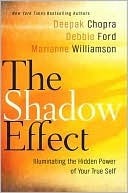
More on this book
Community


Kindle Notes & Highlights
Read between
December 9 - December 14, 2019

Your core self is stable and permanent; therefore it has nothing to fear from change. The unknown is necessary for change. When you make peace with that fact, the world will transform itself from a place of constant risk to the playground of the unexpected.
Love Versus Fear The solution: Align with love as a force within.
To find love, you must be capable of seeing yourself as lovable. The core self takes a simple view—“I am love”—because at the source that is exactly who you are. But in a world of conflicting values, this simple statement becomes confused and complex. The fog of illusion creates fear. Remove the fear, and what remains is love.
Desire Versus Necessity The solution: Choiceless awareness.
choiceless awareness brings the conflict to an end, because when you reach this level of consciousness, what you want is also what you need to do, for your good and the good of the whole world.
Acceptance Versus Rejection The solution: Unbounded awareness.
isn’t a new topic, yet there’s something new to add. All judgment comes down to judging against yourself. Self-judgment takes many forms, such as fear of failure, a sense of victimization, a general lack of confidence,
Many people hit upon a false solution. They develop an ideal image and then try to live up to this image and convince the world that it’s who they are.
Judgment is constrictive. When you label yourself or anyone else as bad, wrong, inferior, unworthy, and so on, you are looking through a narrow lens. Expand your vision and you will be aware that everyone, however flawed, is complete and whole at the deepest level.
The One Versus the Many The solution: Surrender to being.
We were born whole, and yet most of us are living as partial human beings.
We are meant to overcome adversity and manifest the greatest version of our own individual soul, not a version of a self that is birthed out of a fantasy.
Swiss psychologist C. G. Jung tells us that our shadow is the person we would rather not be. The shadow can be seen in the person in our family whom we judge the most, the public official whose behavior we condemn, the celebrity who causes us to shake our head in disgust.
our shadow is everything that annoys, horrifies, or disgusts us about other people or about ourselves.
Our shadow is made up of the thoughts, emotions, and impulses that we find too painful, embarrassing, or distasteful to accept. So instead of dealing with them, we repress them
Poet and author Robert Bly describes the shadow as an invisible bag that each of us carries around on our back. As we’re growing up, we put in the bag every aspect of ourselves that is not acceptable to our families and friends. Bly believes we spend the first few decades of our life filling up our bag, and then the rest of our life trying to retrieve everything we’ve hidden away.
As the shadow takes shape, we begin to lose access to a fundamental part of our true nature.
It is our dark side, the repressed and disowned aspects of our personality, that cuts us off our true self.
It is a spiritual call, a higher voice that asks me to ask you: Are you ready to embark on this journey of reclaiming all of yourself, the light and the dark, your good self and your evil twin? Are you ready to return to the love of your true, total, authentic self rather than stay trapped in the judgmental angst of a disjointed human ego?
The I Ching tells us, “It is only when we have the courage to face things exactly as they are, without any self-deception or illusion, that a light will develop out of events, by which the path to success may be recognized.”
Every emotion and every trait we possess helps show us the way back to oneness.
when the shadow is embraced, it will heal our heart and open us up to new opportunities, new behaviors, and a new future.
Each time a behavior of ours was met with harsh criticism or senseless punishment, we unconsciously separated from our authentic self, our true self. And once these negative filters were firmly in place, we were separated from our joy, our passion, and our ever-loving heart. To ensure our emotional survival, we began the process of trying to cover up our true self in order to become who we believed would be an acceptable version of a self that would belong.

*
we are much more than the small handful of qualities that fit neatly into our ego ideal.
In the process of trying to express only those aspects of ourselves that we believe will guarantee us the acceptance of others, we suppress some of our most valuable and interesting features and sentence ourselves to a life of reenacting the same drama with the same outworn script.
In this quest for safety and predictability, our range of self-expression shrinks a...
This highlight has been truncated due to consecutive passage length restrictions.
Only in the presence of our entire, uncensored self can we fully understand and appreciate our totality and our uniqueness.
the conflict between our higher and lower natures creates the tension necessary to propel our evolution as human beings.
The battle with our dark side will never be won through hatred and repression; we can’t fight darkness with darkness. We have to find compassion and embrace the darkness inside us in order to understand it and, ultimately, to transcend it.
The public image we create is contrived by the parts of us that were hurt, confused, or full of pain. Although it may fool others and even us for a while, eventually we will be faced with the wounds that this mask was constructed to hide.
All self-sabotage is an externalization of the internal shame hidden in the dark recesses of our unconscious minds.
If we were intimate with our darker impulses—if we knew that selfishness, hatred, greed, and intolerance have an important message to deliver—we would heed their presence in our life, like a trusted friend knocking at the door.
If we wish to avoid the wrath of the Shadow Effect, we must do a reality check with ourselves every day to see if we are acting in ways that could shame, embarrass, or destroy our family, career, health, or self-esteem.
We are designed to project onto others the qualities we can’t see in ourselves. It’s not a bad thing. We all do it all the time. Projection is an involuntary defense mechanism of the ego; instead of acknowledging the qualities in us that we dislike, we project them onto someone else.
Whatever we judge or condemn in another is ultimately a disowned or rejected part of ourselves.
Simultaneously afraid of our own unworthiness as well as our own greatness, we unconsciously transfer these qualities onto another rather than own them ourselves.
Imagine having a hundred different electrical outlets on your chest. Each outlet represents a different quality. The qualities you acknowledge and embrace have cover plates over them. They are safe—no electricity runs through them. But the qualities you’re not okay with, the ones you have not yet owned, do have a charge. So when others come along and reflect back to you an image of a self you don’t want to be, you become reactive.
When we are judging another, we never really think we are talking about ourselves. But once we understand our finger-pointing, we can start to untangle ourselves from our perceptions and fierce judgments of others.
remember the old saying, “You spot it, you got it.”
In this holographic world, everyone and everything is a mirror, and you are always seeing yourself and talking to yourself.
Another effective way of finding unclaimed parts of ourselves is to explore the repetitive behavior patterns we have struggled with for years.
Every time we find a behavior that threatens our peace of mind, our happiness, or our safety, we are implored to heed the call of our internal world and explore the root cause of our behavior.
If we find an impulse in ourselves that we unknowingly hid, we have the right and the ability to bring it into the light of our awareness, forgive ourselves and others for the pain we experienced, and break free from the self-defeating behavior.
You must accept the dualistic view that being human comes with both a healthy dose of selfishness and an equal dose of selflessness.
Freedom is being able to choose whoever and whatever we want to be at any moment in our life. If we have to act in a particular way to avoid being something we don’t like, we’re trapped.
When we are reclaiming these parts of ourselves, it’s vitally important to remember that we are doing this to own our true magnificence. It’s best said by C. G. Jung: “I’d rather be whole than good.”
When we can compassionately embrace the part of us that has set this behavior in place, we will take back the power over our own actions and break the automatic responses of our unwanted patterns.
we are designed to want to feel safe, and more often than not, repeating the same old behaviors is what gives us a false sense of safety. It somehow feels easier to repeat the past than explore a different outcome.
Your job is to learn from the shadow, to integrate it, and allow it to evolve your thinking and expand the boundaries of your self-created persona. Your challenge is to find its value and to bring the light of forgiveness and compassion so that you can defuse its ability to dismantle your life.
you must forgive yourself for possessing all these human qualities and find a healthy respect and a healthy outlet for each and every aspect of yourself.
