
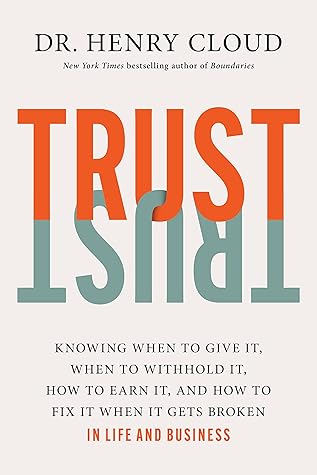
More on this book
Community


Kindle Notes & Highlights
by
Henry Cloud
Started reading
February 19, 2024

trust sends a signal to our entire being that says, “Move forward.” When we trust, we move toward a person, a group, a deal, a company, or whatever the object of our trust may be, and invest our hearts, time, energy, love, or wallets. When we don’t trust, we get a strong internal message in the opposite direction: “Move away.”
The list of ways humans can betray one another is almost infinite, but the pain is always the same: hurt, betrayal, disillusionment, anger, withdrawal from trusting others, reticence in future transactions, suspicion, and more.
“developing emotional object constancy.” This means that the “love object” (the caretaker) gets internalized through thousands of instances of trusting connection. At some point, an infant achieves the milestone of “secure attachment” leading to “constancy,” whereby he or she feels loved even when not being attended to directly.
the challenge is that our desires to trust need to have a good partnership with our objective, upper brain, which can serve as a guide as to who is trustworthy and who is not.
When our desires get mixed with amped-up trust chemicals, the combination can drive us to destinations where we don’t want to go.

Mistaken trust for desire. Trust is internal, desire is external.
Part of the purpose of this book is to help you shape both your desires to trust and your objective equipment to help guide those desires.
Trust is the confidence that someone will guard what is important to you, what you need, possess, or desire.
You can trust someone when you feel your needs are understood, felt, and cared about.
You can trust someone when you feel their motive is for you, not just for themselves.
You can trust someone when you feel they have the ability or capacity to guard and deliver results for what you have entrusted to them.
You can trust someone who has the character or personal makeup needed for what you entrust them with.
You can trust someone who has a track record of performing in the ways you need them to perform.
You will depend on someone based on what happened last time you trusted them. Behavior builds expectations, either good or bad.
Leading someone to trust you does not begin with convincing them that you are right.
The task is to know them instead of to persuade them. People must feel known in order to trust. Trust begins not with convincing someone to trust you; it starts with someone feeling that you know them.
A mirror reflects back to us who we are, and in the deepest communications between people, reflecting back to someone who they are says: “I see you. I hear you. I know who you are.”
“Grant that I may not so much seek… to be understood, as to understand.”
We can never act in ways that cause someone to trust us if we do not understand what they feel, think, need, desire, and fear.
