
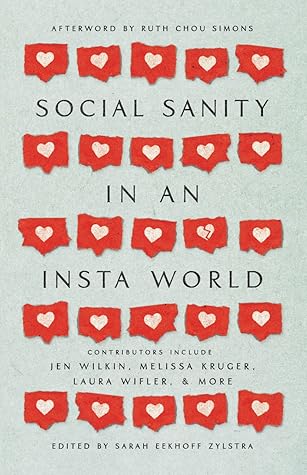
More on this book
Community


Kindle Notes & Highlights


But how? How can we be wise as serpents and innocent as doves on social media (Matt. 10:16)? How can we guard our time as well as guard our hearts against envy, anger, or sloth? How can we encourage others without being overly simplistic or share without bragging? How can we challenge or correct without needlessly offending? How can we be vulnerable without complaining or cheerful without sounding fake?
The “goodness” or “badness” of social media, like that of money or power or education, is determined by the desires of the one using it (more
We cannot help but be shaped by what we look at. As has often been noted, “We become what we behold.” Or, as Jesus put it, “The eye is the lamp of the body. So, if your eye is healthy, your whole body will be full of light, but if your eye is bad, your whole body will be full of darkness” (Matt. 6:22–23).
time-wasting has always been a temptation for humans,
At its best, social media can help us form connections and stay connected to others. But at its worst, it can whisper the lie that we can be like God, not bound to one place at one time. When we long for omnipresence, we lose our ability to be fully present where God has placed us.
Ultimately, our relationship with social media, whether toxic or healthy, is dependent on the state of our hearts, the priorities of our souls, and what we love and value.
the need for discernment starts from the moment we sign on.
So often, we feel we’re too busy. We’re too busy to go to the church prayer meeting. Too busy to read our Bibles. Too busy to volunteer. Too busy to love our neighbor. Too busy to help the needy. Yet, somehow, we find hours to scroll on our phones.
In his book The Discipline of Spiritual Discernment, Tim Challies defines discernment as “the skill of understanding and applying God’s Word with the purpose of separating truth from error and right from wrong.”1
Our greatest problem isn’t spending too much time on social media. Our greatest problem is that we’re not spending enough time in our Bibles.
Consider your current social media feed. List five people you’re eager to hear from when you log on. Do they influence you toward or away from loving God and others? In what ways do you notice their influence?
Holiness isn’t marked by the number of times you quoted Scripture on your pages. It’s inward.
We’re often blind to what’s good because we’re too busy with what’s easy.
Perhaps the best way to make these decisions is to start with creating a mission statement so you understand why you’re there to begin with. Then you can focus your energy, put up guardrails, and let social media serve God’s purposes in your life. Here are a couple of examples: As a personal user with a private account, I share milestones and fun memories with my friends and family. I use social media to deepen relationships with my real-life community and maintain connections with people I don’t see regularly. My posts should be a bright spot in someone’s day.
Social media can foster mentoring relationships.
