
More on this book
Community


Kindle Notes & Highlights


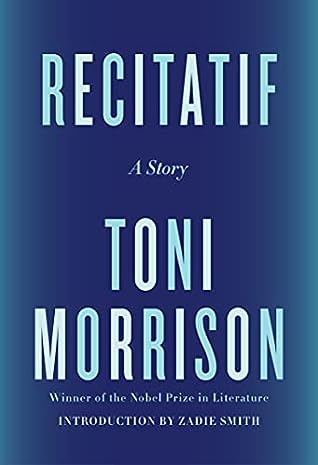
In 1980 Toni Morrison sat down to write her one and only short story, “Recitatif.”
This extraordinary story you hold in your hands was specifically intended as “an experiment in the removal of all racial codes from a narrative about two characters of different races for whom racial identity is crucial.” [*1]
The characters in question are Twyla and Roberta, two poor girls, eight years old and wards of the state, who spend four months together in St. Bonaventure shelter. The very first thing we learn about them, from Twyla, is this: “My mother danced all night and Roberta’s was sick.” A little later, that they were placed together, in room 406, “stuck in a strange place with a girl from a whole other race.” What we never learn definitively—no matter how closely we read—is which of these girls is black and which white. We will assume, we can insist, but can’t be sure. And this despite the fact that
...more
As Twyla and Roberta discover, it’s hard to admit a shared humanity with your neighbor if they will not come with you to reexamine a shared history.
Imagine thinking of history this way! As a thing personally directed at you. As a series of events structured to make you feel one way or another, rather than the precondition of all our lives? The long, bloody, tangled encounter between the European peoples and the African continent is our history. Our shared history. It’s what happened. It’s not the moral equivalent of a football game where your “side” wins or loses. To give an account of an old English country house that includes not only the provenance of the beautiful paintings but also the provenance of the money that bought them—who
...more
Difficult to “move on” from any site of suffering if that suffering goes unacknowledged and undescribed.
Like Twyla, Morrison wants us ashamed of how we treat the powerless, even if we, too, feel powerless. And one of the ethical complexities of “Recitatif” is the uncomfortable fact that even as Twyla and Roberta fight to assert their own identities—the fact they are both “somebody”—they simultaneously cast others into the role of nobodies.
of course, ultimate reality is not where any of us live. For hundreds of years, we have lived in deliberately racialized human structures—that is to say, socially pervasive and sometimes legally binding fictions—that prove incapable of stating difference and equality simultaneously.
That people live and die within a specific history—within deeply embedded cultural, racial, and class codes—is a reality that cannot be denied, and often a beautiful one. It’s what creates difference. But there are ways to deal with that difference that are expansive and comprehending, rather than narrow and diagnostic.
As a reader of these two embedded writers, both profoundly interested in their own communities, I can only be a thrilled observer, always partially included—by that great shared category, the human—but also simultaneously on the outside looking in, enriched by that which is new or alien to me, especially when it has not been diluted or falsely presented to flatter my ignorance—that dreaded “explanatory fabric.” Instead, they both keep me rigorous company on the page, not begging for my comprehension but always open to the possibility of it, for no writer would break a silence if they did not
...more
Life is complex, conceptually dominated by binaries but never wholly contained by them.
Fascism labors to create the category of the “nobody,” the scapegoat, the sufferer. Morrison repudiated that category as it has applied to black people over centuries, and in doing so strengthened the category of the “somebody” for all of us, whether black or white or neither. Othering whoever has othered us, in reverse, is no liberation—as cathartic as it may feel.[*13] Liberation is liberation: the recognition of somebody in everybody.[*14]
I was dying to know what happened to her, how she got from Jimi Hendrix to Annandale, a neighborhood full of doctors and IBM executives. Easy, I thought. Everything is so easy for them. They think they own the world.
We both giggled. Really giggled. Suddenly, in just a pulse beat, twenty years disappeared and all of it came rushing back. The big girls (whom we called gar girls—Roberta’s misheard word for the evil stone faces described in a civics class) there dancing in the orchard, the ploppy mashed potatoes, the double weenies, the Spam with pineapple. We went into the coffee shop holding on to one another and I tried to think why we were glad to see each other this time and not before. Once, twelve years ago, we passed like strangers. A black girl and a white girl meeting in a Howard Johnson’s on the
...more
