
More on this book
Community


Kindle Notes & Highlights


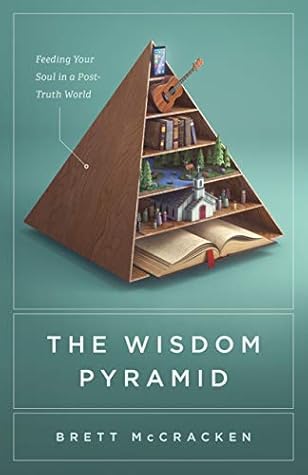
We need a diet comprised of lasting, reliable sources of wisdom rather than the fleeting, untrustworthy information that bombards us today; a diet heavy on what fosters wisdom and low on what fosters folly.
The “limitless space” nature of online media has also created a situation where “news” channels must find content to fill 24 hours a day, seven days a week, resulting in a diminishment of what qualifies as “newsworthy” (e.g., filling an hour with live car chases). On the Web, not only is there the expectation of daily, fresh, “breaking news” content, but there is fierce competition for clicks. Desperate to stand out, websites are motivated to use incendiary headlines and other tricks to collect coveted clicks by any means necessary. The result is content that is often rushed (a hot take on
...more
“In a culture that rewards immediacy, ease, and efficiency,” writes literacy advocate Maryanne Wolf, “the demanding time and effort involved in developing all the aspects of critical thought make it an increasingly embattled entity.”
If we only ever ate our favorite foods, most of us would be sick or dead. I love almond croissants and chocolate chip cookies (especially paired with a cup of black coffee!), but a diet consisting only of this would land me in the hospital. So it is with our information diet. We might be tempted to consume only material we like and have a taste for, but that will leave us sickly. Sadly, this is exactly what many of us do in today’s hyper-individualistic, choose-your-own-adventure world.
What’s wrong with a world that revolves around you and your particular preferences and proclivities? A few things. First, when everything revolves around you and your tastes, it’s only going to be awesome if you know exactly what’s good for you. And we usually don’t.
Just as too much food makes a body sick, too much information makes the soul sick. Information gluttony is a real problem in the age of Google—its symptoms are widespread and concerning. Here are five of them.
It naturally leaves our heads spinning and—over time—our hearts battered and ultimately numb. It’s obituaries next to baby announcements, cry-for-help laments next to “look at my best life!” vacation photos. Sports scores next to Augustine quotes. Worship music next to snake-chasing-iguana videos. John Piper sermons between sessions of Fortnite and Duolingo language learning. In the words of Arcade Fire, it’s “Everything Now!” In addition to causing cognitive dizziness, this indistinguishable array of information erodes our ability to distinguish between the trivial and the truly important.
...more
Media critic Neil Postman saw this coming in the 1980s, when he observed that televised news had become a sort of variety show of disconnected amusements meant to keep viewers tuned in: “Now . . . this” is commonly used on radio and television newscasts to indicate that what one has just heard or seen has no relevance to what one is about to hear or see, or possibly to anything one is ever likely to hear or see. The phrase is a means of acknowledging the fact that the world as mapped by the speeded-up electronic media has no order or meaning and is not to be taken seriously. There is no murder
...more
We can easily come to the point where we spend hours attending to headlines about things that will never affect us, debates about things we know little about, and problems we cannot solve. Meanwhile, as we are consumed by the “far away” dramas of our social media spaces, we neglect the tangible realities of our immediate place—the local news, proximate debates, and immediate problems we could more meaningfully address.
Wherever there is an abundance of options, we can struggle with commitment to anything.
We are so overwhelmed with possible paths, possible sources of truth and theories of the good life, that we don’t pick any path. Or we switch paths every few months. Or we cobble together our own just-for-me spiritual path, pulling bits and pieces of theology, philosophy, morality, and aesthetics from all manner of disconnected sources. Because we can.
Whatever you believe, or whatever you might be tempted to believe, there is information online to back you up. And it’s not just the dark web we’re talking about here, where trolls and terrorists find reinforcement for their extremist beliefs. We’re all susceptible to the path of least cognitive resistance: selecting sources that harmonize with our existing beliefs and don’t complicate our paradigms or rile us up.
Just as eating too much food makes us sick, eating too fast also makes us ill. Scarfing down food quickly may satiate our immediate hunger or need for “on the go” fuel, but it usually isn’t great for our health. Similar things happen when we consume information too fast. It may seem like we are maximizing time and optimizing ourselves—efficiently consuming all manner of information at ever greater speeds—but the reality is we are eroding our capacity for wisdom.
Our overstimulated brains are becoming weaker, less critical, and more gullible at a time in history when we need them to be sharper than ever.
Google offers quick answers to any query we might have. But wisdom is not about getting to answers as fast as possible. It’s more often about the journey, the bigger picture, the questions and complications along the way. Google’s speedy delivery of answers is efficient, but it’s not as nutritious or enjoyable for our souls. It’s like treating food only as fuel and forsaking the value of slowly making and enjoying a meal.
Presentism is toxic not only because it rejects the resources of the past, but also because it has little discipline to stay on course for the future. Orientation around the new is by definition unstable, because the “new” quickly becomes “old” and passé. The presentist world burns through fads and ideas at an alarming pace. Among other things, this undermines the sorts of qualities—grit, perseverance, long-haul commitment—that are essential to actually solving complex problems. Presentism leads us to be “all in” for some cause for a few months, only to lose interest when another cause grabs
...more
This is one reason journalism has seen better days. In today’s microspectacle world, what wins in the attention game is often the hot take, the incendiary headline, the rashly reported story, the “breaking news” that isn’t actually newsworthy. Cable news channels have far more air time to fill than there is real news to report, so they stack their schedules with talking head commentary, partisan debates, salacious scandals, celebrity divorces, and other infotainment to keep viewers glued to their screens—at least until another “breaking news” alert or “must see” viral video draws the viewer’s
...more
The temptation in today’s world is to make every thought public. But is this wise? Some of the wisest people I know are very slow to publicly share their opinions. They recognize the fallibility of first impressions and the folly of “insta-reaction.” Kevin DeYoung noted recently that one of the distinguishing marks of a “quarrelsome person” is that he or she has no unarticulated opinions. “Do people know what you think of everything?” DeYoung asks. “They shouldn’t. That’s why you have a journal or a prayer closet or a dog.”15
Here’s Tozer: Many are brainwashed from nine o’clock in the morning or earlier until the last eyelid flutters shut at night because of the power of suggestion. These people are uncommitted. They go through life uncommitted, not sure in which direction they are going.17
Wisdom is knowing what to do with knowledge gained through various means of education: how to apply knowledge and information in everyday life; how to discern if something is true or not; how to live well in light of truth gained. Wisdom is not merely knowing the right answers. It’s about living rightly. It’s about determining which right answer is best. It’s a moral orientation: a developed sense and intuition for discerning right and wrong, real and fake, truth and falsehood; the ability to weigh greater and lesser goods and make complex decisions involving multiple, sometimes competing
...more
No other source of truth is as universally beloved and consistently cross-cultural as the Christian Bible.
The Bible is our most important source of wisdom because it is literally the eternal God—the standard and source of all truth—revealing himself. What a miraculous thing! Yet sadly many of us are bored by it, struggling to read it habitually, if at all. Our Bibles collect dust in a dark corner of our rooms while our Facebook feeds are constantly refreshed.
When most of us start our days (myself included!), we read emails and tweets before we read the words of God.
We like to think (as we saw in chapter 3) we are all we need to figure out how to flourish in the world. Adam’s original sin was a proud intellectual self-sufficiency, what J. I. Packer describes as the “ability to solve all life’s problems without reference to the word of God.”3 True faith, argues Packer, means giving up the notion of intellectual autonomy and recognizing that “true wisdom begins with a willingness to treat God’s Word as possessing final authority.”4 Man is not the measure of all things. God is.
the work of the Spirit as relates to Scripture is not to make new revelation but to illuminate what has already been revealed.
Five Principles for Rightly Handling Scripture
Scripture speaks to us about everything: money, sex, family, art, science, justice, and politics, to name a few. To properly handle the Bible is to acknowledge that it should inform everything in our lives, no matter who we are, what we do, or how we feel.
define
You might be thinking, If to love the Bible is to become wise, then why are so many Bible-loving people so awful and unwise—using the Bible in self-serving ways to defend ignorance, justify bias, and perpetuate fear and loathing? The answer is that they are using the Bible. They aren’t coming to the Bible to be shaped by it; they are coming to the Bible to shape it into what they want it to be. We see it in politics all the time: “Christians” in both parties appeal to the Bible to justify their political stances. We see it in our own lives too. All of us tend to like the parts of Scripture
...more
Scripture is valuable as a whole, not just the parts
We get the most out of the Bible when we read it in big chunks and grasp its grand narrative.
God, through a book, should daily inspire in us the sort of gratitude and praise we see in Psalm 19. God’s word revives the soul and makes wise the simple (v. 7); it rejoices the heart and enlightens the eyes (v. 8); it is more desirable than gold and sweeter than honey (v. 10). We should have the fervor of John Wesley, who once said, “O give me that book! At any price, give me the book of God!”21 Do we treasure the Bible this way? Do we delight in it and meditate on it day and night, such that we become, as the psalmist writes, like a tree planted by streams of water, robust and sturdy and
...more
The church, the people of God, is second only to the Bible, the word of God, as a source of reliable and transformative wisdom.
Rather than running away from the church in these confusing and chaotic times, people should be running to the church.
A church community frees you from the crushing weight of self-obsession. It frees you to be part of something bigger than yourself, with people who are not like you. It frees you from the bias-confirming bubbles of only being exposed to like-minded people who always affirm but never challenge you. It frees you from the burden of being accountable only to yourself: what you believe, how you like to worship, how you interpret the Bible, how you want to live and so on. When we are the only authority on these things, it’s hard to become wise.
Almost every community will help you become wiser than you would be alone.
But a church community—a group committed to pursuing holiness collectively and more interested in glorifying God than in celebrating the “authentic” self—can offer particularly valuable nutrition for a healthy wisdom
In an age of nauseating narcissism where everyone clamors for stardom and Instagram likes, the church humbles us and weekly reminds us: this is not about you. This is about God. You are welcome here, you are wanted, your presence in the body is important. You are part of the story. But God is the star, not you. What a freeing and wonderful thing.
Expressive individualism would have us look deep into our hearts to discover our inner essence and express that to the world. But the gospel shows how the depths of our hearts are steeped in sin; it claims that what we need most is not expression, but redemption. The world says we should look inward, while the gospel says to look upward. In an expressive individualist society, that message is countercultural.2
The ancient church calendar rhythms and weekly worship rhythms of the local church can be powerful counter-formational forces in our lives. Like anything, it’s all about regularity and habit. Occasional or when-convenient appearances at church will hardly shape us. But showing up weekly and immersing yourself in a church’s “not-about-me” orientation can do wonders for your spiritual sanity in an unwise age.
We go crazy in life when everything is possible. We don’t know where to look, where to go, what to trust, what path to take. If every direction is possible we end up going nowhere. This is where the church, functioning as a community of accountability and limitation, is actually freeing for any who commit to it.
It is a narrowing down of our field of limitless choices. But far from shrinking our world, this limitation is freeing. To land in a church and to be grounded there, to be accountable there, provides a spiritual and relational stability that reduces the number of variables in life. It provides a defined plot of land where we can put down roots, grow, and be fruitful. It challenges the FOMO restlessness that tempts us to move so quickly from place to place that we never bear fruit anywhere.
Do we really think “my values” are a more reliable source of truth than church teaching that has been consistent for centuries? If we do, then we’ve turned church into a consumer commodity that exists merely to serve our interests on our terms.
God could have just sent us a PowerPoint presentation with five ideas to believe in order to be saved. Instead he sent a person. God in flesh, our hope divine. A physical, in-flesh church can be a haven for us digital ghosts. However uncomfortable it is to do church with a couple hundred weird, smelly, not-like-me people whose hugs and handshakes are often awkward, the experience of embodied church can be a massive source of truth and hope in a lonely digital age.
In a presentist world where wisdom is shrunk to the narrow confines of immediate relevance, the church broadens horizons. It draws upon wisdom and truth from thousands of years ago and speaks to realities that will exist millions of years from now. It situates us within a story that crosses cultures and borders and transcends time and space. It invites the refugees of a relentlessly unstable world to take refuge in the practices and time-filtered wisdom of two millennia of Christian tradition.
It’s important for contemporary Christians to avoid chronological snobbery, assuming our issues and insights are unique or new. To guard against this we should familiarize ourselves with our family of faith across time, drawing from and building upon their wisdom.
Everything ever tweeted and the most-viewed viral videos will be forgotten ashes in the embers of history, but the church will remain. That’s why it’s a massively important staple of any wisdom diet.
Nature reminds us there is a world bigger than the one we’ve made.
“We may live in a post-truth era, but nature does not.”
Perhaps that’s one of the reasons I’ve always loved nature—God’s beautiful and terrifying creation. It is what it is, not what we want it to be. In a world where man thinks he is the measure of all things, nature begs to differ. There is a givenness to nature that is sanity in an insane world. It is there to sustain our lives, to be enjoyed, but also to challenge us, to put us in our place, and to impart to us wisdom—if we are willing to listen.
