
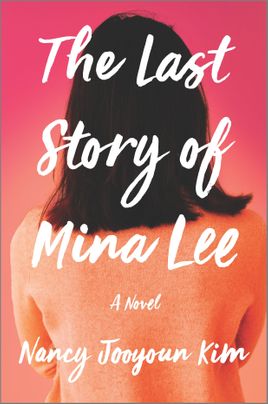
More on this book
Community


Kindle Notes & Highlights


“Sometimes, agreeing to the same lie is what makes a family family,
the crowd of emotions, the struggle to put food on the table, the fear of being followed down the street at night, kidnapped or stabbed. Always looking behind her. Maybe this was why she couldn’t leave the past behind—everything about her life had trained her to look back. By never looking forward, she was always tripping, falling over things.
Her mother didn’t have time for empathy. She always had to keep moving. If she stopped, she might drown.
She had always counted on one more hour, one more day, one more year to explain herself to her mother, to tell her that she loved her more than anyone in the world but could never live around her, never live under the same roof with her again.
The message had always been that women without men lacked shape, women without men were always waiting for them to appear like images in a darkroom bath.
Her mother was too heavy with history, with sadness, unspoken and unexplained.
Margot never felt strong or sturdy enough for the details of her mother’s truth. She could barely handle her own.
Growing up American was all about erasing the past—lightly acknowledging it but then forgetting and moving on.
How much had her mother been carrying? How much had she been carrying for them both? And now Margot would have to bear it all by herself.
Her mother’s body was proof that sometimes there was not one more hour, one more day, one more week in this life. Sometimes, all you had left was right now—the seconds ticking away.
But what kind of future had she been saving for—the future that she was living in now without any art? She had so many ideas that she had never pursued, so many sketches she had made but abandoned throughout the years. She realized the part of her that dreamed had died somewhere, too, snuffed by a need for practicality, stability, a sense of value in this world, which always seemed to measure you with fixed numbers that had been created for whom, by whom? Not her. Not her mother.
Those words were like hands trying to touch her.
Because their life would be part of the lie that this country repeated to live with itself—that fairness would prevail; that the laws protected everyone equally; that this land wasn’t stolen from Native peoples; that this wealth wasn’t built by Black people who were enslaved but by industrious white men, “our” founders; that hardworking immigrants proved this was a meritocracy; that history should only be told from one point of view, that of those who won and still have power. So the city raged. Immolation was always a statement.
Every meal, even a somber one like this, was a celebration of what we had left, what remained on this earth to taste and feel and see.
And the whole world told women every day, If you are alone, you are no one. A woman alone is no one at all.
Maybe it was the tiniest of things, at times, on a consistent basis, that kept us alive, and if she could not create such kindnesses for herself, couldn’t she allow someone else to do so for her?
But maybe the questions themselves frightened her mother. Not because she didn’t care about Margot, but because the questions were the same ones that she was never willing to ask or answer about herself. It hurt too much to know. How are you doing? How do you feel?
A single human being could live an entire continent of pain and worry and longing.
what if the hope of never having to move on was what kept her alive? Maybe the tragedy of waiting was the only way she survived?
Some questions were never meant to be answered, yet ideally, pursuing them might at least shed light on how much you valued yourself, the need you might have to tell your own story, however fragmented it might be. It was okay to yearn for the impossible every now and then as long as in the yearning you discovered something about yourself.
How human, how beautiful even our mistakes could be.
families were our greatest source of pain, whether they had lost or abandoned us or simply scrubbed our heads.
Something about this country made it easy to forget that we needed each other.
In this country, it was easier to harm someone else than to stay alive. It was easier to take a life than to have one. Was she finally an American?
Sometimes we wrongly guessed how much others could bear.
