
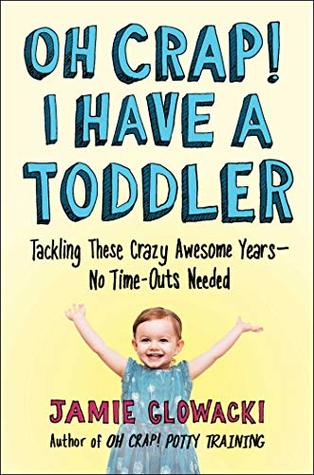
More on this book
Community


Kindle Notes & Highlights
Read between
June 13 - August 3, 2025

Individuation is the psychological process in which your child individuates, or separates from you to become an individual.
teenagers and toddlers are both awesome. Both experience explosive growth, coupled with a developmental need to push against and away from you, and in this way they’re very similar.
Kim John Payne of Simplicity Parenting. He articulates something about parenting that I’ve known intuitively, and does it in a beautiful way: Zero to six years is governing. Six to twelve years is gardening. Twelve to eighteen years is guiding.
All of parenting is one giant toolbox. The more tools you have, and the better you know how to use them, the more effective you can be.
There are natural challenges working against you and your child at this age. Individuation. Big emotions with limited language. A growing body that isn’t always as skilled as your toddler would like. Emerging personality. These all contribute to making this age hard.
You are a badass parent. Just know that.
Yes. Our children are demanding at this age. They physically need us for sure. But we must take care of ourselves. Put on your own oxygen mask before assisting others.
This part of the book is about you and how you might become a better parent by working on yourself. You as a person who happens to be a parent.
Boundaries are truly the base of parenting.
This age range defines “If you give them an inch, they’ll take a mile.”
It’s a toddler’s developmental job to push against your “no.” Which means your job is to hold firm.
Compare that to a person with weak boundaries, who will hem and haw, not give a straight answer, or do something for us but with bitterness and resentment. That is far more unpleasant than if that person had just said no.
If you have weak boundaries, you will eventually feel exhausted and resentful.
If kids don’t get a no, if we don’t put up that emotional/mental fence, they will keep pushing forward until they find it.
When we have clear rules and boundaries, when we can say no with our parental authority and the child knows we mean it, that child can do a child’s job, which is to play and discover.
A no should be a no that no amount of crying or fit throwing will make you cave on. A yes is yes. There can always be a yes, as long as you are in control of the situation. Because if you’re not, then your child is.
For God’s sake, you’re helping shape a whole human being. Sometimes it takes my breath away, the work we’re doing is so astounding and profound. But it’s also your journey as well. It’s not just childhood, it’s parenthood too. You get to have your down days.
if it’s not working for the family as a whole, then it’s not working. Resentments and hurts will start to build that will only add another kind of dynamic to the family. A not-good one.
The definition of authoritative is “able to be trusted as being accurate or true; reliable; commanding and self-confident; likely to be respected and obeyed.”
they try to balance the responsibility of the child to conform to the needs and demands of others with the rights of the children to be respected and have their own needs met.
And as sweet and loving as they are right now, wait. Raising these little humans will get infinitely more interesting as their brains and bodies grow. You’ve been warned.
Governing means setting rules and boundaries and expectations but doesn’t have to look power-hungry and mean.
True connection—not just doing things together.
The goal is to not drain your own battery so you avoid having to shut down to recharge.
Whereas if you can be 100 percent present but for smaller chunks of time, and that fills your child’s emotional tank and buys you some “off ” time, that’s a brilliant investment.
If you feel like you’re doing everything and yet not doing any of it well, it’s time to slow down and stop multitasking.
occasional outbursts, superhigh-charged emotions, and epic tantrums are developmentally appropriate at two and three years old.
For our generation of parents, in our particular society, it has become the norm to serve at the altar of parental martyrdom, boundaries be damned.
If you do not take care of yourself and your relationships and you focus only on your children, you are a parenting martyr.
As Maya Angelou said, “I’ve learned that people will forget what you said, people will forget what you did, but people will never forget how you made them feel.”
And being resentful is a slow burn to relationship hell.
Twenty percent of your energy output yields 80 percent of your results. Let that sink in for a minute. Only 20 percent of what you do in any given situation is responsible for 80 percent of the results.
BTW, I’m the last living soul without a dishwasher.

Nope! Me too
Stop picking up toys. Pick up toys once a day, at the end of the day. Picking up toys all day feels like you’re doing something. Why not use those spare moments to sit. Relax. Or pick your nose. Whatever.
“Create a life you don’t need a vacation from.”
If you want downtime, you must make room for downtime. Downtime must be a big stone. ’Cause otherwise it won’t fit.
Is there anything scarier than extended silence with toddlers?
Find your bond with your child. Look at the child you have, not the child you want.
Kids do stupid things. Kids act like jerks. Kids make massive mistakes. That doesn’t mean we’ve failed as parents. It’s not always about you.
But if you find you are anxious about your parenting, the best thing you can do is stay off the internet.
“There’s no such thing as being a perfect parent. So be a real one.”
our children are constantly learning. They don’t do what we say, they do what we do. They learn their behaviors through and from us and how we react.
Autonomy
Compassion
Compromise
Creativity
Curiosity
Dependa...
This highlight has been truncated due to consecutive passage length restrictions.
F...
This highlight has been truncated due to consecutive passage length restrictions.
Gratitude
