
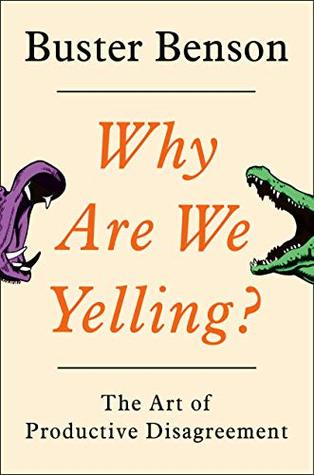
More on this book

Community


Kindle Notes & Highlights

Read between
July 15 - November 7, 2020

CONS OF SEEKING GROWTH: It requires an assessment of risks, which opens up the door for conflicts of head, heart, and hand.
Risk can also lead to losses if you miscalculate, underperform, or are just unlucky. Growth can come in many forms, some easier to measure than others.
PROS OF SEEKING CONNECTION: Building connections with others also leads to growth and security over time. We’re social creatures who find enormous fulfillment in relationships and are much less anxious and more resilient when we have strong relationships surrounding us.
CONS OF SEEKING CONNECTION: Trust takes a long time to build. As they say, it’s earned in drops and lost in buckets. Trust can be betrayed in costly ways.
PROS OF SEEKING ENJOYMENT: Seeking enjoyment helps motivate us on long journeys of growth and connection. The spark of enjoyment is a clear antidote to the spark of anxiety. Following our enjoyment is a way of understanding our inner interests better.
CONS OF SEEKING ENJOYMENT: Sometimes enjoyment can come at a cost, if it’s used to belittle. [Insert all cautionary tales of chronic hedonism here.]
Here are a few questions that you can bring to almost any disagreement: What formative events in your life brought you to this belief? What’s really at stake here?
What’s complicated about your position here that people don’t usually notice at first?
If what you believe was proven conclusively true to its staunchest oppone...
This highlight has been truncated due to consecutive passage length restrictions.
What would have to be true for you to change your...
This highlight has been truncated due to consecutive passage length restrictions.
What other possibilities might we be missing that would change how we ea...
This highlight has been truncated due to consecutive passage length restrictions.
Imagine a world where this is no longer a problem. How...
This highlight has been truncated due to consecutive passage length restrictions.
Remember cognitive strategy number 7: Favor the familiar? This strategy creates a blind spot when it comes to building our own arguments, because we end up being a bit too lenient on ourselves. But
our opponents are better equipped to identify the flaws in our arguments than we are. You can use this quirk of the mind to make your argument stronger!
Disagreement feels futile when the voices of power and reason fail us. We start listening to the voice of avoidance—just give up on the other side ever becoming reasonable. But now we know what to do! Let’s ask a better question.
A traditional essay makes a single case and puts all its weight behind it. A problem brief collects the best proposals that attempt to answer the open question.
Once the problem’s central question and end game are clear, and cases are made, it’s possible for a productive disagreement to emerge among the collaborators.
When a space is designed to build relationships—for example, around a table with food and drink—it’s said to have wa.
A focused and creative working space, designed to facilitate the flow of ideas, is said to have ba.
When a space is conducive to interruptions and serendipity, like a park with shared seating a...
This highlight has been truncated due to consecutive passage length restrictions.
“I’m very sensitive,” “Your concerns,” “If I understand,” “Is that right?” “Do you see,” “One concern I struggle with,” “There’s also the question,” etc., are all examples of the language of possibility and signal to everyone that this is a neutral venue for ideas to be discussed and not a battle zone.
The general consensus of research into the effects of deplatforming is that it initially draws a lot of attention to the people and ideas being banned, but then a drop-off happens, after which the banned parties end up getting less attention going forward.
The Gulag Archipelago by Aleksandr Solzhenitsyn
Socrates taught that the true goal of dialogue was to reach moments of aporia—not to decide or become certain or be proven right but to realize that you don’t actually know what you’re talking about.
We can easily mistake people who have answers for people who are wise.
In the case of standing before a chasm that you can’t see the other side of, imagining an answer for how to get across might feel wise, but Socrates believes that there’s wisdom in not seeing an answer that isn’t there and acknowledging the impasse.
The reputation of uncertainty is that it feels unsatisfying because you don’t get the immediate answers that you are looking for, but when aporia is used to sidestep the need for righteous indignation and a false sense of security, it’s actually the more satisfying path to take, even in the moment.
The voice of power loves a mob, especially when it feels morally justified.
The goal of all of this is not to come out of disagreements unscathed, but to actually get into them—to become scathed.
Conflicts about what is meaningful have been forced into narrow conflicts over what is true for a long time, because the voices of power and reason have found them easier to manage.
